Oct 3rd 2025
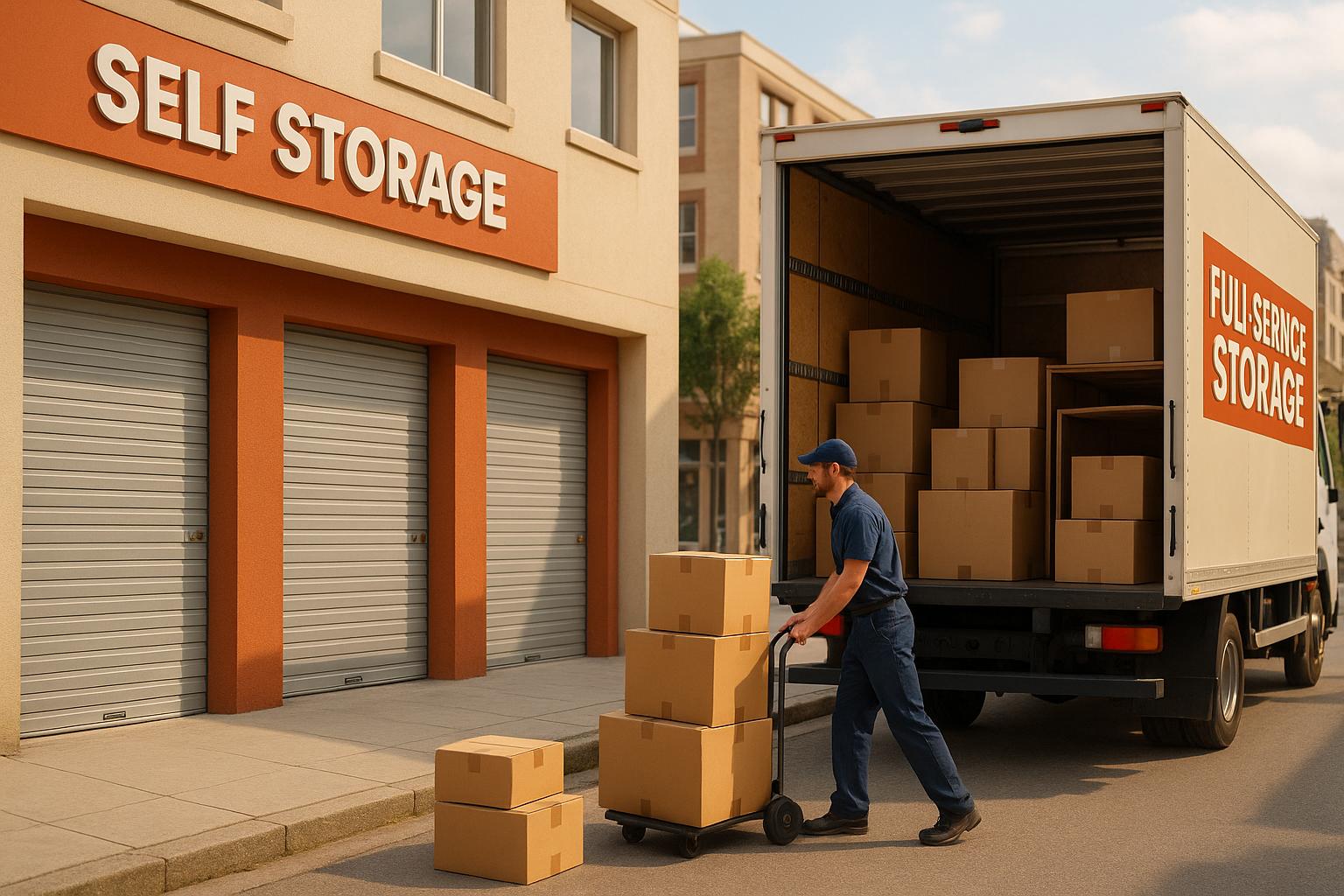
Self-Storage vs. Full-Service Storage Abroad
When moving internationally, storing your belongings is often necessary due to delays in housing or shipping. The two main options are self-storage and full-service storage, each with distinct advantages and challenges:
- Self-Storage: You handle packing, transport, and organization. It's cheaper, offers 24/7 access, and works for smaller loads or short-term needs.
- Full-Service Storage: Professionals manage packing, transport, and secure storage. It's more expensive but ideal for valuable or fragile items, long-term storage, or convenience.
Quick Comparison
| Feature | Self-Storage | Full-Service Storage |
|---|---|---|
| Cost | Lower base rates | Higher, includes services |
| Effort Required | High (DIY) | Minimal (professionals handle it) |
| Access | Flexible (often 24/7) | Limited (advance notice needed) |
| Security | Varies by facility | High, includes inventory tracking |
| Insurance | Basic or separate purchase | Included with storage package |
| Best For | Budget-conscious, short-term | Long-term, high-value items |
Choosing the right option depends on your budget, timeline, and the type of items you're storing. Self-storage is great for saving money and maintaining control, while full-service storage offers convenience and peace of mind for complex moves.
Moving Abroad in 2025? Top Tips You Need to Know 🌍
Self-Storage for International Moves Explained
Self-storage is a hands-on option for managing your belongings during an international move. While it requires you to handle packing, loading, and tracking your items, it can significantly reduce costs and gives you full control over the process.
How Self-Storage Works
When you choose self-storage, you rent a storage unit in the size you need and handle all the packing and organization yourself. Another option is portable storage containers, which let you pack at your own pace without making multiple trips to a storage facility. Here’s how it works: the company delivers the container to your location, you load it up, and then they pick it up for storage or transport.
One of the biggest perks of self-storage is access. Many facilities offer 24/7 availability, meaning you can retrieve or add items whenever you need. This flexibility can be a lifeline during international moves, where plans often shift unexpectedly.
With these basics in mind, let’s dive into why self-storage might be the right fit for you.
Benefits of Self-Storage
One of the most appealing aspects of self-storage is the cost savings. In 2020, the average monthly cost for a standard 10'x10' unit was $116 nationally, with rates ranging from $84 in Houston to $175 in New York City [2]. By doing the labor yourself, you avoid the higher fees associated with full-service storage providers.
Another major advantage is flexibility. Self-storage facilities often offer around-the-clock access to your unit, which is especially helpful when you need specific items like documents, seasonal clothing, or household essentials during your transition to a new country. In contrast, full-service storage usually requires advance notice to access your belongings.
Additionally, self-storage typically comes with month-to-month contracts. This arrangement allows you to adjust the length of your storage as your moving plans evolve, without locking yourself into a long-term commitment.
Drawbacks of Self-Storage
The most obvious downside? The physical effort involved. You’re responsible for packing, renting a truck or hiring movers to transport your items, and managing the loading and unloading process. For larger households or anyone with physical limitations, this can be a daunting task.
On top of that, you’ll need to stay organized. Keeping an accurate inventory of your stored items is essential, especially during an international move where you might not access your belongings for months. Without proper labeling and planning, finding specific items later can become a frustrating challenge.
Security and climate control can also be concerns. While many facilities offer climate-controlled units, these typically come at a higher price. For delicate items, maintaining a stable environment - between 55-80°F with low humidity - is crucial to prevent damage [1][2].
When to Choose Self-Storage
Self-storage is a great option if you’re on a tight budget, need frequent access to your belongings, or have a smaller volume of items to store. By handling the physical work yourself, you can save hundreds or even thousands of dollars compared to full-service options, making it an ideal choice for cost-conscious movers.
It’s also a smart pick if you expect to need access to your items on short notice. Whether it’s seasonal gear, important paperwork, or something you initially thought you wouldn’t need, having the ability to retrieve items without advance planning can ease the stress of an international move.
Lastly, self-storage works well for smaller loads or short-term needs. If you’re only storing a few rooms' worth of furniture and boxes for a limited time, this option offers a practical, low-cost solution without the added expense of full-service storage.
Full-Service Storage for International Moves Explained
Full-service storage takes care of every step involved in storing your belongings. From packing your items to delivering them to your new home abroad, professionals handle it all, ensuring a seamless experience.
How Full-Service Storage Works
When you opt for full-service storage, a team of experts comes to your home to manage the entire process. They carefully pack your belongings using specialized materials like custom crates, moving blankets, and stretch wrap to ensure maximum protection [4][5]. Each item is meticulously cataloged into a detailed inventory so you’ll always know what’s being stored.
Once everything is packed, the crew transports your items to secure storage facilities. These storage vaults are designed to keep your items safe, often raised off concrete floors for added protection [4]. Some services even offer climate-controlled options, though proper wrapping often provides sufficient safeguarding.
A dedicated relocation coordinator typically oversees the process, keeping you informed every step of the way [5]. When you’re ready to have your belongings delivered, the same professional care is applied during unloading and setup at your destination. This thorough approach ensures both convenience and peace of mind.
Benefits of Full-Service Storage
The biggest advantage of full-service storage is the convenience it offers. There’s no need to pack boxes, rent a moving truck, or make repeated trips to a storage unit. This is especially helpful during international moves when your time and energy are already stretched thin managing tasks like visa applications and housing arrangements.
Security is another key benefit. Your items are handled by professionals and stored in secure, pad-wrapped vaults [4][5]. This is particularly valuable for protecting high-value items such as antiques, artwork, or expensive electronics.
Additionally, full-service storage often includes comprehensive insurance with full replacement coverage, giving you financial and physical protection for your belongings [4][5].
Drawbacks of Full-Service Storage
The main downside is the cost. Full-service storage is significantly more expensive than self-storage because you’re paying for professional labor, high-quality packing materials, and premium storage facilities [4][5]. For those on a tight budget, this cost difference can be a major factor.
Another drawback is limited access to your items. Unlike self-storage facilities that often allow 24/7 access, full-service storage typically requires advance notice to retrieve specific belongings [4]. Since everything is packed and organized for optimal protection, getting to a particular item quickly can be challenging.
You also have less control over how your items are packed and organized. While professionals are skilled at ensuring your belongings are safe, their methods may not align with your personal preferences, making it harder to locate specific items later.
When to Choose Full-Service Storage
Full-service storage is ideal for families moving internationally, especially for work-related relocations or permanent moves. The comprehensive nature of the service makes it an excellent option for expats who need their belongings handled with care and professionalism across borders [5].
It’s also a smart choice if you’re dealing with valuable or fragile items that require specialized packing or climate-controlled environments. Antiques, fine art, and high-end electronics benefit greatly from professional handling and secure storage.
If you value convenience and prefer having a single point of contact for your move, full-service storage can be a worthwhile investment. The reliability, professional care, and added security it provides are particularly important for complex relocations where timing and precision are critical.
sbb-itb-be87134
Self-Storage vs. Full-Service Storage: Direct Comparison
Choosing between self-storage and full-service storage comes down to weighing cost, control, and convenience. As mentioned earlier, it’s all about finding the right balance between your budget, the effort you’re willing to put in, and the level of security you need.
Feature and Cost Comparison Table
| Feature | Self-Storage | Full-Service Storage |
|---|---|---|
| Upfront Cost | Lower base rates | Higher all-inclusive pricing |
| Hidden Costs | Transportation, packing materials, personal time | Minimal extra costs |
| Packing | DIY responsibility | Professional packing included |
| Access to Items | 24/7 availability (varies by facility) | Advance notice required |
| Insurance Coverage | Basic or separate purchase required | Comprehensive coverage included |
| Security Level | Varies by facility | Consistently high standards |
| Climate Control | Available for an extra 20–35% | Often included or optional |
| Personal Effort | High time and labor investment | Minimal personal involvement |
Now, let’s break down the pricing factors that highlight the real cost differences.
Pricing Structure and Cost Factors
At first glance, self-storage appears to be 20–50% cheaper, but hidden costs like transportation, packing materials, and the value of your time can quickly add up [7][8].
On the other hand, full-service storage costs more upfront because it includes professional packing, transportation, and storage [7][8]. When you factor in the additional expenses tied to self-storage - like renting trucks or paying for air freight - full-service storage often becomes a better deal, especially for international moves [8].
Pricing also depends on factors like unit size, rental duration, and location [3][6]. Units in urban areas are typically more expensive, and climate-controlled options can add 20–35% to the base rate. Seasonal demand also affects pricing, with rates increasing by 20–30% in the summer and dropping 15–25% in the winter [3][6][8].
If you’re planning long-term storage, annual contracts can save you 10–15% compared to monthly plans [6]. Additionally, some providers offer discounts when you bundle storage with moving services - often 10–20% off - and occasionally throw in the first month for free with full-service moves [6].
Insurance and Security Comparison
When it comes to protecting your belongings, full-service storage generally provides stronger security and better insurance compared to self-storage [8][9].
Self-storage facilities usually have solid security features, such as surveillance cameras, gated access, keypads, and on-site staff. However, the level of protection can vary widely between providers [8][9][10]. Insurance for self-storage is often limited, meaning you might need to purchase additional coverage separately [8][9].
Full-service storage, on the other hand, typically includes advanced security measures - like climate-controlled environments and professional monitoring - as part of the package [8][9]. Insurance policies offered with full-service storage tend to be more comprehensive, making them a safer choice for international moves or storing high-value items [8][9].
For delicate or valuable belongings, full-service storage is the better option. It includes professional packing, shipping, and handling, which reduces the risk of damage. With self-storage, these tasks fall entirely on you [8][9]. Regardless of the option you choose, look for key security features like 24/7 video surveillance, unique access codes, individual unit alarms, and on-site security staff for added peace of mind [8][9][10].
How to Choose the Right Storage Option
Picking the right storage solution for your international move depends on your timeline, budget, and security needs. Let’s break it down.
Key Factors to Consider
Self-storage and full-service storage each come with their own pros and cons. Self-storage gives you more control but requires hands-on management. On the other hand, full-service storage offers convenience but comes at a higher price. Deciding between the two depends on your priorities.
Budget is a big deal. Beyond the base cost, factor in expenses like transportation, packing, and insurance. If you’re storing high-value items - think artwork, antiques, or electronics - the added protection and professional handling of full-service storage might be worth the extra cost.
The length of your move also matters. If you’re relocating for six to twelve months and need frequent access to your belongings, self-storage might be the better option. But for longer stays or permanent moves, full-service storage often provides better long-term security and value.
Next, think about the volume and value of your items. A few everyday belongings from a small apartment might fit fine in self-storage. But if you’re storing an entire household - especially with expensive furniture, electronics, or sentimental items - professional handling and climate-controlled storage become more important. Items like leather furniture, musical instruments, and documents are especially sensitive to temperature and humidity changes.
Finally, consider your personal preferences. Some people like the control of packing and organizing their own things. Others prefer leaving it to professionals so they can focus on other aspects of their move.
Researching Storage Providers
When evaluating storage providers, make sure they meet all legal and industry requirements. For international moves, companies should be registered with the Federal Maritime Commission (FMC) and display a valid FMC number [11][13]. For interstate moves, check for licensing with the Federal Motor Carrier Safety Administration (FMCSA), while local movers must meet state-specific regulations [12][16].
Membership in professional organizations can also signal reliability. Look for affiliations with groups like the Fédération Internationale des Déménageurs Internationaux (FIDI), which offers FAIM accreditation, the International Association of Movers (IAM), or the Overseas Moving Network International (OMNI). These organizations enforce industry standards through regular audits, ensuring members follow safe and ethical practices [11][14][15].
Customer reviews are another valuable resource. Read reviews on multiple platforms and pay attention to how companies handle complaints. Patterns of issues like damaged items, poor communication, or hidden fees are warning signs to take seriously.
If possible, visit storage facilities in person, especially for self-storage. Inspect their security measures, climate control systems, and pest prevention efforts. Ask how they handle problems that might arise while you’re abroad.
Once you’ve verified credentials and security, use a comparison tool to simplify your decision-making process.
How ConsumersAdvisors.com Can Help
ConsumersAdvisors.com makes it easier to compare storage options for international moves. The platform connects you with pre-vetted moving companies offering both self-storage and full-service solutions, letting you compare services and pricing side by side.
You’ll get instant quotes from licensed providers, saving you the hassle of calling multiple companies. Expert reviews on the platform highlight the strengths and weaknesses of each provider, while detailed profiles include essential details like licensing, insurance, and service areas.
The site also offers customizable moving packages, giving you the flexibility to choose what works best for your needs. For example, you could arrange transportation to a self-storage facility or opt for full-service storage with climate control and comprehensive insurance. A dedicated move coordinator ensures every part of your move, including storage, runs smoothly and aligns with your shipping timeline.
With these tools and insights, you can confidently select a storage solution that fits your unique situation and makes your international move a little less stressful.
Conclusion: Choosing the Right Storage for Your International Move
When it comes to international moves, picking the right storage option is a balancing act between cost, convenience, and the level of care your belongings need. Whether you go for self-storage or full-service storage depends entirely on your budget, specific needs, and the nature of your items.
Self-storage is a great option if you want to save money and maintain control over your belongings. It's especially practical for short-term moves, smaller loads, or when you have trusted local contacts who can help manage the unit. However, it does require you to handle all the coordination yourself, from packing to ensuring everything is stored properly.
On the other hand, full-service storage is a better fit for long-term moves or for items that are valuable, fragile, or bulky. This option may come with a higher price tag, but it offers peace of mind with professional packing, secure climate-controlled facilities, and comprehensive insurance. Plus, it spares you the hassle of coordinating logistics from afar, as the service providers handle everything for you.
The type of items you're storing also plays a big role in the decision. Everyday items like clothes and books can usually be stored in basic self-storage facilities. However, antiques, electronics, and temperature-sensitive belongings require the controlled environments and specialized care that full-service storage providers can offer.
Before making a decision, take a close look at the total costs involved. Consider upfront fees, transportation, insurance, and the value of your time. Also, think about how often you’ll need access to your items and whether you have the local support to manage a self-storage unit effectively.
To simplify your search, platforms like ConsumersAdvisors.com can connect you with pre-vetted storage providers. With instant quotes and detailed reviews, you can compare real costs and services instead of relying on advertised rates. They also provide access to licensed providers and dedicated move coordinators, helping you make an informed choice that aligns with your timeline and budget.
Whichever option you choose, start planning early. International moves come with plenty of moving parts, and securing the right storage solution ahead of time will make the transition much smoother. From syncing with shipping schedules to managing visa timelines, early preparation is key to a stress-free move.
FAQs
What should I consider when deciding between self-storage and full-service storage for an international move?
When deciding between self-storage and full-service storage for an international move, it's important to weigh factors like convenience, cost, and accessibility.
Self-storage puts you in charge. You can access your belongings whenever you want, giving you maximum flexibility. However, you'll be responsible for packing, transporting, and organizing everything yourself. While this option tends to be easier on the wallet, it does require more effort on your part.
Full-service storage takes the work off your hands. Professionals manage the packing, transportation, and storage, saving you time and energy. The trade-off? It’s typically more expensive, and you might not have quick access to your items when you need them.
To choose the right fit, think about your budget, how much time you have, and how much involvement you're comfortable with during the process.
What hidden costs should I consider when choosing between self-storage and full-service storage?
When considering storage options, hidden costs can significantly impact affordability. With self-storage, you might face unexpected expenses such as setup fees, required insurance, lock replacements, or charges for extra services. These can quickly inflate the advertised monthly rate.
Full-service storage typically includes these expenses in a higher upfront price. While it might seem pricier at first glance, the predictable pricing and lack of surprise fees can make it a smarter choice over time - particularly for international moves.
What security features should I look for in a storage provider when moving internationally?
When relocating internationally, ensuring the safety of your belongings should be a top priority when selecting a storage provider. Opt for facilities equipped with round-the-clock surveillance cameras, gated access controlled by electronic or biometric systems, and durable, secure locks on each storage unit.
Other important features to consider include well-lit premises, maintained visitor logs, and strict access protocols. These added precautions can go a long way in protecting your items from theft or unauthorized entry while they’re stored overseas.