Oct 16th 2025
10 Packing Tips for Hot Weather Moves
Moving in hot weather can be tough - both on your belongings and on you. High temperatures, which can exceed 120°F inside a moving truck, can damage heat-sensitive items like electronics, candles, and cosmetics. Plus, the risk of dehydration and heat exhaustion for those helping with the move is real. But with the right strategies, you can protect your belongings and stay safe.
Here’s what you need to know:
- Use heat-resistant packing materials like double-walled boxes or plastic bins. Avoid bubble wrap in humid conditions.
- Pack heat-sensitive items carefully, keeping electronics, candles, perishables, and cosmetics in insulated containers or coolers.
- Add reflective and insulated layers to protect against heat transfer. Wrap items in thermal blankets or insulation padding.
- Pack and load during cool hours (early morning or late evening) to avoid peak heat.
- Keep water and cooling supplies ready, including ice water, sports drinks, and cooling towels.
- Wear appropriate clothing and gear, like breathable fabrics, closed-toe shoes, and sunscreen.
- Use sunscreen throughout the day and reapply every two hours.
- Label and separate delicate items with clear instructions like "Fragile" or "Heat-Sensitive."
- Set up shade and cooling areas with pop-up canopies, fans, and hydration stations.
- Work with professional movers who offer climate-controlled trucks and heat-safe protocols.
Quick Tip: Hire professional movers for added safety and efficiency. Platforms like ConsumersAdvisors.com can help you find movers who specialize in hot-weather relocations.

By following these tips, you can ensure your belongings stay safe and your move goes smoothly, even in extreme heat.
Tips about Your Summer Moving 2025
1. Use Heat-Resistant Packing Materials
A successful summer move starts with choosing materials that can handle the heat. During hot weather, the inside of a moving truck can easily hit temperatures of 120°F or more[5]. Regular single-wall cardboard boxes often can’t handle these conditions and may warp or collapse under intense heat.
For better durability, consider heavy-duty materials. Double-walled or reinforced cardboard boxes, priced around $2–$4 each, hold up well even in high temperatures[2]. Plastic bins are another solid option, offering excellent heat resistance and available for rental at approximately $1.50–$3.00 per box per week[4]. However, plastic bins can trap moisture, so adding silica gel packets or a small container of baking soda can help absorb excess humidity[2].
| Material Type | Heat Resistance | Cost per Box | Best For |
|---|---|---|---|
| Standard Cardboard | Low | $1–$2 | Light items, short moves |
| Heavy-Duty Cardboard | Moderate | $2–$4 | General household items |
| Plastic Bins | High | $1.50–$3.00 per week | Heat-sensitive items, long moves |
Skip standard bubble wrap in hot and humid conditions - it can trap heat and moisture. Instead, go for packing paper, which allows better airflow and helps reduce moisture buildup[2].
Spending a bit more on heat-resistant packing materials can save you from the headache of damaged belongings. Up next, we’ll explore how to pack heat-sensitive items with extra care.
2. Pack Heat-Sensitive Items Carefully
When moving during hot weather, protecting delicate belongings becomes a top priority. High temperatures can wreak havoc on items like electronics, candles, cosmetics, and perishables.
Electronics, for example, can sustain irreversible damage if exposed to temperatures above 95°F for extended periods [10]. Devices like laptops, tablets, smartphones, and TVs should ideally remain in their original packaging, which often includes built-in insulation. If that’s not an option, wrap them in towels or other protective layers. For the safest transport, keep electronics in an air-conditioned vehicle and load them last to minimize heat exposure.
Candles are another item that needs special care since they can start softening or melting at just 80°F [8]. Placing them in insulated containers or small coolers can help preserve their shape. Cosmetics like lipsticks or creams face similar risks - they can melt or separate in extreme heat [2][3]. An insulated pouch or a cooler works well for these items, too.
Perishable foods, on the other hand, require a strict temperature-controlled environment. They should always be kept below 40°F and never left unrefrigerated for longer than two hours [10]. It’s worth noting that most professional movers won’t handle perishables, so check ahead with your moving company for any restrictions. If you’re transporting them yourself, pack them in coolers with plenty of ice packs and be prepared to replenish the ice as needed [10].
| Item Type | Temperature Risk | Best Protection Method | Special Notes |
|---|---|---|---|
| Electronics | Damage above 95°F | AC transport, insulated padding | Use original boxes when possible |
| Candles | Melting starts at 80°F | Cooler or insulated container | Keep separate from other items |
| Perishables | Spoilage above 40°F | Cooler with ice packs | Most movers won’t transport perishables |
| Cosmetics | Melting/separation varies | Insulated pouch or cooler |
Labeling is another crucial step. Clearly mark boxes containing sensitive items as both "Fragile" and "Heat-Sensitive." This ensures movers handle them with care and prioritize unloading these boxes first, reducing their time in the heat [3].
If you’re hiring professional movers, ask about their procedures for handling delicate belongings. Many full-service moving companies have protocols in place to protect heat-sensitive items during summer moves. Platforms like ConsumersAdvisors.com can help you compare moving services that specialize in handling such items [9].
3. Add Reflective and Insulated Layers
When the inside of a truck climbs to temperatures of 120°F or more, using reflective and insulated materials can help manage heat transfer effectively [5]. These materials create air pockets that act as a buffer, shielding your belongings from extreme temperature swings.
Thermal blankets are a great starting point. You can wrap individual items with them or use them to line the walls of your moving truck or storage container. The reflective surface deflects heat, while the insulated layer helps maintain cooler conditions inside your boxes [2]. To take it a step further, add insulation padding for extra protection.
Insulation padding provides a snug layer of defense, especially for delicate items like electronics. This padding forms a barrier to help maintain more consistent temperatures during transport [8].
If you're looking for a budget-friendly option, regular towels can work as an alternative to professional insulation [8]. While they don’t offer the same level of heat resistance as thermal blankets, towels can still create those essential air pockets when wrapped around sensitive items.
Here’s a simple method to maximize protection: wrap heat-sensitive items - like electronics, medications, documents, candles, toiletries, aerosol cans, and batteries - in insulation padding or towels. Then, pack them into boxes lined with additional protective materials. This double-layer system helps stabilize the temperature around your belongings during the move.
It’s also important to consider moisture. Opt for materials that allow some airflow to prevent condensation buildup, especially in humid conditions [2].
Finally, keep these insulated and wrapped items in air-conditioned spaces until you're ready to load them onto the truck. This minimizes their exposure to heat and ensures they stay as safe as possible during the journey [3].
4. Pack and Load During Cool Hours
Plan your packing and loading during the cooler parts of the day. Since the hottest hours typically fall between 12:00–4:00 PM, aim for early morning (7:00–10:00 AM) or late evening (after 5:00 PM) to get the job done comfortably [5].
Starting your move early can make a noticeable difference. Morning temperatures are often 10–20°F cooler than midday. For example, in states like Texas or Arizona, mornings might stay in the 70s–80s°F range, while midday temperatures can soar past 100°F. This cooler window not only helps you avoid heat exhaustion and dehydration but also reduces the risk of sunburn [5]. Adjust your packing and loading schedule to make the most of these hours.
Moving early also protects heat-sensitive items. Electronics, cosmetics, and perishables are better loaded during cooler hours and should be unloaded first when you arrive. This prevents damage caused by extreme heat [2].
| Time Slot | Temperature | Risk Level | Recommended Action |
|---|---|---|---|
| Early Morning | Coolest | Lowest | Best time for packing/loading |
| Midday (12–4 PM) | Hottest | Highest | Avoid heavy activity |
| Late Afternoon | Cooling | Moderate | Good alternative if morning isn't an option |
Coordinating your move with these cooler hours reduces heat exposure for both you and your belongings. Many professional movers recognize the importance of heat safety. For example, Poseidon Moving & Storage advises starting truck loading at dawn or scheduling moves in the morning, especially in hot-weather states like Texas, Florida, and Arizona [5]. In fact, some moving companies now offer flexible schedules or even require early morning starts during the summer to ensure the safety of their workers and clients.
To make the most of your cool-hour strategy, check local weather forecasts ahead of time to avoid unexpected heat waves or storms. Coordinate with your movers or helpers to ensure everyone is available during the best time slots [8].
If you’re hiring professional movers, platforms like ConsumersAdvisors.com can help you compare long-distance moving companies that offer flexible scheduling for early morning or evening moves. This ensures you work with experienced movers who prioritize safety during hot-weather relocations. Pairing this strategy with proper precautions will help make your move as smooth as possible.
5. Keep Water and Cooling Supplies Ready
Staying hydrated is one of the most important steps you can take during a hot-weather move. Physical labor in the heat can lead to dehydration, which increases the risk of serious conditions like heat exhaustion and heatstroke[6][12].
To keep everyone safe, set up a hydration station. Fill a cooler with ice water and sports drinks and keep it within easy reach throughout moving day. While plain water should be your go-to drink, sports drinks can help replenish electrolytes lost during heavy activity. However, steer clear of sugary or caffeinated beverages like sodas or energy drinks - they can actually make dehydration worse[6].
If you're using a moving truck, remember that the interiors are often not temperature-controlled. Combine that with the outdoor heat, and you're looking at a recipe for discomfort. Cooling supplies can make a big difference here. Stock up on cooling towels before the move. These can be dampened and placed on your neck or head for quick relief. They’re reusable, so you can re-wet them as needed throughout the day[6]. Portable fans are another must-have. If the air conditioning in your new place isn’t up and running yet, set up fans near entry points and loading zones to improve air circulation[1].
Make hydration a habit by scheduling regular water breaks. Use a timer to remind everyone to pause and drink. Keep water stations close to work areas, and consider using insulated bottles to ensure drinks stay cold. For an extra cooling boost, freeze water bottles overnight so they remain chilled as the day heats up[11][3].
| Supply Type | Purpose | Placement Strategy |
|---|---|---|
| Ice water & sports drinks | Hydration and electrolyte replacement | Coolers near work areas and in the truck |
| Cooling towels | Instant relief from heat | Distribute to all helpers |
| Portable fans | Improve air circulation | Near truck entrances and loading zones |
Create a shaded or air-conditioned rest area where everyone can recover from the heat. If you’re working outdoors, set up tents or umbrellas to provide shade, and position portable fans in these spots to keep them cool. These simple measures can go a long way in reducing heat stress[6].
If you’re hiring professional movers, consider companies that prioritize heat safety. Platforms like ConsumersAdvisors.com can help you compare movers who enforce policies like mandatory water breaks to protect their teams from heat-related illnesses[3].
Finally, don’t forget that your coolers can serve a dual purpose. In addition to holding drinks, they can keep perishable items from your refrigerator cold if you’re moving locally. This is a great way to protect both your health and your food during the move[1].
sbb-itb-be87134
6. Wear Appropriate Clothing and Gear
What you wear during a move can make all the difference in keeping heat exhaustion at bay. The right clothing not only helps regulate your body temperature but also protects you from injuries. It’s your first line of defense against the challenges of moving in hot conditions.
Start with lightweight, breathable materials like cotton, linen, or moisture-wicking synthetics. These fabrics improve air circulation and help sweat evaporate faster. Stick to light-colored clothing, which reflects sunlight and keeps you cooler than darker shades that tend to absorb heat. Loose-fitting clothes are another must - they allow better airflow and don’t restrict movement, unlike tight garments.
While shorts and tank tops might seem like the obvious choice, they leave you exposed to sunburn and scrapes. Instead, go for long pants and long-sleeved shirts made from lightweight materials. These offer better protection from the sun and reduce the risk of minor injuries from moving equipment.
Don’t overlook your footwear. Supportive, breathable, closed-toe shoes are essential for protecting your feet from both heat and potential hazards. Pair them with moisture-wicking socks to keep your feet dry and prevent blisters.
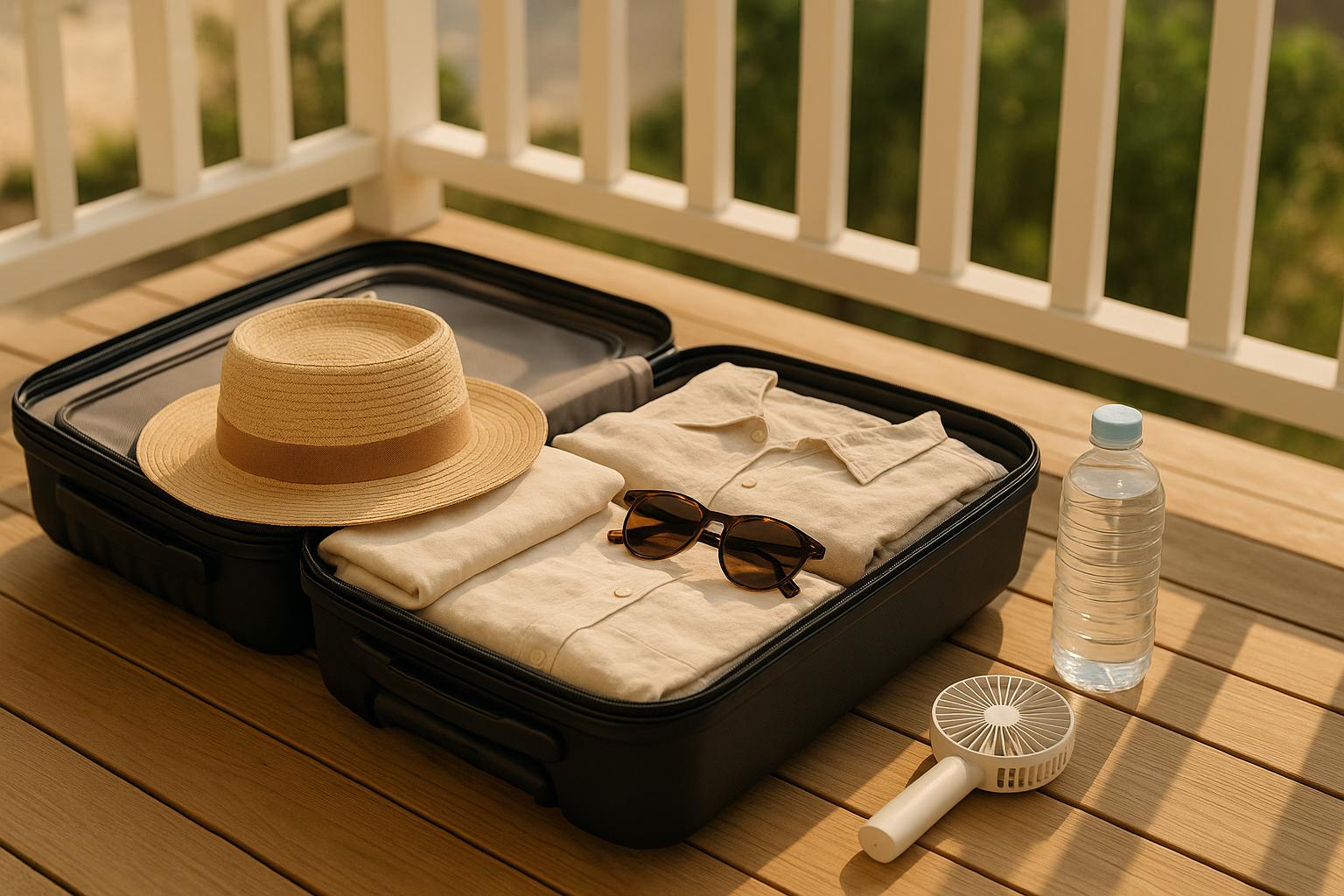
Accessorize smartly to stay safe. A wide-brimmed hat and UV-blocking sunglasses shield your face and eyes from the sun. Lightweight gloves are great for handling hot surfaces, like metal dollies that have been sitting in the sun.
Here’s a quick reference guide to help you gear up:
| Clothing Item | Recommended Features | Why It Matters |
|---|---|---|
| Shirts & Pants | Light-colored, loose-fitting, cotton or moisture-wicking fabric | Keeps you cool, promotes airflow, and aids sweat evaporation |
| Footwear | Closed-toe, supportive, breathable materials | Protects feet from injuries and hot surfaces |
| Accessories | Wide-brimmed hat, UV-blocking sunglasses, lightweight gloves | Shields you from sun exposure and hot equipment |
Don’t forget about sunscreen. According to the American Academy of Dermatology, you should use sunscreen with SPF 30 or higher on any exposed skin. Reapply every two hours, especially when sweating, to protect areas like your face, neck, and hands from harmful UV rays[1].
If you hire professional movers through ConsumersAdvisors.com, you’ll notice they stick to these same safety protocols. Their teams wear light, breathable clothing and use protective gear to tackle hot weather moves effectively.
Lastly, plan your moving outfit the night before. Include extras like a spare shirt and socks for quick changes during breaks. Having dry, fresh clothing ready can make a world of difference in staying comfortable throughout the day.
7. Use Sunscreen Throughout the Day
Sunscreen plays a crucial role in protecting your skin during a hot weather move. Moving day typically involves hours spent outdoors, hauling boxes and furniture under the blazing sun. Without proper sun protection, you could end up with painful sunburns or even long-term skin damage. Alarmingly, statistics show that one in five Americans will develop skin cancer by the age of 70, with over 5 million cases diagnosed annually in the U.S. alone [5].
To safeguard your skin, apply a broad-spectrum, water-resistant sunscreen with an SPF of 30 or higher to all exposed areas at least 15 minutes before heading outside. Be diligent about reapplying every two hours - or sooner if you're sweating heavily. Don’t forget areas that are easy to overlook, like your ears, the back of your neck, the tops of your feet, and the backs of your hands. A simple way to stay on track is by setting a timer on your phone, ensuring you stay protected throughout the day. This small step not only shields your skin but also helps you stay focused and productive during the various stages of your move.
Remember, even on cloudy days, up to 80% of UV rays can still reach your skin [5]. And if you’re spending time inside a moving truck, keep in mind that temperatures can climb above 120°F, further increasing the risk of sunburn. For those with sensitive skin, dermatologists often suggest mineral-based sunscreens containing zinc oxide or titanium dioxide, as they are less likely to cause irritation [7]. Choosing fragrance-free and hypoallergenic options can also help minimize the chances of skin reactions.
Professionals in the moving industry, like those working through ConsumersAdvisors.com, stress the importance of sun safety. Their teams incorporate sun protection into their heat-prevention strategies, especially during peak sunlight hours between 10 AM and 4 PM. Taking these precautions ensures a smoother, safer moving experience.
8. Label and Separate Delicate Items
When truck temperatures soar above 120°F, heat-sensitive items can suffer serious damage [5][8]. Properly labeling and separating these items is key to protecting them during hot weather moves. Electronics, artwork, medications, and glassware are especially vulnerable to issues like warping, melting, or even complete failure under extreme heat.
Clear labeling is a must. Use permanent markers and weather-resistant labels on all visible sides of boxes. Include instructions like "FRAGILE", "HEAT-SENSITIVE", "KEEP COOL," or "UNLOAD FIRST" [8]. For electronics, it’s helpful to specify the contents, such as "Laptop" or "Gaming Console."
A color-coding system can make identification even faster on moving day. For example:
- Use bright red tape for heat-sensitive electronics.
- Use yellow tape for fragile glassware.
- Use green tape for items that need to be unpacked immediately.
Once labeled, group similar items together to reduce handling risks and minimize exposure to heat. Pack electronics in dedicated boxes, keeping them separate from heavier items that could shift and cause damage. Medications, artwork, and important documents should also be packed in their own clearly marked containers.
If you’re hiring professionals, consider vetted moving companies through platforms like ConsumersAdvisors.com. Many offer full-service packing with expert labeling systems. Their teams are trained to recognize industry-standard labels and follow strict protocols for handling marked items during hot weather.
Finally, document everything. Take photos of labeled boxes and create an inventory list of all heat-sensitive items. Note the condition of valuables like electronics or artwork before packing, as extreme heat can cause damage that isn’t immediately visible. This step ensures accountability and provides a clear record in case of any issues during the move.
9. Set Up Shade and Cooling Areas
Creating shaded and cool areas can significantly reduce heat risks during moves, especially since the interior of moving trucks can reach temperatures above 120°F [5]. This step works hand-in-hand with earlier strategies for staying cool and hydrated.
A simple way to provide shade is by using pop-up canopies. Basic models start at around $50, while sturdier, larger versions can cost up to $200 [1]. For smaller moves, large umbrellas can also do the trick and are usually more budget-friendly. Set up these shade structures at both the starting point and the destination, focusing on areas like loading zones and packing spaces where the hardest work takes place.
To improve cooling in shaded spots, consider adding portable fans. Battery-operated or plug-in fans can circulate air and make the heat more bearable. These fans typically cost between $15 and $50, depending on their size and features [1]. Place them strategically near high-activity areas to provide relief where it’s needed most.
Stock your cooling stations with essentials like ice water, sports drinks, and cooling towels. These should be readily available during the hottest part of the day, typically between 12 and 4 PM [5]. Adding misting bottles to the mix can provide an extra layer of refreshment. Position these stations in easily accessible areas, such as near loading zones, so movers can quickly grab supplies during breaks. In cities like Phoenix, Arizona, where outdoor surfaces can heat up dangerously by mid-morning, setting up early is especially important [3].
For larger-scale moves, such as commercial relocations, you may need bigger canopies and more powerful fans. Professional moving companies, which you can compare on ConsumersAdvisors.com, often have robust safety measures for hot weather. These include mandatory cooling breaks and rotating tasks to prevent overexertion [3].
Finally, make sure to schedule regular breaks in shaded areas during peak heat hours. This helps prevent exhaustion and keeps energy levels steady throughout the move.
10. Work with Professional Moving Services
Hiring professional movers can be a game-changer when it comes to tackling a move in extreme heat. These experts bring the right equipment, methods, and experience to ensure your belongings - and the people handling them - stay safe despite the challenging conditions.
Specialized Equipment and Materials
Professional movers often use materials specifically designed to handle high temperatures, like heat-resistant wraps and insulated blankets. Many companies also offer climate-controlled trucks, which are essential for protecting items like electronics, artwork, and other temperature-sensitive belongings. If climate-controlled trucks aren’t an option, movers may provide expedited services or temporary climate-controlled storage to minimize heat exposure.
Proven Safety Protocols
Beyond safeguarding your belongings, professional movers prioritize the safety of their staff. Companies such as POG Moving & Helpers implement strict safety measures, including scheduled water breaks and task rotation, to prevent heat exhaustion during the move [3].
Strategic Scheduling and Planning
Timing is everything when moving in extreme heat, and professional movers are experts at planning around it. They often schedule moves during the cooler parts of the day, like early morning or late evening, to reduce heat-related risks. For long-distance moves, they monitor weather forecasts and adjust schedules to avoid peak temperatures. Once at the destination, they aim for quick unloading to limit your belongings’ exposure to the heat.
Service Options
Platforms like ConsumersAdvisors.com can help you find licensed movers who offer a range of services tailored for high-temperature moves. These include full-service packing, temporary climate-controlled storage, and expert advice on handling heat-sensitive items [2].
"Yes - most movers won't transport hazardous materials, perishable food, plants, pets, or high-value items like cash and jewelry. Always ask your mover for a full list so you can plan ahead." - ConsumersAdvisors.com [9]
Cost Considerations
Moving in the summer can be pricey, with long-distance moves ranging between $2,000 and $5,000. Adding climate-controlled or expedited options typically increases the cost by $300 to $800. While this might seem steep, investing in professional movers with heat-mitigation strategies can save you money in the long run by reducing the likelihood of damaged items [2][8].
ConsumersAdvisors.com simplifies the process by offering instant quotes and expert reviews, connecting you with movers who prioritize heat safety. This not only eases the burden of planning but also ensures your belongings - and the people helping you - are well-protected in extreme temperatures.
Conclusion
Moving during extreme heat requires careful planning and smart strategies to keep both you and your belongings safe. Temperatures inside moving trucks can soar to 120°F or more on scorching summer days, posing serious risks to electronics, sensitive items, and even your health [5]. Without proper precautions, the heat can cause irreversible damage.
Timing plays a critical role in managing heat. Starting your move early in the morning, between 7:00–10:00 AM, or later in the evening, after 5:00 PM, helps you avoid the most intense heat of the day. These cooler windows not only make the process more comfortable but also reduce the risk of heat-related damage.
The strategies outlined in this guide work together to create a solid plan for protecting your belongings and ensuring your safety. From packing heat-sensitive items with care to adjusting your schedule, these tips are key to a successful move. However, for an added layer of protection, professional movers can be a game-changer. Their expertise, along with specialized tools like climate-controlled trucks, helps safeguard your valuables while adhering to strict safety protocols.
If the challenges of moving in high temperatures feel overwhelming, platforms like ConsumersAdvisors.com can simplify your search for qualified movers. They connect you with experienced professionals who offer services like full-service packing, temporary climate-controlled storage, and expert coordination - essential for navigating extreme weather conditions.
FAQs
How can I protect my electronics during a move in hot weather?
To keep your electronics safe during a move in hot weather, start by using their original boxes with protective padding if you still have them. If not, opt for sturdy boxes and add plenty of cushioning, like bubble wrap or packing paper, to shield them from both heat and movement. Keep electronics out of direct sunlight and never leave them in a hot car for long periods. Instead, try to transport them in an air-conditioned vehicle whenever possible.
For devices that are especially sensitive to heat - like laptops, tablets, or gaming consoles - insulated containers or thermal wraps can help maintain a stable temperature. Clearly label these boxes with terms like "Fragile" or "Temperature Sensitive" to ensure they’re handled with care. If you're hiring professional movers, make sure to inform them about any special precautions needed for these items.
What’s the best way to protect perishables and heat-sensitive items during a summer move?
When you're moving during hot weather, keeping perishables and heat-sensitive items safe takes a bit of extra effort. Many moving companies won't handle perishable food, so it's a smart idea to check their restrictions ahead of time. For things like food or medications that need to stay cold, pack them in insulated coolers with ice packs and keep them out of the moving truck. Other items, such as electronics, candles, or artwork, are better off traveling in your air-conditioned car to avoid heat-related damage. With some thoughtful preparation, you can protect your belongings from the summer heat.
What advantages do professional movers offer for relocating in hot weather that might be hard to handle on your own?
When it comes to moving in hot weather, professional movers bring the know-how and tools to make the process safer and more manageable. They handle the heavy lifting, including packing, loading, and transporting items sensitive to heat, ensuring your belongings stay protected from the scorching temperatures.
They also use tailored materials and methods to keep fragile or perishable items safe - something that can be tricky to manage on your own. With their expertise and resources, movers can save you both time and energy, helping you avoid the extra strain that comes with moving in extreme heat.