Oct 22nd 2025

What To Do If Movers Hold Your Items Hostage
Imagine this: you hire a moving company, but on delivery day, they demand extra payments and refuse to release your belongings. This illegal practice, often called "holding items hostage", can leave you feeling trapped. Here’s what you need to know and do:
- Understand Your Rights: Movers can’t charge more than 110% of a non-binding estimate at delivery. Federal law protects you, and the FMCSA can fine movers up to $10,000 per violation.
- Review Your Contract: Check for unauthorized charges and ensure you’ve fulfilled your payment obligations. Movers must provide a booklet called Your Rights and Responsibilities When You Move.
- Gather Evidence: Collect contracts, bills of lading, payment receipts, and photos of your belongings. Documentation strengthens your case.
- Communicate with the Movers: Request a written explanation for delays or fees. If they refuse, document their responses.
- File Complaints: Report the issue to the FMCSA and your state’s consumer protection office. These agencies can investigate and enforce penalties.
- Consider Legal Action: If needed, use arbitration or small claims court to resolve disputes. For complex cases, consult a consumer rights attorney.
- Avoid Future Issues: Research movers, verify licenses, and read reviews. Use platforms like ConsumersAdvisors.com to compare reliable companies.
Taking these steps quickly can help you recover your belongings and hold rogue movers accountable.
‘Bamboozled’: State investigating after customers claim moving companies held belongings hostage
Know Your Rights and Check Your Moving Contract
After reading about some of the concerning tactics movers might use, the next step is clear: know your rights and carefully review your moving contract. If movers are withholding your belongings, it’s essential to understand the legal protections available to you. Federal regulations require moving companies to adhere to specific rules once you’ve fulfilled your end of the agreement, so being informed can make all the difference.
Check the "Rights and Responsibilities When You Move" Document
By federal law, every interstate moving company must provide you with a booklet called "Your Rights and Responsibilities When You Move" before moving day[3]. This booklet outlines your rights and explains how to handle claims if issues arise. If your mover skips this step, it’s a major red flag for potential fraud. Thankfully, you can also download this document for free from the FMCSA website[2]. Referring to its specific sections when filing complaints can help show that the mover has violated federal regulations.
Learn When Movers Can Legally Hold Your Items
Movers can only hold your belongings if you haven’t fulfilled your contractual obligations, such as paying valid charges on time[1]. For non-binding estimates, federal regulations cap delivery charges at 110% of the original estimate. On the other hand, with binding estimates, once you’ve paid the agreed amount, movers must release your items without adding surprise fees[9]. While movers may legally hold your items for up to 21 days in cases of genuine disputes[8], using unauthorized charges to withhold belongings is illegal and can result in civil penalties of at least $10,000 per violation[2]. Reviewing your contract immediately can help you identify any unauthorized charges and protect yourself from such tactics.
Spot Contract Violations and Fake Charges
Understanding the limits on legal charges is one thing, but spotting contract violations is just as important. Catching these issues early can strengthen your case against fraudulent movers. Some common warning signs include:
- Receiving a suspiciously low estimate without an in-home visual inspection.
- The company using a vague name like "Movers" instead of its full legal business name.
- Refusing to provide a written, itemized binding estimate that includes all services and charges.
If a broker gives you an estimate without the carrier’s agreement, this can also lead to penalties of at least $10,000 per violation. To protect yourself, keep copies of all paperwork, save communication records, and never sign blank or incomplete forms. If a mover tries to rush you into signing without enough time to review the terms, consider this a serious warning sign. Keeping track of these discrepancies can significantly strengthen your case if you need to dispute illegal charges.
"A binding estimate locks in your price based on the estimated weight and services. A non-binding estimate can change if your actual load is heavier or takes more time."[7]
Collect Evidence and Try to Resolve with the Moving Company
Once you’ve reviewed your contract for potential violations, the next step is to gather proof and address your concerns directly with the moving company. A well-documented case can be a game-changer if you need to escalate the issue later. Most disputes can be resolved through clear communication and solid evidence. Armed with a clear understanding of your rights, start collecting the necessary documentation to support your claims.
Collect All Important Documents and Proof
To strengthen your case, gather every relevant document as quickly as possible. These records will show that you’ve upheld your end of the agreement. Key items to include are:
- The signed contract: This outlines the terms and conditions of your agreement.
- Bill of lading: A critical document that serves as a receipt and details the shipment.
- Payment receipts: Proof of what you’ve already paid.
- Written estimates and inventory lists: These help confirm what was agreed upon before the move.
Additionally, take photos of your belongings before the move and document any damage that occurs during delivery. For high-value items or sealed boxes, note serial numbers and create detailed inventory lists. Visual and written evidence like this is essential if you need to lodge a complaint or take legal action.
Don’t forget to include other supporting documents, such as weight or scale tickets, receipts for extra services, or any addenda to the original contract. These details can help determine whether additional charges are legitimate or not.
Ask for a Written Explanation from the Movers
If the moving company is withholding your belongings, demand a written explanation. Ask them to outline the reasons for the delay, reference specific contract clauses that justify their actions, and provide documentation for any extra charges. Always insist on getting this explanation in writing.
When making your request, be specific. For instance, if they claim your shipment weighs more than estimated, ask to see the reweigh tickets. If they’re charging storage fees, request proof that these charges are stated in your original contract. This forces the company to either justify their actions with proper documentation or expose unauthorized charges.
Carefully review their written response for inconsistencies, invalid fees, or outright contract violations. Use it as leverage during negotiations. If their reasoning doesn’t align with your contract or federal regulations, such as the 110% cap for non-binding estimates, remind them of your rights. Let them know you’re prepared to escalate the issue to the Federal Motor Carrier Safety Administration (FMCSA) or your state’s consumer protection office if the matter isn’t resolved quickly.
Stay calm but firm in all communications. Keep a record of every interaction and present your case objectively. If the movers refuse to cooperate or behave aggressively, let them know you’re documenting the conversation and will report their actions to the appropriate authorities. Even a refusal to provide a written explanation can serve as crucial evidence if you need to file complaints with the FMCSA or your state’s consumer protection office. If their response doesn’t validate their claims, be ready to take the dispute to the next level.
File Complaints with Government Agencies
If talking directly with the moving company doesn’t fix the problem, it’s time to take things up a notch by involving the right government agencies. These organizations have the power to investigate your complaint, demand the release of your belongings, and even penalize movers who break the rules. Filing complaints at both the federal and state levels can increase pressure on the company and improve your chances of a quicker resolution.
Government agencies see hostage situations as serious violations of consumer protection laws. When you file a complaint, it becomes part of the mover’s public record, potentially triggering investigations and enforcement actions. These agencies can do what individuals can’t - they can suspend licenses, issue hefty fines, and force companies to comply with the law. Once you’ve gathered all your evidence, taking your case to these agencies is a logical next step.
File a Complaint with the Federal Motor Carrier Safety Administration (FMCSA)
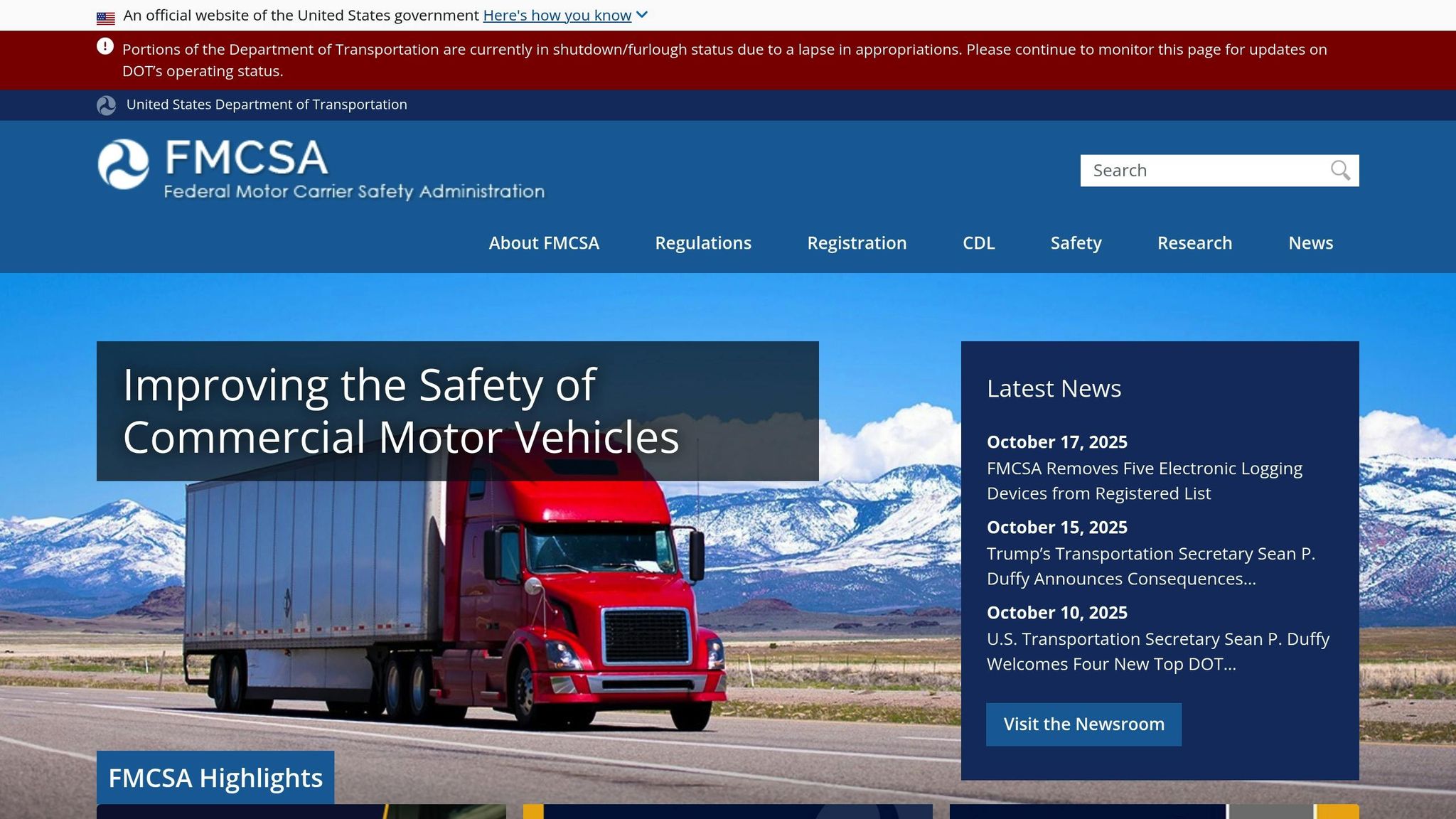
For moves that cross state lines, the FMCSA is your go-to agency. This federal organization oversees interstate moving companies and has the authority to investigate cases where movers are holding belongings hostage. They can order your items returned and impose civil penalties of at least $10,000 per violation against the offending company [2].
To file your complaint, use the FMCSA's online National Consumer Complaint Database. If you prefer speaking to someone, you can also file by phone. However, the online system often processes cases faster and keeps better records of your complaint [10].
Before submitting your complaint, gather all necessary documentation. You’ll need the mover’s USDOT number, which should be on your contract and bill of lading. This number is key because it identifies the company and helps the FMCSA track their compliance history. Include as much detail as possible - contracts, estimates, correspondence, and any other relevant documents. A detailed complaint strengthens your case.
Be specific about what went wrong. For example, if the mover is violating the 110% rule for non-binding estimates, make that clear. For interstate moves, movers can’t demand payment exceeding 110% of the original estimate at the time of delivery to release your goods [3]. Any extra charges can be billed later, but your belongings must be delivered once you pay the 110%.
The FMCSA has serious enforcement tools. They can suspend a mover’s operating authority for up to 36 months, essentially shutting down their interstate operations. In some cases, consumers affected by violations may even receive a share of the fines collected [2]. Your complaint also becomes part of the public record, helping other consumers navigate similar situations.
Contact Your State Consumer Protection Office
If the FMCSA doesn’t resolve your issue, or if your move was within a single state, reach out to your state’s consumer protection office. Even for interstate moves, filing a state-level complaint adds another layer of accountability. State agencies often act faster than federal regulators and may have more experience dealing with local movers [3].
State consumer protection offices have different tools than federal agencies. They can investigate complaints, mediate disputes, and enforce penalties against moving companies. Some states even have stricter moving regulations than federal standards, offering additional safeguards. These agencies also tend to be more familiar with local movers and may have handled issues with your specific company before.
You can contact your state consumer protection office through their website or hotline. When filing your complaint, include the same documentation you used for the FMCSA. State agencies often provide updates and guidance throughout the process, making it easier to track your case.
Many states also offer mediation services, which can help resolve disputes without escalating to formal enforcement. Mediation is often quicker and less confrontational. However, if mediation doesn’t work, state agencies can take stronger actions like imposing fines, revoking licenses, or even involving law enforcement.
Filing complaints with both federal and state agencies maximizes the pressure on the moving company. It also ensures that if one agency can’t help, the other might step in. Keep detailed records of all interactions, including complaint numbers and updates, to stay organized throughout the process.
sbb-itb-be87134
Take Legal Action or Use Arbitration
If government agencies don't resolve the issue and the mover continues to withhold your belongings, it's time to consider legal action. You have two main options: arbitration or court proceedings. The best choice depends on your contract, the amount you're claiming, and the complexity of your case. Both paths can compel the mover to release your items and potentially compensate you for damages, but they operate differently and come with their own benefits.
For interstate moves, movers are required to offer arbitration as a way to settle disputes without going to court. If your contract includes an arbitration clause, you may need to go through this process before exploring other legal options. Carefully review your agreement to determine the route you must take. These legal options are designed to help you enforce your rights and move forward.
Choose Between Small Claims Court and Arbitration
Small claims court and arbitration are two distinct ways to resolve disputes, each suited to different scenarios.
Small claims court is a public forum where you present your case directly to a judge, often without needing an attorney. Filing fees range from $30 to $100, depending on your state and the claim amount. The process typically takes about 2-3 months from start to finish, and the court's decision is legally binding. Most states set limits for small claims cases between $5,000 and $10,000, though states like California allow individuals to claim up to $12,500.
This option works well if you have clear evidence of contract violations, such as a mover demanding more than 110% of the original estimate and refusing delivery. It's a straightforward process where you can present your documentation directly to a judge familiar with consumer protection laws.
Arbitration, on the other hand, is a private process where a neutral arbitrator makes the final decision. For interstate moves, arbitration is mandatory for claims up to $10,000, meaning movers can't refuse to participate. For claims above $10,000, movers may decline arbitration, leaving court as your only option. Arbitration is generally faster, often resolving disputes within 30-60 days, but it can involve higher upfront costs, as you may need to share arbitration fees with the mover.
Unlike court, arbitration decisions are final and offer limited opportunities for appeal. This process is often more flexible, and arbitrators are usually experienced in handling moving-related disputes. Costs are typically split between you and the mover, though the arbitrator might adjust this based on the case outcome.
| Option | Cost | Time Frame | Claim Limits | Best For |
|---|---|---|---|---|
| Small Claims Court | $30-$100 filing fee | 2-3 months | $5,000-$12,500 (varies by state) | Clear contract violations, lower-value claims |
| Arbitration | Split arbitration fees | 30-60 days | Mandatory up to $10,000 | Required by contract, faster resolution needed |
To initiate either process, you'll need to organize your documentation. This includes any evidence of contract breaches, such as violations of the 110% rule.
For small claims court, you'll need to serve legal papers to the mover's process agent in your state. The FMCSA (Federal Motor Carrier Safety Administration) offers an online tool to locate these agents. For arbitration, send a written request referencing the arbitration clause in your contract or the federal requirement for interstate moves. Choose the option that aligns with your contract terms and the value of your claim to move things along efficiently.
Hire a Consumer Rights Attorney for Complex Cases
If the situation becomes too complicated or exceeds the limits of small claims court, you might need to bring in a professional. There are several scenarios where hiring an attorney is the smartest move.
When to consider hiring an attorney:
- If your claim exceeds small claims court limits (typically over $10,000).
- If the case involves intricate FMCSA regulations.
- If the moving company has disappeared or filed for bankruptcy.
- If fraud or other criminal elements are involved.
- If your documentation is incomplete or the mover remains unresponsive.
Attorneys usually charge in one of three ways: contingency fees (25-40% of the recovery), hourly rates ($150-$400 per hour), or flat fees ($500-$1,500). Many offer free initial consultations to assess your case before you commit to hiring them.
An experienced attorney can use federal penalties to strengthen your position. For example, the FMCSA can impose fines of up to $10,000 per day on movers who illegally hold belongings hostage. This kind of pressure often pushes movers to settle rather than face escalating fines. Attorneys are also familiar with state-specific laws, such as Arizona's A.R.S. §§ 44-1611 to 44-1616, which provide additional protections beyond federal regulations.
Hiring an attorney increases your chances of success, especially if your belongings are worth more than $15,000, the case involves complex interstate commerce laws, or the moving company is actively avoiding contact. Attorneys can also work with law enforcement if criminal activity is suspected, potentially turning a civil dispute into a criminal case.
If your case involves multiple violations - such as exceeding the 110% rule, failing to provide federally required documentation, and holding goods without justification - an attorney can build a comprehensive case addressing all these issues. This approach often leads to higher settlements and ensures the moving company faces appropriate consequences.
Before reaching out to an attorney, gather all your documentation and prepare a clear timeline of events. The stronger your initial evidence, the more likely an attorney will agree to take your case on contingency, saving you from upfront costs.
Avoid Future Problems: How to Pick Reliable Movers
Avoiding a moving nightmare starts with choosing the right company. Each year, over 4,000 complaints are filed against movers for issues like lost or damaged items, as well as demands for extra payments. Rogue movers often lure customers with low estimates, only to inflate fees later and hold belongings hostage until payment is made[5]. Here's how to verify credentials and protect your belongings before signing any contracts.
Check Moving Company Licenses and Credentials
Make sure your mover is licensed and insured - this is non-negotiable. For interstate moves, check the company’s registration with the Federal Motor Carrier Safety Administration (FMCSA) using their USDOT number. The FMCSA database provides details like insurance status, physical business addresses, and compliance history[1][2].
For local moves under 50 miles, verify licenses with your state’s consumer protection office or public utilities commission[3]. Although same-day deliveries in local moves reduce the risk of hostage situations, proper licensing is still critical.
Be wary of red flags, such as movers who refuse to provide their USDOT number, lack a physical address, or won’t show proof of insurance. Also, avoid companies with generic names like "Moving Company" or those that don’t answer the phone with their full business name - these are common scam tactics.
To dig deeper, research the company’s reputation on trusted review platforms like the Better Business Bureau (BBB), Yelp, and Google[2][3]. Check for unresolved complaints or enforcement actions with the FMCSA and your state’s consumer protection office. The FMCSA’s National Consumer Complaint Database tracks issues and can trigger federal investigations into shady operators[5].
Legitimate movers won’t demand large upfront deposits or insist on cash-only payments. Most reputable companies require a small deposit and accept various payment methods.
Use Comparison Platforms Like ConsumersAdvisors.com

Comparison platforms can simplify your search for trustworthy movers. After confirming basic credentials, websites like ConsumersAdvisors.com let you compare long-distance moving companies by providing instant quotes, expert reviews, and detailed information about licensed movers.
The platform evaluates movers based on factors like Transparent Pricing, Reputation & Reliability, Safety & Security, and more. This structured approach helps you avoid scams and identify reliable companies.
ConsumersAdvisors.com also distinguishes between direct moving companies (van lines) - which own their trucks and crews - and moving brokers, who coordinate moves through third-party carriers. Understanding this difference is key. Van lines handle everything with their own staff and equipment, while brokers rely on external carriers, which can complicate accountability.
With the Consumer Advisors Guarantee, the platform ensures movers have valid insurance, legal USDOT authority, and privacy protections. According to the site, 85% of users choose the top-ranked mover, often saving up to 33% compared to average costs[7].
Once you’ve received quotes, call the movers directly. Confirm availability, request personalized estimates, and discuss additional services like packing or storage. Also, clarify whether the estimate is binding or non-binding to avoid surprises later.
Create an Inventory List and Understand Coverage Options
A detailed inventory list is your best defense against disputes and missing items. Document everything with a written list and photographs, especially fragile or high-value items[3]. This record is critical for insurance claims and ensuring all your belongings arrive safely.
Go room by room when compiling your list, paying extra attention to valuables like electronics, artwork, and antiques. Take photos from multiple angles and note any existing damage - this can help if movers claim pre-existing issues or if items go missing.
Know your coverage options to protect against loss or damage. Federal law requires interstate movers to offer two types of valuation coverage: Released Value Protection (minimal coverage, typically $0.60 per pound per item) and Full Value Protection (which provides repair, replacement, or cash settlement)[3]. Review your contract carefully and consider purchasing extra insurance for high-value items.
Request a copy of the mover’s insurance certificate and verify that it covers loss, damage, and liability during transit. Check coverage limits and exclusions, and explore supplemental insurance if needed.
Don’t skip reading the "Rights and Responsibilities When You Move" booklet, which movers must provide for interstate moves[5]. This document outlines your rights and the mover’s obligations, including when they can legally hold your belongings and what constitutes a breach of contract.
Get multiple written estimates and never sign blank or incomplete documents. Keep all paperwork - contracts, estimates, inventory lists, and receipts - organized. These documents can serve as crucial evidence if disputes arise.
Finally, remember that all interstate movers must participate in an FMCSA arbitration program for claims up to $10,000. Familiarizing yourself with this process can help you resolve issues if they occur[6]. Choosing a reliable mover upfront is the best way to secure your rights and avoid future problems.
Conclusion: Protect Your Rights and Plan Better Moves
If movers are holding your belongings hostage, take immediate action. Start by carefully reviewing your contract, documenting everything, and filing complaints with the FMCSA (Federal Motor Carrier Safety Administration) and your state's regulatory agencies. The FMCSA's 110% rule ensures that movers can't charge you more than 110% of a non-binding estimate at the time of delivery, offering a layer of protection against excessive fees[3][4].
Keep a detailed record of all communications, contracts, and evidence related to your belongings. Many people who've successfully resolved such disputes stress that meticulous documentation and persistence are key. These records not only strengthen your case when filing complaints or disputing charges with your credit card company but also help you make better choices when hiring movers in the future.
Once you've resolved the situation, focus on preventing similar issues down the road. Research thoroughly and select a reputable moving company. Platforms like ConsumersAdvisors.com can help you compare licensed movers and read expert reviews to make an informed decision.
To avoid future problems, create detailed inventory lists, verify the company's licenses and insurance, and understand your coverage before signing anything. Never sign blank documents or work with movers who won't provide their USDOT number or proof of insurance. These simple precautions, paired with thorough research, can save you from the nightmare of having your belongings held hostage.
If you find yourself in this unfortunate situation, stay calm and follow the proper steps. Escalate to law enforcement if necessary, as federal laws are in place to protect your rights. Regulatory agencies have the authority to intervene when movers operate outside legal boundaries.
FAQs
What should I do if movers demand extra payment to release my belongings?
If movers are refusing to release your belongings unless you pay extra fees, the first thing you should do is review your contract. Look to see if you have a binding estimate, which locks in the cost based on the agreed weight and services. On the other hand, if you were provided a non-binding estimate, the price could legally increase if the shipment is heavier or if additional services were needed.
If you believe the movers are breaking the law or holding your items hostage, take action immediately. Reach out to the Federal Motor Carrier Safety Administration (FMCSA) to file a formal complaint. You can also contact local law enforcement or consult an attorney for help. Be sure to keep all related documents, like your contract, receipts, and any communication with the movers, as these will be crucial to building your case.
How can I make sure a moving company is licensed and reliable before hiring them?
To make sure you're working with a licensed and trustworthy moving company, start by checking their credentials with the U.S. Department of Transportation (USDOT). Long-distance moving companies are typically required to have a USDOT number. You can easily verify this number on the Federal Motor Carrier Safety Administration (FMCSA) website. It's also a good idea to read customer reviews to get a sense of the company’s professionalism and reliability.
For an easier way to compare options, platforms like ConsumersAdvisors.com can be incredibly helpful. They let you evaluate licensed movers, access expert advice, and get instant quotes - all in one place - making it simpler to find a reliable company for your move.
What can I do if government complaints don’t resolve the issue of movers holding my belongings hostage?
If reaching out to government agencies doesn’t lead to a solution, it might be time to consider legal action. Your first step should be consulting an attorney who focuses on moving disputes or consumer protection laws. They can help you understand your rights and determine the best way forward, whether that involves negotiating with the moving company or filing a lawsuit.
You should also report the issue to the Federal Motor Carrier Safety Administration (FMCSA), if you haven’t done so already. The FMCSA oversees interstate movers and could step in if illegal practices are involved. While pursuing legal action can take time and effort, it might be the only way to recover your belongings and ensure the moving company is held accountable for their actions.