Oct 30th 2025
Ultimate Guide to FMCSA's 'Ready to Move' Brochure
The FMCSA's 'Ready to Move' brochure is a federally required guide designed to protect consumers during interstate moves. It explains your rights, responsibilities, and how to avoid scams. Movers must provide this document before transporting your belongings, ensuring you're informed about key aspects like written estimates, liability coverage, and dispute resolution options. Here's what you need to know:
- Why It Matters: Over 35 million Americans move annually, and complaints about fraud, damaged goods, or unexpected fees are common. This brochure helps you avoid these pitfalls.
- Key Protections: Federal law ensures written estimates, liability coverage options, and access to dispute resolution programs.
- Your Role: Verify movers' credentials, read all documents carefully, and stay involved during the move.
- Common Scams: Watch for lowball quotes, unmarked trucks, and pressure tactics.
For a smooth move, use FMCSA tools like ProtectYourMove.gov to research movers and follow the brochure's checklists for each phase of the process.
Your Rights and Responsibilities as a Consumer
Understanding your legal protections and obligations during an interstate move is essential to avoid disputes and ensure a smooth experience. These rights and responsibilities form the backbone of a safe and hassle-free move.
Your Rights During an Interstate Move
When moving across state lines, federal law provides several key protections to safeguard your interests. For starters, movers are legally required to give you written estimates that clearly outline all charges for their services. This step helps you avoid unexpected costs down the road [3].
Movers must also offer liability coverage. You can choose between two options:
- Released Value Protection: Covers items at $0.60 per pound per item at no additional cost.
- Full Value Protection: Covers repair, replacement, or compensation for lost or damaged items, but comes with an added fee [1].
Additionally, movers must provide you with essential documents, including federally mandated brochures that explain your legal protections [3].
If issues arise during your move, you have the right to access dispute resolution programs. For example, if items go missing, document the problem on the inventory list, keep all paperwork, and file a claim with the mover. If the issue isn’t resolved, you can contact the FMCSA for assistance in securing compensation [4].
Movers are also required to provide clear procedures for handling complaints and must give you a contact number for addressing any questions or concerns [4].
Your Responsibilities as a Consumer
While your rights are there to protect you, your responsibilities play a critical role in ensuring everything goes smoothly.
Start by verifying your mover’s credentials. Check their USDOT number and confirm they have proper insurance at www.protectyourmove.gov [3].
Make it a priority to thoroughly read and understand all documents before signing. This includes the written estimate, order for service, bill of lading, and inventory list - these documents are your legal safety net [3].
Be present during both pickup and delivery. Carefully inspect your items and note any damages or missing items on the inventory list before signing. This step is crucial if you need to file a claim later [5].
Plan ahead for items that movers typically won’t transport, such as hazardous materials, perishables, plants, pets, or high-value items. Make alternative arrangements for these [7].
Understanding the difference between binding and non-binding estimates is another key responsibility. A binding estimate locks in your price based on the estimated weight and services, while a non-binding estimate can change if your actual load is heavier or takes longer than expected [7].
| Coverage Type | What It Covers | Typical Cost to Consumer |
|---|---|---|
| Released Value | $0.60 per pound per item | Included in move (no extra fee) |
| Full Value Protection | Repair, replace, or pay for lost/damaged items | Additional fee (varies by mover) |
Don’t forget to submit your change of address at least a week before moving to avoid mail delays [7].
Lastly, keep all moving documents - such as the bill of lading, inventory lists, and other paperwork - until any claims are fully resolved. These records will be essential if any disputes arise [5]. A little organization can go a long way in protecting your interests.
Moving Checklist for a Stress-Free Experience
The FMCSA has created a moving checklist that divides the process into three clear phases. Each phase includes specific tasks to help you stay organized, avoid potential pitfalls, and protect your interests throughout the move. By following this guide, you can make the experience far less stressful.
Before the Move
Preparation is key to avoiding unexpected costs and potential scams. Start by researching moving companies early. Use ProtectYourMove.gov to verify their credentials - this step is crucial to protect yourself from fraud [6].
Get at least three written estimates. Interstate moves generally cost between $2,000 and $5,000, but prices vary depending on your specific needs [2]. When comparing estimates, pay attention to the services included, not just the total price.
Make a detailed inventory of your belongings, noting their condition and value. Take photos or videos of high-value items like electronics, artwork, or antiques. This documentation will be invaluable if you need to file a claim later [1][2].
Check the company's reputation through the Better Business Bureau and ask for recommendations from friends or family [8][5]. Read all the documents provided by the mover, including federally required brochures that explain your rights [3].
Plan ahead for items movers won’t transport. Hazardous materials, perishable food, plants, pets, cash, and jewelry are usually off-limits. Ask your mover for a list of restricted items so you can make other arrangements [7].
Don’t forget to submit your change of address with USPS at least a week before your move. This ensures your mail gets forwarded without delays [7].
For quick comparisons and expert reviews, check out consumersAdvisors.com.
On Moving Day
With your preparation complete, your role on moving day is all about oversight. Stay present throughout the process. Supervise the loading, answer any questions, and provide clear instructions to the movers [5]. Use your checklist to stay organized and communicate directly with the crew [1][4].
Before loading begins, confirm the inventory list with the crew leader. As items are loaded onto the truck, check them off your list and note any pre-existing damage. This step can help you avoid disputes later.
Carefully review all paperwork before signing. Pay close attention to the bill of lading - it acts as your contract and receipt. Double-check that all details, like pickup and delivery addresses and agreed-upon services, are accurate. Keep copies of these documents with you, not packed away in boxes [1][5].
Label your boxes clearly, and keep important items - like passports, birth certificates, insurance documents, and medications - with you at all times [1][4].
Before the truck leaves, do a final walkthrough of your home. Check every room, closet, cabinet, and storage area to make sure nothing gets left behind. Once the truck departs, retrieving forgotten items can be both difficult and expensive [5].
After Delivery
Once your belongings arrive, it’s time to verify everything. Supervise the unloading process and check each item against your inventory list as it comes off the truck. If anything is missing or damaged, document it immediately. Make notes on the inventory list, take photos of any damage, and notify the mover in writing as soon as possible - ideally on the same day [5].
When it comes to payment, follow the type of estimate you agreed to. Binding estimates mean you’ll pay the exact amount quoted, while non-binding estimates may vary based on the actual weight of your shipment or additional services [7].
Keep all moving documents until any claims are fully resolved [5]. These papers are your legal safeguard in case of disputes. If you need to file a claim, the FMCSA provides clear guidance on the process and timelines through their resources at ProtectYourMove.gov [1][5]. If your mover doesn’t handle your claim properly, you can reach out to the FMCSA for assistance.
How to Choose a Registered and Reliable Mover
Picking the right moving company can be the difference between a smooth move and a logistical nightmare. The FMCSA's "Ready to Move" brochure is a great resource for avoiding scams, which collectively cost consumers millions each year [6]. Below, we’ll break down how to spot red flags and find a mover you can trust.
Verifying FMCSA Registration
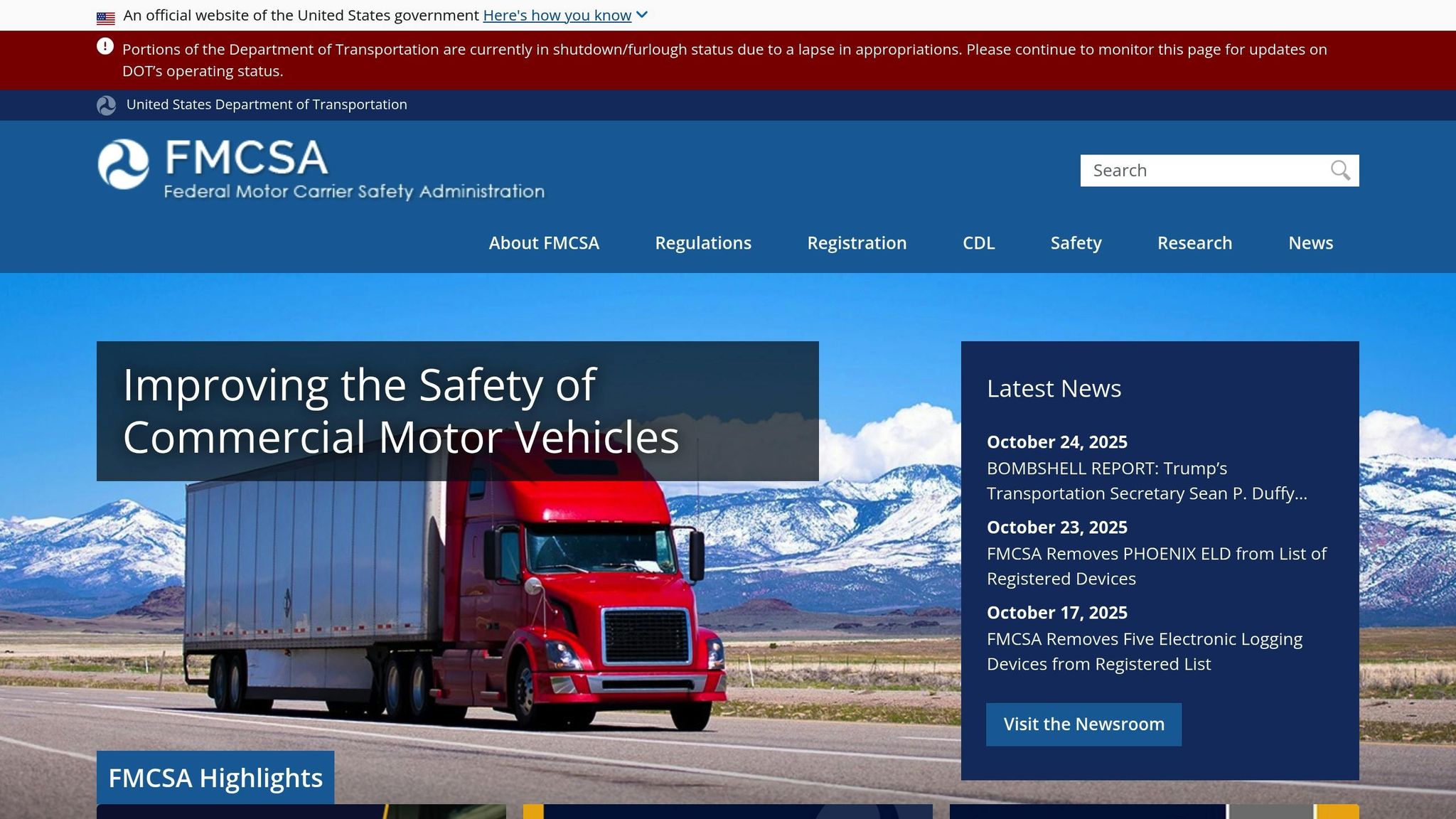
For interstate moves, every legitimate company must have a U.S. Department of Transportation (USDOT) number and be registered with the FMCSA. You can verify this information on the FMCSA website at www.protectyourmove.gov. This tool provides details like registration status, insurance coverage, and a company’s complaint history.
Double-checking USDOT numbers on the FMCSA site is essential to avoid fraudulent operators. Beyond this, you can use other sources to confirm a mover’s legitimacy for added peace of mind.
Red Flags to Watch for
Understanding your rights is crucial, but recognizing warning signs can save you from becoming one of the thousands of victims filing moving fraud complaints each year [6]. Common scams include holding your belongings hostage for extra fees, damaging or losing items, and inflating charges.
Here’s what to watch out for:
- No written estimates: Avoid movers who refuse to provide detailed, written quotes. Vague verbal estimates often lead to surprise fees later.
- Suspiciously low quotes: If an estimate seems too good to be true, it probably is. These often result in unexpected additional charges.
- No physical location: Companies without a listed address may be hiding their operations. Always verify their location and credentials.
- Large upfront cash payments: Reputable movers typically ask for a small deposit or payment upon delivery. Demands for large cash payments upfront could be a red flag.
- Unmarked trucks: Legitimate companies use branded vehicles. Unmarked trucks can indicate a lack of professionalism or legitimacy.
- Pressure tactics: If a company pushes you to sign incomplete or blank documents or rushes you into making decisions, proceed with caution.
- Sparse or negative reviews: Lack of online reviews - or overwhelmingly poor ones - should raise concerns.
- Broker scams: Some unlicensed brokers collect deposits and either disappear or pass your job to unqualified carriers. Always confirm whether you’re dealing directly with a moving company or a broker.
Using consumersAdvisors.com for Mover Comparison

Once you’ve verified credentials and ruled out questionable companies, it’s time to compare options. ConsumersAdvisors.com offers a reliable platform for evaluating licensed long-distance movers while steering clear of scams. The site ensures that listed movers meet strict standards, including having proper insurance and valid USDOT registration [7].
Each mover’s USDOT number is prominently displayed, making verification straightforward. The platform also uses AI to assess movers based on factors like Transparent Pricing, Reputation & Reliability, Customer Reviews, Tracking & Transparency, Support Services, and Safety Measures.
sbb-itb-be87134
Moving Estimates and Insurance Options Explained
Choosing a registered mover is just the first step. To ensure a smooth interstate move, it's essential to understand your estimate and insurance options. These details not only protect your budget but also safeguard your belongings. Federal law mandates movers to offer specific types of estimates and valuation coverage, and the choice you make can greatly influence your overall costs and peace of mind. Here's a breakdown of these options.
Binding vs. Non-Binding Estimates
When working with interstate movers, you'll encounter two types of estimates: binding and non-binding. Each comes with its own level of cost predictability and flexibility, so it's important to know the difference[3][5].
A binding estimate locks in the total cost of your move based on the items and services listed in your agreement. Even if the actual weight of your belongings changes, you'll pay the agreed-upon amount. This makes budgeting much easier, but keep in mind that adding extra services will result in additional charges[3][5].
On the other hand, a non-binding estimate provides a cost based on the assessed weight of your items and the services required. The final cost can go up or down depending on the actual weight and services provided on moving day. While this option offers flexibility, it can also lead to surprise expenses, which might disrupt your budget[3][5].
| Estimate Type | Cost Predictability | Final Cost Changes? | Best For |
|---|---|---|---|
| Binding | High | No (unless adding services) | Budget-conscious moves |
| Non-Binding | Low | Yes (based on actual weight) | Flexible, variable moves |
Make sure your estimate is clearly documented as either binding or non-binding. The written agreement should detail all charges, specify the estimate type, list included services, and outline any potential additional fees[3][5].
Valuation Coverage Options
Once you've sorted out your estimate, the next step is understanding your coverage options. Federal law requires movers to offer two types of valuation coverage: Full Value Protection and Released Value Protection. These options determine how much you'll be compensated if your belongings are lost or damaged during the move[1][2].
Full Value Protection ensures the mover is responsible for repairing or replacing damaged items at their current market value, subject to certain limits. This option offers comprehensive coverage, but it comes at a cost - typically around 1% of your shipment's declared value, though prices vary among movers[1][2]. For example, if an item is damaged, the mover must either repair it, replace it with a similar item, or reimburse you for its market value.
Released Value Protection, on the other hand, is a no-cost option but offers minimal coverage. It compensates you at a rate of just $0.60 per pound per item, regardless of the item's actual value. For instance, if a 50-pound TV worth $1,000 is lost, you’d only receive $30 (50 lbs × $0.60)[1][2].
The gap in reimbursement between these two options is significant. While Full Value Protection would ensure your $1,000 TV is replaced or fully reimbursed, Released Value leaves you far short of the item's actual worth.
Movers are required to explain both options before your move and allow you to choose your preferred coverage. You'll need to sign a statement confirming your selection, so take the time to evaluate the value of your belongings and the potential financial risks of loss or damage[1][2].
If you're comparing movers through platforms like ConsumersAdvisors.com, you can see how different companies handle valuation coverage and pricing. Their AI tools assess factors like Transparent Pricing and Support Services, making it easier to find movers who clearly explain coverage options without hidden fees.
Key Takeaways for a Safe Move
Reviewing the FMCSA's "Ready to Move" brochure can help you prepare for a smooth and secure interstate move.
Know your rights. Federal law requires movers to provide the "Ready to Move" brochure and a booklet outlining your rights before you sign any contracts. If a mover refuses, it could be a red flag for potential fraud[3][4].
Check credentials carefully. Legitimate interstate movers must have a valid U.S. DOT number and be registered with the FMCSA. You can verify this information at www.protectyourmove.gov[3]. This step ensures you're not dealing with unlicensed operators.
Keep thorough records. Hold onto your bill of lading until all claims are resolved[8][5]. On delivery day, inspect your items and note any damages or missing belongings on the inventory list before signing any documents. Once you sign, filing claims becomes much harder[5]. Proper documentation is key to protecting your interests.
Be involved at every stage. Stay present during pickup, transit, and delivery. Verify the inventory and document any damages before signing off[5]. Your active participation helps maintain accountability throughout the process.
If problems arise, contact the FMCSA for assistance. For licensing issues, call (202) 366-9805, and for insurance-related questions, dial (202) 385-2423[3]. If you have disputes about transportation charges, the Surface Transportation Board can help at 1-866-254-1792[8]. Additionally, the Better Business Bureau is a resource for addressing company reputation concerns[8].
For added peace of mind, use ConsumersAdvisors.com to compare verified, licensed movers based on clear pricing, reviews, and customer support. Following these steps, as outlined by the FMCSA, will help ensure your move is safe and compliant.
FAQs
What warning signs should I look for to avoid moving company scams?
To steer clear of moving company scams, keep an eye out for these red flags:
- Suspiciously low quotes: If a price seems unrealistically low, it’s likely a trap. Scammers often bait customers with cheap rates, only to pile on hidden fees later.
- No written estimate: Trustworthy movers will always provide a written estimate. If a company insists on verbal quotes only, consider it a warning sign.
- Missing physical address or license details: Verify that the company has a proper address and is registered with the FMCSA. Check their USDOT number to confirm their legitimacy.
- Requesting large upfront payments: Be wary if a mover demands a hefty deposit or full payment before doing the job.
Take the time to research thoroughly, read customer reviews, and confirm that the company provides a clear list of items they won’t transport. These typically include hazardous materials, perishable foods, plants, pets, or valuable belongings. A little diligence can save you from unnecessary headaches and ensure your possessions are in safe hands.
How can I make sure my moving estimate is accurate and binding, and why should I choose a binding estimate?
When planning your move, consider requesting a binding estimate. This type of estimate locks in the price based on the anticipated weight of your items and the specific services you require. Unlike a non-binding estimate, the cost won’t fluctuate - even if your belongings weigh more or the move takes longer than expected.
Opting for a binding estimate helps you avoid surprise expenses. It also makes budgeting easier since you’ll know the exact cost upfront, giving you one less thing to worry about during the moving process.
What should I do if I have a problem or dispute with my moving company during or after my move?
If you run into a problem or disagreement with your moving company, the first step is to review your contract and any documents they provided. For example, check the FMCSA's Ready to Move brochure, which explains your rights and responsibilities. This can give you a clearer idea of how to handle typical moving issues.
After that, reach out to the moving company directly. Contact their customer service or claims department to try and resolve the issue. If they’re unresponsive or the problem continues, you have other options. You can file a complaint with the Federal Motor Carrier Safety Administration (FMCSA) or get in touch with legal or consumer protection groups for help. Be sure to keep records of all communication, along with copies of receipts, contracts, and any other important documents. These could be crucial if further action is needed.