Sep 24th 2025
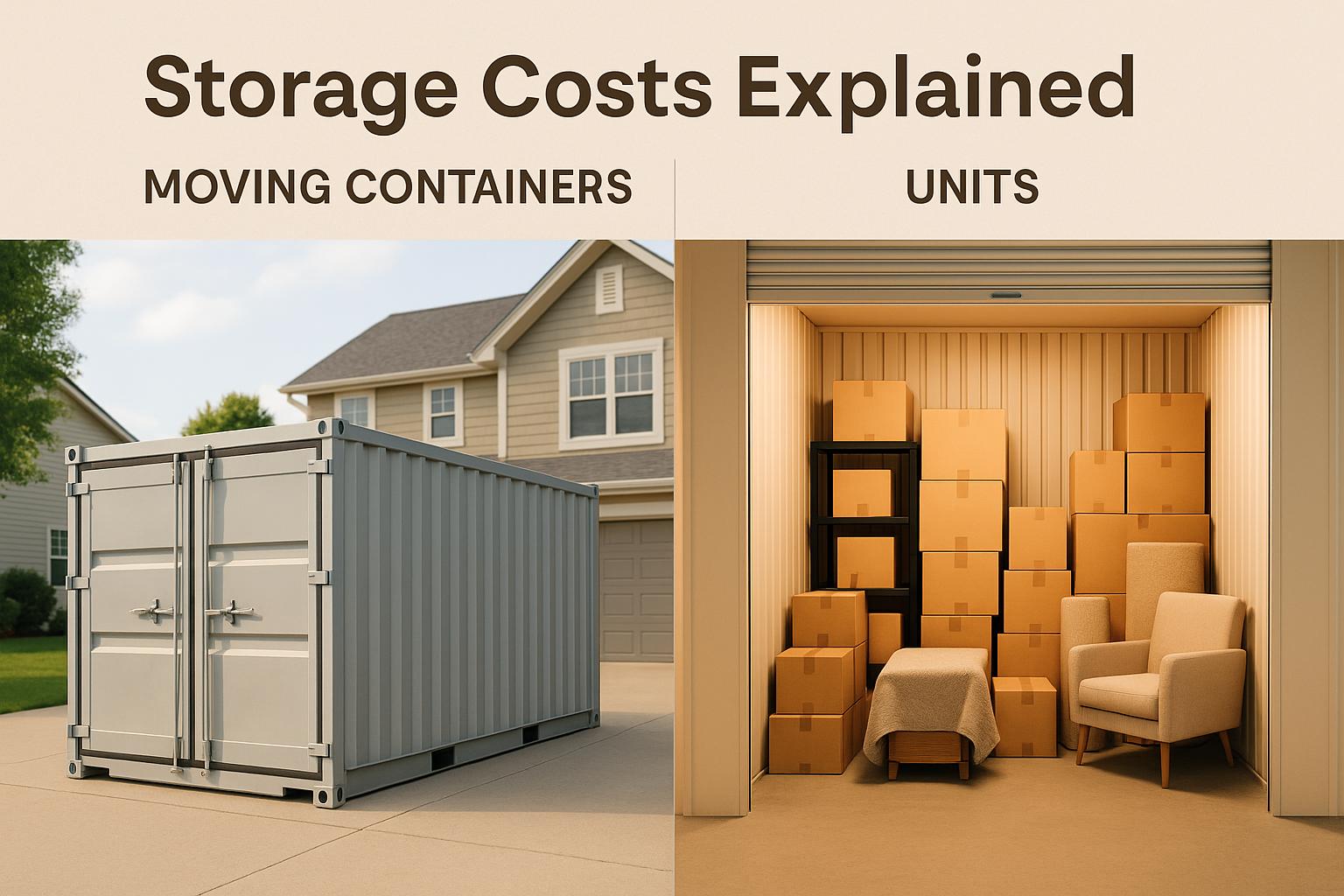
Storage Costs Explained: Moving Containers vs Units
When deciding between moving containers and storage units, the choice depends on your budget, access needs, and storage duration. Here's a quick breakdown:
- Moving Containers: Delivered to your location, offering on-site access. Costs range from $150–$300/month plus delivery and pickup fees. Ideal for short-term storage or moving.
- Storage Units: Located at facilities, requiring you to transport items. Costs range from $50–$200/month, with additional fees for features like climate control. Best for long-term storage.
Key Factors to Compare:
- Cost: Moving containers are pricier but convenient; storage units are cheaper but less accessible.
- Access: Containers offer 24/7 access on-site; units have limited hours.
- Security: Storage units often have stronger security features.
- Climate Control: Available in storage units, rare in containers.
Quick Comparison:
| Feature | Moving Containers | Storage Units |
|---|---|---|
| Monthly Cost | $150–$300 | $50–$200 |
| Delivery Fee | Charged separately | Not applicable |
| Access | On-site, often 24/7 | Limited to facility hours |
| Security | Basic | Advanced |
| Climate Control | Rarely available | Often available |
| Best For | Short-term, moving | Long-term, infrequent use |
Choose containers for flexibility during moves or renovations. Opt for units if you need affordable, secure, long-term storage.
Full Service Movers vs. Portable Storage Containers. Pick The Right Option For You and Your Move
Moving Container Costs
When planning a move with containers, it’s important to understand that costs go beyond the monthly rental fees. Additional charges, like delivery and long-distance moving expenses, can significantly impact your budget. Here's a closer look at the key cost factors.
Monthly Rental Costs
The monthly rental price for moving containers depends on factors like container size, provider, and location. Generally, costs range from $80 to $270 per month, with most falling between $139 and $239. For example:
- U-Haul’s U-Box: Around $90 per month
- 1-800-PACK-RAT: Approximately $127 per month
- PODS: Up to $270 per month
Container size also plays a role. A 10-foot container typically costs $130–$200 per month, while a 20-foot container ranges from $100 to $250. Specialty sizes may come with higher rates.
In 2025, 55% of moving customers underestimated their total moving container costs due to unexpected fees and extended rental periods [1].
Delivery and Pickup Fees
Many companies charge separate fees for delivering and picking up the containers, which are not included in the monthly rental cost. These charges can add up quickly, so it’s worth confirming the exact fees with your provider to avoid surprises.
Long-Distance Moving Costs
If you’re moving long distances, the costs will vary based on the number of containers and the distance traveled. Here’s an idea of what to expect:
- PODS: For moves over 250 miles, prices range from $2,110 to $4,110 for a one-bedroom move, $3,100 to $4,960 for two- to three-bedroom homes, and $5,560 to $7,700 for larger residences.
- U-Pack: Offers competitive rates, with one-bedroom moves typically costing $1,500 to $2,600, and moves for three or more bedrooms ranging from $3,550 to $6,650.
- 1-800-PACK-RAT: Prices fall in between, charging $1,250 to $3,825 for one-bedroom moves and $5,125 to $6,925 for larger homes.
One advantage of long-distance container rentals is that they often include a month of storage time, giving you flexibility to load and unload at your own pace. Unlike traditional movers that charge based on weight, container pricing remains consistent regardless of how much your belongings weigh. This predictability can help you manage your moving budget more effectively.
Storage Unit Costs
The cost of a storage unit depends on several factors, including its size, location, and available features. Knowing what influences these prices can help you plan your budget effectively.
Monthly Rental Fees
The monthly rent for a storage unit is primarily determined by its size and location. Smaller units are more affordable, while larger ones come with higher price tags. Units with drive-up access often have an added premium. Location also plays a big role - urban areas tend to have higher rental rates compared to suburban or rural spots. On top of this, facilities may charge additional operational fees, which can further impact the total cost.
Extra Fees and Charges
Be prepared for additional fees beyond the base rent. These might include move-in fees, security deposits, and processing charges. If you opt for a climate-controlled unit, expect a surcharge. Insurance requirements can add to the bill, and penalties like late payment fees or key replacement charges can quickly increase your overall expenses.
How Location and Features Influence Pricing
Location and facility features are key factors in storage unit pricing. Urban facilities typically charge more than those in suburban or rural areas. Features like ground-floor access, gated entry, security cameras, and extended hours can also push prices higher. Seasonal demand may further affect rates, particularly during peak moving times.
Choosing the right storage unit means balancing size, extra fees, and facility features to match both your needs and your budget.
sbb-itb-be87134
Moving Containers vs Storage Units Comparison
When deciding between moving containers and storage units, understanding their differences can help you determine which option works best for your needs.
Cost and Feature Differences
Moving containers come with higher upfront costs due to separate delivery and pickup fees, along with a variable monthly rental. The main advantage? They provide on-site storage, giving you the flexibility to access your items whenever you need.
Storage units, on the other hand, generally have lower monthly rental fees. However, accessing your belongings requires a trip to the facility during its operating hours. Many storage units include strong security measures - like gated access, surveillance cameras, and on-site management - to keep your items safe.
The pricing structures also differ. Moving containers often charge delivery and pickup fees separately from the monthly rental, while storage units typically bundle most services into one monthly rate. Additional costs for storage units may apply for premium features like climate control or extra insurance.
Comparison Table
Here’s a quick side-by-side look at how moving containers and storage units compare:
| Feature | Moving Containers | Storage Units |
|---|---|---|
| Monthly Cost | Generally higher | Typically lower |
| Delivery Fee | Charged separately | Usually not applicable |
| Access | On-site, often available 24/7 | Limited to facility operating hours |
| Climate Control | Less commonly available | Often available as an option |
| Security | Basic security measures | Enhanced security features |
| Long-Distance Moving | Well-suited | Typically less practical |
| Flexibility | High – container can be relocated | Lower – fixed facility location |
Best Choice for Different Situations
Moving containers are ideal for long-distance moves, home renovations, or DIY projects where flexible, on-site access is essential. They work well when you need to keep your belongings close and accessible.
Storage units, however, are better suited for long-term storage needs when frequent access isn’t a priority. They’re perfect for items like holiday decorations, seasonal sports gear, or sensitive belongings like electronics, artwork, and important documents that might benefit from climate control.
Ultimately, your decision will depend on your specific needs and how long you plan to store your items. If you’re looking for a short-term solution or temporary storage during a move, the convenience of moving containers can be a big plus. But if you need an affordable, secure option for extended periods, storage units may be the better choice. Next, we’ll explore how to pick the right option for your unique storage requirements.
How to Choose the Right Option
When deciding between storage options, it's essential to weigh your needs in terms of time, cost, and security. Here's a closer look at the key factors to consider.
Storage Time and Access Needs
If you need storage for less than six months, moving containers are a practical choice. They provide on-site access, which can save you time and effort - perfect for short-term needs like home renovations, temporary relocations, or staging a house for sale.
For longer-term storage, traditional storage units often offer better value. This is especially true if you're storing seasonal items or belongings you don’t need to access frequently. While traveling to a storage facility may be less convenient, the cost savings over extended periods can make up for it.
If you need frequent access to your items, the convenience of on-site containers might justify the higher price. However, if your belongings will remain untouched for months, the lower costs of a storage unit could be more appealing.
Next, let’s break down how to evaluate the total costs.
Budget and Total Costs
Don’t just focus on the monthly fee - look at the total cost. Moving containers often come with higher ongoing charges, plus extra fees for delivery and pickup. On the other hand, storage units usually require a smaller upfront commitment, such as the first month’s rent and a modest security deposit.
It’s also important to account for hidden costs. These might include fuel surcharges, administrative fees, or additional deposits. To avoid surprises, ask for a clear breakdown of all associated costs upfront. This will give you a better understanding of what you’re really paying for.
Once you’ve reviewed the financial side, it’s time to think about security and environmental factors.
Security and Climate Control Requirements
After considering time and cost, think about the safety of your belongings and whether they need protection from temperature or humidity changes. Storage facilities often have features like gated access, surveillance cameras, and on-site staff, making them a more secure option. Moving containers, on the other hand, typically offer basic security that depends heavily on where the container is placed.
If you’re storing items like wooden furniture, photographs, musical instruments, or wine, you’ll need to factor in climate control. Many storage units offer environments that regulate temperature and humidity, while moving containers rarely provide this feature.
The overall security of the storage location is another important consideration. A container in a busy or public area may be less secure than one in a private driveway. Additionally, insurance options can vary. Professional storage facilities often provide more comprehensive coverage than moving container companies.
Ultimately, your decision should reflect what matters most to you - whether it’s convenience and frequent access, saving on costs, or ensuring the highest level of security and protection for your belongings.
Conclusion
Key Points
Deciding between moving containers and storage units comes down to your budget, convenience, and specific requirements. Moving containers typically cost between $200 and $400 per month and offer the benefit of on-site access, sparing you the hassle of traveling to retrieve your items. On the other hand, storage units are often more economical, with monthly rates ranging from $50 to $300.
For short-term storage (less than six months), the convenience of containers might outweigh their higher price. However, for long-term storage, storage units generally provide better value. Don’t overlook additional fees, as they can significantly impact your overall expenses. Also, think about your security and climate control needs - storage facilities often provide advanced protection and climate-controlled environments, whereas containers offer more basic security features. These differences in cost and features can help guide your decision, and ConsumersAdvisors.com is available to assist you further.
How ConsumersAdvisors.com Can Help

ConsumersAdvisors.com simplifies the process by connecting you with trusted moving companies that integrate both storage and moving services. The platform offers instant quotes from licensed movers, giving you the ability to compare moving costs alongside storage options that fit your specific needs.
With ConsumersAdvisors.com, you can explore customizable moving packages that combine storage solutions with your relocation plans. This streamlined approach often results in more competitive pricing compared to booking storage and moving services separately. Professional movers can handle everything from temporary storage during your move to long-term storage at your destination.
The platform’s expert reviews and clear pricing details make it easier to make informed choices. You can explore comprehensive information about different storage options and understand exactly what’s included in each package before making a commitment.
FAQs
What should I consider when choosing between moving containers and storage units?
When weighing your options between moving containers and storage units, it's essential to consider factors like flexibility, accessibility, and cost. Moving containers are a solid choice if you're planning a long-distance move or need on-site storage. They let you pack at your own pace, giving you more control over your timeline. On the flip side, storage units work well for local storage needs and often come with climate control, which is perfect for items that need extra care.
From a cost perspective, moving containers might have higher upfront fees, but they could save you money in the long run, especially if you need them for an extended period. Storage units, however, usually involve monthly rental payments, which can add up the longer you use them. To decide what's right for you, think about how often you'll need access to your belongings and how long you plan to store them. Tailoring your choice to your specific needs will help you get the most out of either option.
What unexpected costs should I watch for when using moving containers, and how can I avoid them?
Unexpected costs can sneak up on you when using moving containers, with fees like insurance, charges for oversized items, or storage delays adding to your total. These extra expenses can sometimes add up to hundreds - or even thousands - of dollars.
To keep your budget in check, it’s crucial to ask for detailed quotes upfront and ensure you get a clear breakdown of all potential fees. Take the time to create a complete inventory of your belongings and confirm exactly what the service covers. By planning carefully, understanding the fine print, and working with a trustworthy and transparent moving company, you can dodge hidden costs and stick to your budget.
How do moving containers and storage units differ in terms of security and climate control, and what does this mean for the safety of my belongings?
Moving containers are built with tough steel and often come with lock boxes, offering solid protection against theft. Traditional storage units, however, can vary in security depending on their construction and the quality of their locks.
When it comes to climate control, traditional storage units tend to have the upper hand. Many are designed to maintain a steady temperature range of 55°F to 80°F, which helps shield items like electronics, artwork, and wooden furniture from damage caused by extreme heat, cold, or humidity. Moving containers, by comparison, typically don’t have climate control, making them less suitable for items that are sensitive to temperature changes.
In short, moving containers work well for secure storage, while climate-controlled units are a better choice for protecting fragile or temperature-sensitive belongings.