Oct 19th 2025
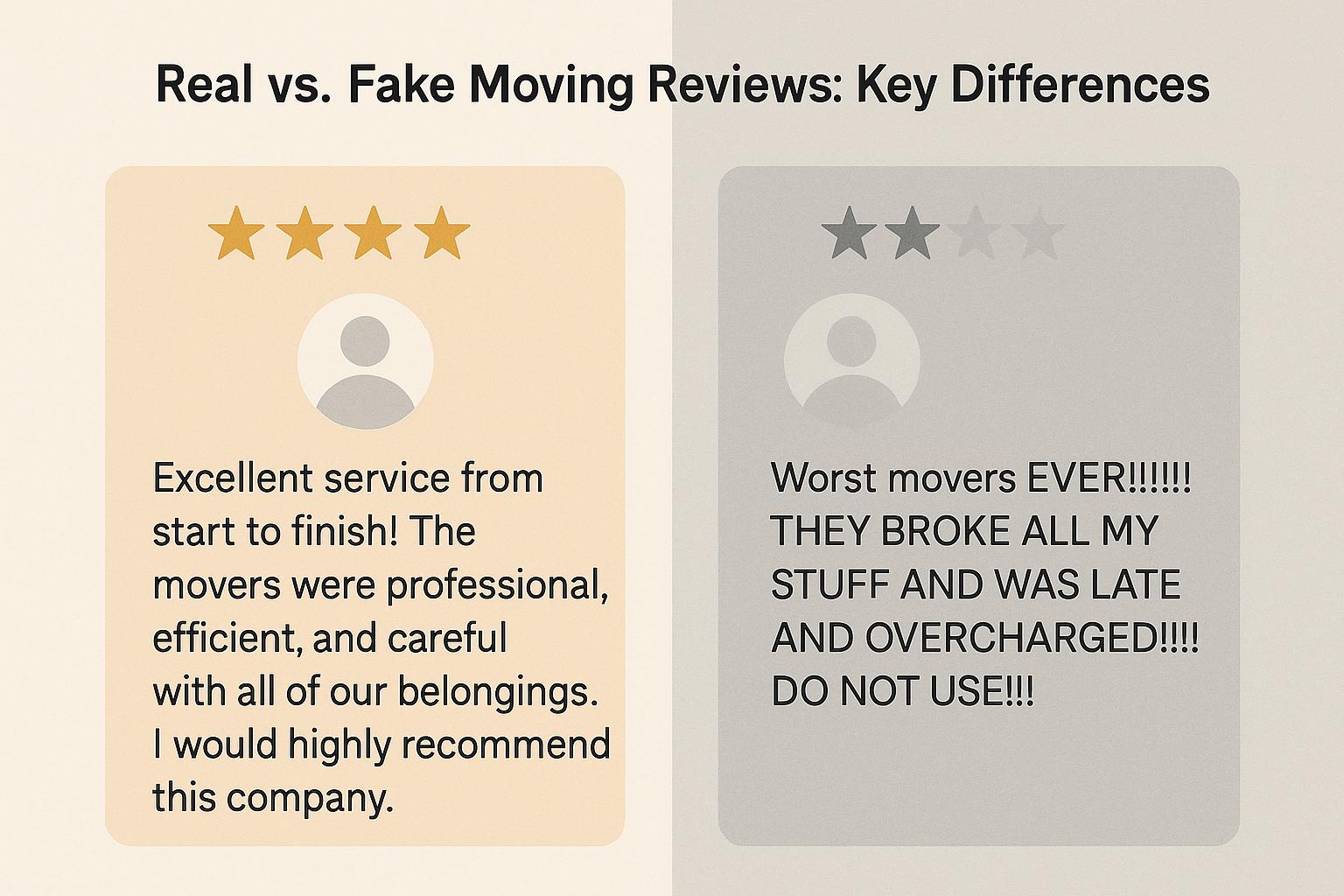
Real vs. Fake Moving Reviews: Key Differences
When choosing a moving company, online reviews can be a helpful guide - but fake reviews are a growing problem. Fake reviews mislead customers, hide poor service, and can lead to financial losses or damaged belongings. Recognizing the differences between real and fake reviews is essential to avoid scams and make informed decisions.
Here’s how to spot the differences:
- Real Reviews: Include specific details (e.g., how items were handled, arrival times), balanced feedback (both positives and negatives), and natural, everyday language. They often come from profiles with a history of diverse reviews.
- Fake Reviews: Use vague or overly enthusiastic language, lack specific examples, and often appear in suspicious patterns (e.g., a sudden flood of 5-star reviews). Reviewer profiles may look generic or lack activity history.
Quick Tips to Identify Genuine Reviews:
- Look for detailed stories and balanced comments.
- Avoid reviews with generic praise or extreme negativity.
- Check multiple platforms like Google, Yelp, and BBB for consistency.
- Use verified platforms like ConsumersAdvisors.com for vetted feedback.
Key takeaway: Real reviews provide clear, specific insights, while fake ones are often vague and overly positive. Protect yourself by using trusted platforms and cross-checking reviews before hiring a mover.
What Real Moving Reviews Look Like
Detailed Stories About the Moving Experience
Genuine moving reviews often dive into the specifics of the experience. They describe everything from arrival times and how delicate items were handled to the challenges movers faced on-site. These reviews might even mention the names of staff members, key routes, or provide a step-by-step breakdown of the moving process.
Take Michael from Arlington, TX, for example. He shared his experience with Amerisafe Van Lines, highlighting how the coordinator managed his move from Philadelphia to Austin "without any handoffs", which gave him the impression of having "a dedicated team the whole way" [1]. Similarly, Andre from San Diego, CA, praised Moving Ease for their clear communication, noting that their representative "was great at explaining the process, never left a question unanswered, and always got back to me very quickly." He added that "on the moving day, the team that showed up was efficient, polite, and helpful", and everything arrived "on time and in perfect condition" [1].
Authentic reviews also touch on how fragile items were handled, the challenges movers faced - like navigating tight staircases or small spaces - and how unexpected issues were resolved. They might include timestamps, describe the condition of belongings upon delivery, or reference actual costs and fees. These details make the reviews feel real and relatable.
Fair Comments About Good and Bad Points
Authentic reviews strike a balance, pointing out both the positives and occasional drawbacks of a moving experience. For instance, George from Seattle, WA, appreciated how New Start Relocation ensured "everything made it from Philly to Austin without a scratch", but he also admitted to feeling uneasy about using a broker [1].
Real reviewers understand that no service is flawless. They might praise a company’s efficiency but also mention minor communication hiccups or note that while items were handled carefully, there were slight delays. This kind of balanced feedback feels honest and credible. Chloe from Seattle, WA, shared her experience with USA Home Logistics, saying, "No surprise charges, no drama, just a smooth move from start to finish" [1]. These kinds of remarks show how companies can exceed expectations while still acknowledging the reality of the situation.
Normal, Everyday Language
What sets genuine reviews apart is their natural, conversational tone. They’re written in everyday language, often with casual expressions or minor grammatical quirks that reflect the unscripted style of someone sharing their personal story. Instead of using over-the-top phrases like "exceptional world-class service", a real review might describe the movers as "professional but friendly" or "efficient, polite, and helpful" [1].
Reviewers often use personal pronouns and share their emotional reactions to the process. They may talk about feeling anxious before the move, relieved when everything went smoothly, or grateful for clear and consistent communication. One reviewer even noted feeling like "someone had our back the whole way", emphasizing the supportive and personal touch of their experience [1]. Instead of vague praise like "amazing service", genuine reviews provide specifics - like regular updates from coordinators, punctual arrivals, careful handling of belongings, and straightforward pricing. These details paint a clear picture of what made the service stand out.
Warning Signs of Fake Moving Reviews
Vague or Over-the-Top Language
Fake moving reviews often lean on generic praise or complaints like "Great service!" or "Worst company ever!" without offering any real insights into the experience. Genuine reviews, on the other hand, tend to include specific details - like how the movers handled fragile items, whether they arrived on time, or if there were any unexpected challenges [2][4][5]. Beware of overly emotional phrases such as "best movers ever" or "would recommend 100%!" - these can be red flags for inauthenticity [2][5].
For example, a fake review might say: "Amazing service! I'd use them again in a heartbeat!" - which tells you absolutely nothing about the actual move [2][4]. A real review is more likely to sound like this: "The movers showed up promptly, took extra care with my glassware, and finished ahead of schedule. However, they didn’t inform me about the extra charges for stairs, which was frustrating" [2][6]. Notice how the genuine review provides specific feedback, including both positives and negatives.
Another hallmark of fake reviews is unusual or exaggerated language. Overuse of punctuation or ALL CAPS to grab attention can also be a giveaway [3]. If a review reads more like an advertisement than a personal story, trust your gut - it’s probably not authentic.
But language isn’t the only clue. Strange patterns in how reviews are posted can also reveal something fishy.
Strange Posting Patterns
One surefire red flag is when you notice a sudden flood of 5-star reviews within a short period, especially if the company previously had few or no reviews [2][5][3]. This is often a tactic used by companies trying to quickly improve their ratings after receiving negative feedback.
Look out for patterns like multiple glowing reviews posted in rapid succession, similar wording across entries, or reviews published at odd hours (e.g., 3 AM). These signs often point to automated bots or incentivized activity [2][5][3]. Authentic customers don’t all write in the same style or focus on identical aspects of their experience.
According to industry experts, fake reviews are more common than you might think. Some estimates suggest that as much as 30% of online reviews in certain industries are fraudulent [8]. The U.S. Department of Transportation has even warned that some moving companies write their own glowing reviews on third-party platforms to artificially boost their reputation [8].
Profiles of the reviewers themselves can also offer clues about the authenticity of the feedback.
Questionable Reviewer Profiles
Sometimes, a quick glance at the reviewer's profile can expose fake activity. Be cautious of profiles that only have one review, use generic usernames like "HappyCustomer123", or lack a profile picture [2][4][6]. Genuine reviewers often have a history of posting feedback about various businesses over time [2][6].
Bot-generated reviews tend to stand out with flawless grammar, a formal tone, and generic comments [5]. They often repeat the same phrases and consistently give perfect ratings. If you notice a profile that only posts polished, overly professional reviews, it’s worth questioning its legitimacy.
Real profiles, in contrast, show normal human behavior. For instance, you might see that the person reviewed a restaurant last month, a hotel six months ago, and now they’re sharing their thoughts on a moving company. Their tone feels natural and conversational, not like something crafted by a marketing team.
When companies flood platforms with fake reviews, their goal is often to bury negative feedback or incentivize customers to remove bad reviews altogether [5]. This kind of manipulation makes it much harder to get an honest sense of what working with a particular moving company might actually be like.
Real vs. Fake Moving Reviews: Key Differences
Side-by-Side Comparison Chart
Here's a quick look at how to tell authentic reviews apart from fake ones:
| Criteria | Real Reviews | Fake Reviews |
|---|---|---|
| Language Style | Uses a casual, conversational tone with specific examples | Filled with generic, ad-like phrases or overly formal language |
| Level of Detail | Includes precise details, e.g., "Movers wrapped my piano carefully", "Arrived at 8:00 AM" | Vague comments like "Great service!" or "Best movers ever!" |
| Timing Patterns | Posted consistently over time, showing a natural flow | Sudden bursts of reviews after long periods of inactivity |
| Reviewer Profiles | Profiles with diverse review histories across multiple businesses | New accounts, generic usernames (e.g., "HappyCustomer123"), or single-use profiles |
| Tone | Balanced, mentioning both positives and negatives | Overly positive or negative with no middle ground |
| Rating Trends | A mix of ratings (3–5 stars) with natural variation | Clusters of perfect 5-star or lowest 1-star ratings |
Real reviews stand out because they include personal, specific details and balanced opinions. These elements reflect genuine experiences, often highlighting both the good and the not-so-good aspects of the service. In contrast, fake reviews tend to lack depth, favoring either extreme praise or criticism without much substance.
To ensure you're basing decisions on trustworthy feedback, consider platforms like ConsumersAdvisors.com. They specialize in verified customer reviews and expert insights, helping you cut through the noise and find genuine experiences from real customers.
sbb-itb-be87134
FTC Bans Fake Reviews! Essential Update for Moving Companies
How to Check if Moving Reviews Are Real
Avoiding scams means knowing how to spot fake reviews. Here are some practical steps to help you identify genuine feedback and steer clear of misleading testimonials.
Use Trusted Review Platforms
Start by focusing on platforms known for their rigorous review verification processes. Sites like Google, Yelp, and the Better Business Bureau (BBB) are reliable choices because they actively monitor for suspicious activity and enforce stricter standards for authenticity[6]. These platforms use tools to detect unusual patterns, making it harder for fake reviews to slip through the cracks[5].
Another helpful resource is ConsumersAdvisors.com, which offers expert reviews, detailed profiles of moving companies, and a list of licensed and vetted carriers. This helps weed out companies with questionable practices[6]. Similarly, the Federal Motor Carrier Safety Administration (FMCSA) website provides a trustworthy database with added verification features.
Be cautious about reviews posted directly on a moving company’s website. Since companies control their own pages, they may only highlight glowing testimonials or even fabricate feedback. Once you've chosen reliable platforms, take a closer look at individual reviewers to ensure their feedback holds up.
Look Up Reviewer Information
Digging into a reviewer’s background can reveal a lot about their credibility. Genuine reviewers typically leave feedback across various businesses, showing a diverse history of activity[2][6].
Watch out for red flags like profiles with just one review, especially if it’s overly positive or negative[2][4][6]. Generic usernames or accounts without photos or personal details should also raise suspicion.
Consistency is another key factor. Authentic reviewers tend to post sporadically over time, rather than in bursts. Many platforms assign "verified customer" badges, which indicate the reviewer has actually used the service. Profiles linked to social media accounts or those with personal touches often signal authenticity, while fake profiles usually rely on made-up names and lack any real-world connections[3][7].
Check Multiple Sources
Don’t rely on just one platform - cross-check reviews across several sites to spot inconsistencies. For instance, if a moving company boasts perfect five-star ratings on one site but receives mixed or negative feedback elsewhere, that’s a red flag[6].
The Better Business Bureau is a valuable resource for verified business profiles, customer complaints, and resolution histories. It can help confirm both the company’s legitimacy and the credibility of its reviews[6]. You can also use the FMCSA’s mover database to check licensing and complaint records or consult state consumer protection agencies for more insight.
Pay attention to patterns in review timing. If there’s a sudden flood of positive reviews after a long period of inactivity, it could indicate coordinated manipulation[2][5][3]. Genuine reviews tend to trickle in naturally over time, with varying levels of detail and language.
When reviews conflict across platforms, lean on those with stricter verification standards and official regulatory backing. Following these steps will sharpen your ability to spot real feedback, helping you make informed decisions when choosing a moving company.
Conclusion: How to Spot Real Moving Reviews
Being able to tell genuine reviews apart from fake ones is crucial when it comes to protecting your belongings and avoiding costly mistakes. Real reviews tend to stand out - they include specific details, use natural language, and often come from profiles with a history of activity.
Authentic reviews usually strike a balance, highlighting both the positives and negatives of a moving company’s service. For instance, a real review might mention precise details, like the movers’ arrival time, how carefully items were handled, or even minor hiccups during the process. On the other hand, fake reviews often rely on vague, overly enthusiastic praise without offering any substance.
The problem is widespread - many consumers report encountering fake reviews, which can lead to hiring unreliable movers. This can result in damaged property, unexpected costs, or even falling victim to scams. The Federal Trade Commission has ramped up enforcement against companies that use fraudulent reviews[5], emphasizing why it’s so important to verify the authenticity of feedback before choosing a mover.
Platforms like ConsumersAdvisors.com can make this process easier. By using AI-driven tools, they carefully evaluate moving companies to ensure they meet strict criteria. These include proper insurance, legal USDOT Mover Authority, and compliance with privacy standards. For example, in October 2025, ConsumersAdvisors.com highlighted Amerisafe Van Lines with a stellar 5/5 rating based on 3,518 verified reviews. This showcases the platform’s commitment to recommending movers with proven reliability and a strong reputation.
FAQs
How can I confirm if a moving company is reliable before trusting their reviews?
To determine if a moving company is reliable, begin by verifying that they are licensed and insured. You can check this through trusted organizations like the Department of Transportation (DOT) or the Federal Motor Carrier Safety Administration (FMCSA). Make sure they have a valid USDOT number and confirm their credentials.
Websites such as ConsumersAdvisors.com offer expert-reviewed details on licensed movers, making it easier to compare your options with confidence. Ensuring the company is legitimate upfront allows you to evaluate reviews with greater peace of mind.
How can I tell if a moving review might be fake, and what should I do about it?
If a moving review raises your suspicions, keep an eye out for warning signs. These might include vague or overly generic language, excessive praise that lacks specifics, or a cluster of reviews posted within a short timeframe. Reviews that don’t provide any real details about the moving experience or seem to repeat the same phrases across different platforms could also be fake.
When in doubt, turn to reliable sources like ConsumersAdvisors.com. They offer expert reviews, verified details on licensed movers, and comparison tools for long-distance moving companies. These resources can help you sort through the noise and choose movers you can trust.
What are the key signs in reviewer profiles that indicate a review might be fake?
Spotting fake reviews often begins by taking a closer look at the reviewer's profile. Here are a few red flags to keep an eye on:
- Sparse personal information: Fake profiles often lack details, such as a profile picture or a meaningful username. Instead, they might appear overly generic or anonymous.
- Unusual review patterns: Be wary of accounts with very few reviews or ones that post multiple reviews within a short span of time. This kind of activity can indicate a lack of authenticity.
- Vague or overly dramatic language: Reviews that are excessively glowing or harsh without offering specific examples or details about their experience might not be genuine.
By staying alert to these warning signs, you can better filter out unreliable reviews and make smarter choices when evaluating moving companies.