Oct 25th 2025
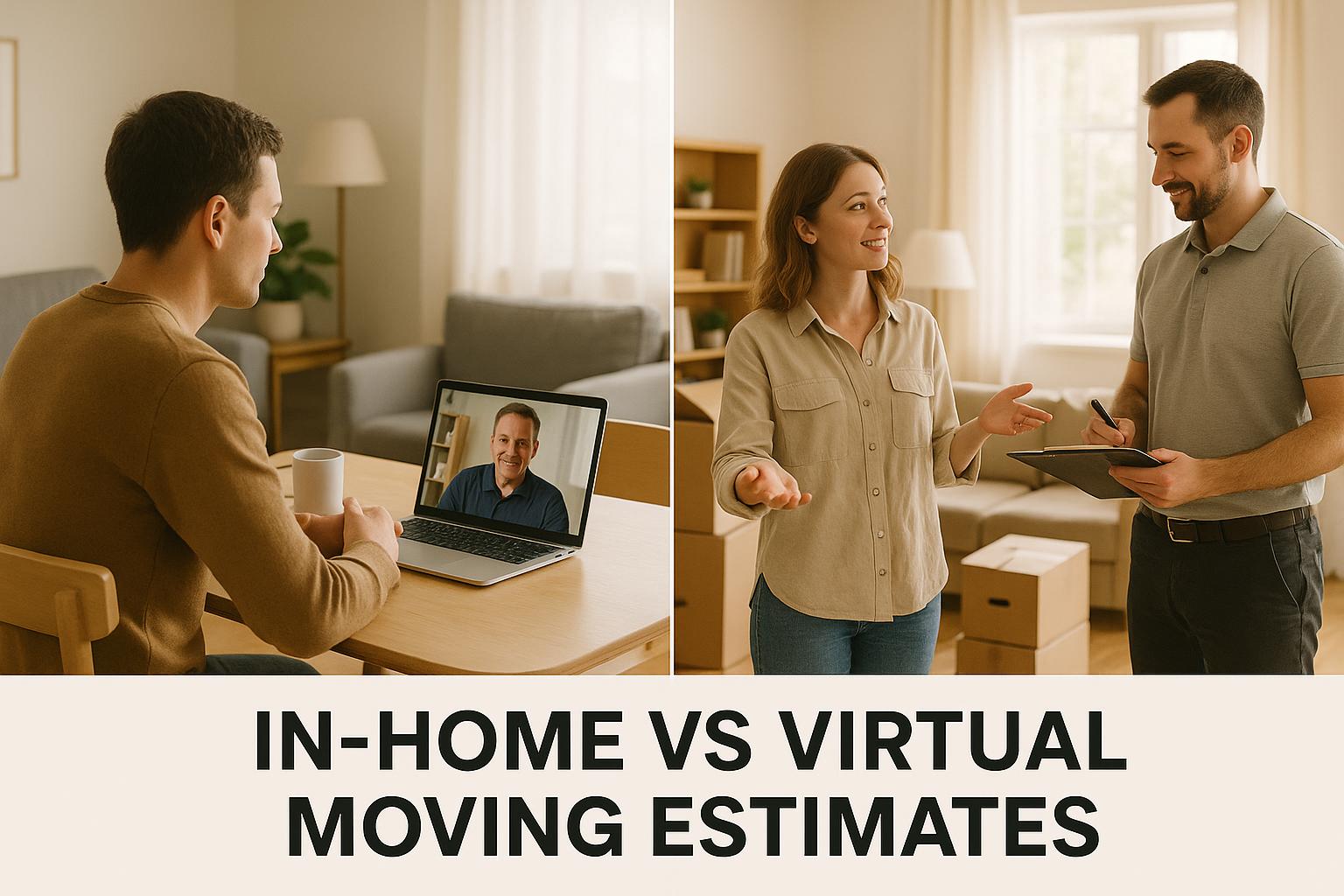
In-Home vs Virtual Moving Estimates
When planning a move, choosing between in-home and virtual moving estimates is crucial for your budget and timeline. Both options have their strengths, depending on your needs:
- In-Home Estimates: A moving consultant visits your home to assess belongings and logistics. Best for large or complex moves, specialty items, or first-time movers. Offers high accuracy and personal interaction but requires scheduling and time.
- Virtual Estimates: Conducted via video call using your smartphone or tablet. Ideal for smaller or straightforward moves, tight schedules, or long-distance relocations. Convenient and faster to arrange but may miss details, leading to potential extra costs.
Quick Comparison
| Feature | In-Home Estimate | Virtual Estimate |
|---|---|---|
| Accuracy | High – personal inspection | Moderate to high – depends on video quality |
| Convenience | Low – requires scheduling | High – flexible and remote |
| Interaction | Face-to-face | Video call or app-based |
| Best For | Large, complex moves or specialty items | Small moves or busy schedules |
| Hidden Cost Risk | Low – thorough assessment | Moderate – details may be missed |
| Contactless Option | No | Yes |
| Time to Schedule | Days to weeks | 24–48 hours |
For larger homes or valuable items, in-home estimates ensure precise planning. Virtual estimates work well for smaller moves or when time is limited. Many movers offer both options, so you can even combine them for accuracy and convenience. Platforms like ConsumersAdvisors.com simplify the process by connecting you with vetted movers offering both services.
Moving Estimates: How to Pick the Best Moving Estimate for Your Move | Relocation.com

In-Home Moving Estimates: How They Work
An in-home moving estimate involves a professional visiting your home to assess your belongings in person. This hands-on approach ensures a more precise and tailored moving plan, especially for complex or large-scale relocations.
The In-Home Estimate Process
The process starts when you contact your preferred moving company - whether by phone, through their website, or via platforms like ConsumersAdvisors.com. From there, you'll schedule a convenient time for a consultant to visit your home.
During the visit, the consultant will conduct a thorough walkthrough of your living and storage spaces. They’ll take note of the quantity, size, and type of items you plan to move, paying special attention to anything that requires extra care, like fragile or oversized belongings.
They'll also evaluate the layout of your home and identify any logistical challenges. This could include tight stairwells, narrow doorways, elevator access, or limited parking. These details help the moving team plan for the right equipment and crew size.
Once the walkthrough is complete, you’ll receive a detailed written estimate. This document will outline the expected costs and services. Depending on the evaluation, the estimate may be binding (a fixed price) or non-binding (subject to adjustments based on the final weight of your items). The in-person interaction also gives you the chance to ask questions and address any concerns immediately.
Benefits of In-Home Estimates
The biggest advantage of in-home estimates is their accuracy. Since the consultant sees everything firsthand, there’s less chance of missed items or surprise charges on moving day.
A 2023 survey by Allied Van Lines found that over 60% of customers with large or multi-room moves preferred in-home estimates because they felt more confident in the accuracy and transparency of the process[4].
Beyond accuracy, in-home estimates offer a personal touch. Consultants can provide tailored advice, such as packing tips or recommendations for special crating, and they can suggest the best way to handle fragile or valuable items.
This face-to-face interaction also allows you to discuss things like insurance options, additional services (like packing or storage), and any other concerns you might have. Plus, by identifying potential challenges during the walkthrough, in-home estimates can help prevent unexpected costs from popping up later.
These benefits make in-home estimates a smart choice for moves with unique requirements or challenges.
When to Choose In-Home Estimates
In-home estimates are especially useful for large or complicated moves. If you’re moving from a multi-story home, have a lot of belongings, or own high-value items, the detailed evaluation is well worth the time.
Specialty items like pianos, artwork, and antiques are another reason to opt for an in-home estimate. A consultant can assess these items in person and recommend the right packing materials, handling techniques, and insurance options to ensure they’re moved safely.
If your home has tricky access points - like narrow staircases, limited parking, or other logistical hurdles - an in-home estimate ensures these challenges are factored into your plan. This way, you’ll get an accurate estimate and avoid surprises on moving day.
Virtual Moving Estimates: How They Work
Virtual moving estimates offer a convenient, tech-savvy alternative to the traditional in-home assessment. Instead of waiting for a consultant to visit your home, you can get a moving quote using a video call or a specialized app. It's a faster, more flexible way to plan your move.
The Virtual Estimate Process
The process begins by scheduling a video session with a moving consultant. You can do this by reaching out to moving companies directly or through platforms like ConsumersAdvisors.com. During this step, you'll provide details about your move, such as the size of your home, the moving date, and the locations involved.
At the scheduled time, the consultant will guide you through a virtual walkthrough of your home using your smartphone, tablet, or computer. You'll show each room, ensuring all key areas and items are covered. Along the way, the consultant may ask questions about unique or fragile belongings to ensure nothing is overlooked. This walkthrough usually takes about 15–30 minutes, depending on the size of your home.
Once the walkthrough is complete, the consultant will prepare a written estimate based on what was discussed and observed. Some platforms, like ConsumersAdvisors.com, make the process even smoother by connecting you with pre-vetted movers. This means you can quickly move forward with trusted professionals, saving time and effort.
Benefits of Virtual Estimates
Virtual moving estimates come with several advantages that make them a popular choice for modern moves. One of the biggest perks is the flexibility they offer. You can schedule the walkthrough at a time that works for you - whether that's in the evening, on the weekend, or during a lunch break. There's no need to rearrange your entire day for an in-home visit.
Another benefit is the quick turnaround. Virtual estimates are often scheduled within 24–48 hours, much faster than the days or weeks it might take to arrange an in-home consultation. This speed is especially important during busy moving seasons when time is of the essence.
For those who prefer remote interactions or are dealing with logistical challenges, virtual estimates are a game-changer. Whether you're out of state, traveling for work, or just want to minimize in-person contact, you can handle the entire process from wherever you are. Plus, since moving companies save time and resources by conducting virtual estimates, you might even see a lower quote as a result.
When to Choose Virtual Estimates
Virtual estimates are particularly well-suited for smaller or simpler moves. If you're relocating from a studio apartment, a one-bedroom home, or have a straightforward inventory, this method provides enough detail for an accurate quote.
They’re also ideal for long-distance moves. If you're crossing state lines, coordinating an in-home visit can be tricky and expensive. A virtual estimate eliminates these hurdles, making the process much easier.
For those in remote or rural areas, virtual assessments offer a practical solution. Even if local moving consultants are hard to find, you can still receive a thorough evaluation without compromising on quality.
Lastly, virtual estimates shine in time-sensitive situations. If you're in a rush or can't fit an in-person appointment into your schedule, this option ensures you can still get an accurate quote without delay.
Virtual moving estimates are a practical, modern alternative that complements traditional methods, especially when scheduling or location challenges arise. They offer a streamlined, efficient way to plan your move without sacrificing accuracy or convenience.
In-Home vs Virtual Estimates: Side-by-Side Comparison
Choosing between in-home and virtual estimates comes down to understanding their strengths and limitations. Each method has unique benefits that cater to different moving needs.
Comparison Table
| Criteria | In-Home Estimate | Virtual Estimate |
|---|---|---|
| Accuracy | High – a professional physically inspects all items and access points | Moderate to High – depends on video quality and thoroughness |
| Convenience | Low – requires scheduling and being present | High – flexible scheduling and fully remote |
| Personal Interaction | Face-to-face consultation with expert advice | Interaction via video call or app |
| Best Use Cases | Large or complex moves, specialty items, first-time movers | Long-distance moves, busy schedules, repeat moves |
| Risk of Hidden Costs | Low – thorough assessment minimizes surprises | Moderate to High – missed details can lead to extra fees |
| Contactless Option | No – requires in-person visit | Yes – entirely remote process |
| Time to Schedule | Days to weeks during busy periods | Usually within 24–48 hours |
This breakdown highlights the key differences, setting the stage for a closer look at their pros and cons.
Main Differences and Trade-Offs
In-home estimates offer unmatched accuracy, while virtual estimates shine in convenience and speed. When a professional visits your home, they can physically inspect your belongings, assess tricky access points like narrow staircases or tight doorways, and identify any special requirements. This level of detail ensures fewer surprises on moving day and minimizes the risk of hidden fees [2].
Virtual estimates, however, are a game-changer for busy schedules. With flexible options, you can fit them into your day without much hassle. But this convenience comes at a cost - there’s a higher chance of missing details, which could lead to unexpected charges later [2]. For those prioritizing accuracy, in-home estimates are the safer bet.
Insurance and compliance can also play a role in your decision. For moves involving high-value or specialty items, in-home estimates are often a requirement for insurance purposes. Virtual estimates might not meet these criteria, which could limit your options [7].
Virtual estimates are particularly useful for long-distance moves or when coordinating from afar. For example, families relocating cross-country can avoid the logistical headache of arranging an in-person visit. On the flip side, first-time movers or those with fragile and specialty items often benefit from the detailed guidance and expert advice that come with in-home consultations [4].
Ultimately, the right choice depends on your specific needs, timeline, and comfort with the trade-offs. By understanding these differences, you can make an informed decision that best suits your move.
sbb-itb-be87134
How to Choose the Right Estimate Type
Now that you’re familiar with the different types of moving estimates, let’s dive into how to pick the one that fits your move best.
What to Consider
The size and complexity of your move should be your first consideration. If you’re dealing with a large home, specialty items like pianos or artwork, or tricky layouts with narrow staircases or tight doorways, an in-home estimate might be your best bet. Having a professional assess your move in person could potentially reduce unexpected costs by about 30% [5].
For smaller moves, like a one-bedroom apartment with standard furniture, a virtual estimate can often provide the accuracy you need while saving you time.
Your schedule flexibility also plays a big role. Virtual estimates are ideal if you’re pressed for time, as they’re quick and can often be completed in less than an hour [2][3]. But if you have a more open schedule and want a thorough evaluation, an in-home estimate ensures every detail is accounted for.
Your comfort with technology is another factor. Virtual estimates require a reliable internet connection, good lighting, and some familiarity with video call platforms. If tech isn’t your strong suit or your connection is spotty, an in-home estimate might help you avoid unnecessary stress.
Personal interaction preferences also come into play. Some people appreciate the face-to-face interaction and expert advice that come with in-home visits, while others prefer the privacy and minimal contact of virtual estimates. Interestingly, a 2023 survey revealed that over 60% of moving customers now choose virtual estimates when available, with convenience being the primary reason [3].
First-time movers might find the detailed guidance of an in-home estimate especially valuable, while those who’ve moved before and are familiar with the process may feel comfortable opting for a virtual assessment.
These factors can help you decide whether to stick with one type of estimate or combine both for your move.
Using Both Options
The good news is that many moving companies offer both in-home and virtual estimates, giving you the flexibility to choose or even combine the two. This hybrid approach can strike the perfect balance between convenience and accuracy [6].
For example, you might start with a virtual estimate for a quick overview and then follow it up with an in-home visit if your move involves high-value items, complex logistics, or if the virtual assessment raises any questions. This two-step method works especially well for larger or more complicated moves, ensuring you get both a fast initial quote and the thoroughness of an in-person inspection [2][4].
Some movers even allow you to switch from a virtual to an in-home estimate without extra charges if the virtual assessment reveals any complexities that need closer attention. To make the most of either option - or both - be sure to communicate your needs clearly with your moving company. Highlight any specialty items, access challenges, or special requirements. If you’re going the virtual route, make sure to show all areas and items to avoid surprises later [2][3].
If you’re unsure where to start, platforms like ConsumersAdvisors.com can connect you with trustworthy movers that offer both estimate options. They provide instant quotes and match you with vetted carriers tailored to your specific needs and preferences.
How ConsumersAdvisors.com Makes Estimates Easier

Finding the right type of moving estimate can feel like a hassle, but ConsumersAdvisors.com takes the guesswork out of the process. By partnering with trusted movers for both in-home and virtual assessments, the platform saves you from the headache of reaching out to multiple companies on your own.
Platform Tools and Services
ConsumersAdvisors.com offers an instant quote tool that simplifies the first step of your move. All you need to do is provide basic details - like the number of bedrooms, your moving date, and destination - and you'll quickly receive preliminary pricing from several movers. You can even indicate whether you prefer an in-home or virtual estimate, and the system will match you with companies that specialize in your chosen method.
For virtual estimates, the platform goes a step further by arranging video walkthroughs or letting you upload a digital inventory directly to movers. This way, you can easily compare options and choose the one that best fits your needs.
On top of that, ConsumersAdvisors.com includes expert reviews of movers, giving you insights into their performance for both in-home and virtual assessments. For example, you can learn about the thoroughness of in-person evaluations or how precise a company's virtual surveys tend to be. This makes it easier to decide which mover aligns with your preferences before you even reach out.
You can also customize your search beyond estimate types. Whether you need full-service packing, storage, or help with specialty items like pianos, the platform ensures you're matched with movers prepared for your unique requirements. According to internal data, users of these tools report 30% higher satisfaction with both their final costs and overall service quality[1]. It’s a straightforward way to connect your moving needs with reliable solutions.
Vetted Movers for Reliable Service
One of the standout features of ConsumersAdvisors.com is its strict vetting process for movers. Every company listed meets rigorous licensing standards, including proper USDOT authority, insurance coverage, and liability protection. This means you can count on dependable service, no matter which estimate type you select.
The platform uses an AI-driven system to evaluate movers based on key factors like transparent pricing, customer reviews, safety measures, and overall reputation. For example, USA Home Logistics, which specializes in virtual estimates, has an impressive 4.9/5 rating from over 3,200 reviews. Meanwhile, Amerisafe Van Lines, known for its in-home assessments, boasts a perfect 5/5 rating from more than 3,500 reviews. No matter who you choose, you can trust that these companies have passed a thorough screening process.
Another benefit is the platform's focus on timeliness. Movers listed on ConsumersAdvisors.com have a 95% on-time estimate delivery rate[1], ensuring you get accurate quotes when you need them. This reliability is crucial for planning your budget and timeline. It’s no wonder that 85% of users go with the recommended movers after exploring the platform’s comparison tools[1]. It’s a clear sign that the system works, helping you make informed decisions with confidence.
Conclusion: Making the Right Choice
Key Points to Remember
Deciding between in-home and virtual moving estimates largely depends on how complex your move is. If you’re dealing with a larger home or have specialty items like pianos or antiques, an in-home estimate is likely the better fit. It allows a professional to assess your belongings and access points, like tight staircases or tricky doorways, ensuring a customized plan for your move.
On the other hand, if you’re moving out of a smaller apartment with standard furniture, a virtual estimate might be the more convenient option. You can schedule it outside of regular work hours and skip the need for someone to visit in person.
Your comfort with technology and ability to provide a thorough video walkthrough are also important factors. Virtual estimates are great if you can clearly showcase every item, but in-home estimates often catch details you might miss. Since 2020, virtual estimates have become increasingly popular for their convenience and safety. Both options have their strengths, and many moving companies now offer both to suit different customer needs. Use this information to choose the option that best fits your situation and make your move as seamless as possible.
Getting Started
Start by taking inventory of your belongings and deciding which estimate type suits your needs. Gather essential details about your move - like dates, locations, and any special requirements - before reaching out to movers.
For a simplified process, platforms like ConsumersAdvisors.com can connect you with licensed and insured carriers that meet strict USDOT standards. With a clear understanding of your estimate options, you’re ready to take the next step toward a smooth and stress-free move.
FAQs
What’s the best way to choose between an in-home and a virtual moving estimate?
When deciding between an in-home or a virtual moving estimate, it really comes down to what works best for your situation and preferences:
- In-home estimates offer a more precise quote since a professional assesses your belongings in person. This approach is especially helpful for larger moves or if you have items that need special care or handling.
- Virtual estimates are a convenient option that saves time, particularly if your schedule is packed. They’re well-suited for smaller moves or if you’re comfortable using video calls to showcase your belongings.
Not sure which option fits your needs? Think about factors like the size of your move, the complexity of your items, and how much time you can dedicate to the process. For extra help, platforms like ConsumersAdvisors.com provide expert reviews and comparison tools to match you with the right moving services.
Are there hidden costs with virtual moving estimates, and how can I avoid them?
Virtual moving estimates can sometimes bring unexpected costs if the details of your move aren’t fully communicated. For instance, if you underestimate how much needs to be moved, overlook specialty items like pianos or oversized furniture, or forget to mention access challenges such as stairs or tight doorways, you might face extra charges on moving day.
To avoid these surprises, provide as much detail as possible during your virtual estimate. Share photos or videos of your belongings, point out any unique items or potential obstacles, and ask the moving company to explain exactly what their quote covers. Taking these steps can lead to a more accurate estimate and a smoother moving experience.
Can I use both in-home and virtual moving estimates together, and how would that work?
Yes, you can mix in-home and virtual moving estimates to get a clearer picture of your moving costs. Start with a virtual estimate to quickly gauge pricing and available services. Then, schedule an in-home estimate for a more precise evaluation, especially if your move involves unique or bulky items.
By combining these approaches, you can compare quotes, address any inconsistencies, and choose the option that best fits your needs and budget. This way, you’re more likely to get great value and a smoother moving process.