Oct 15th 2025
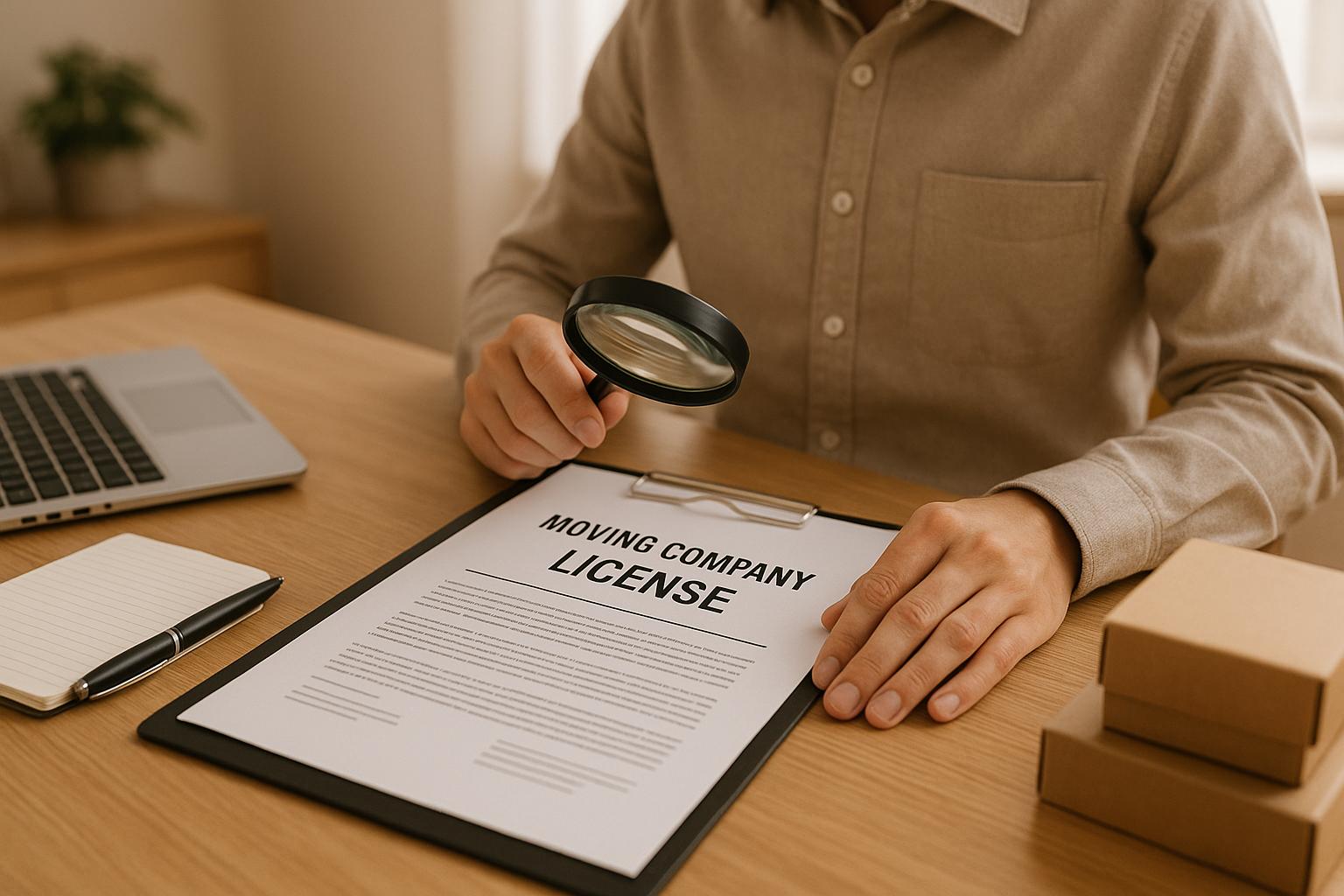
How To Check Moving Company Licenses
Want to avoid moving scams? Start by verifying licenses. Scammers often operate without proper credentials, leaving your belongings and finances at risk. Licensed movers follow federal and state laws, carry insurance, and undergo safety checks. Here’s how you can protect yourself:
- For interstate moves, ensure the company has a USDOT number and MC number from the FMCSA.
- For local moves, check state-specific licensing through your Department of Transportation or Public Utilities Commission.
- Use tools like the FMCSA SAFER System to confirm active licenses, insurance, and safety records.
- Ask for written proof of licenses and insurance - compare them with official records to ensure accuracy.
Taking a few minutes to verify a mover’s credentials can save you from scams, surprise charges, and damaged goods. Platforms like ConsumersAdvisors.com can simplify this process by connecting you with pre-screened, licensed movers.
License and Insurance Requirements for Movers. Legal Moving Company Requirements.
Moving Company License Requirements Explained
Licenses play a key role in verifying whether a moving company is legitimate, whether you're planning an intrastate or interstate move. Here's a closer look at the credentials required, especially for interstate moves.
Federal Licenses for Interstate Moves
For interstate moves, moving companies need two specific federal credentials: a USDOT number and an MC (Motor Carrier) number, both issued by the Federal Motor Carrier Safety Administration (FMCSA). These credentials are essential for legal cross-state transport.
The USDOT number acts as a unique identifier for companies operating commercial vehicles across state lines. This number allows both consumers and regulators to track a company's safety history, insurance compliance, and overall regulatory status.
The MC number, on the other hand, grants federal operating authority for moving household goods between states. If you see "Authorized for HHG" in the FMCSA database, it confirms the company meets federal requirements.
State Licenses for Local Moves
For local or intrastate moves, licensing requirements vary by state. Some states handle licensing through their Department of Transportation, while others use Public Utilities Commissions or similar regulatory bodies.
For instance, California requires movers to obtain a license through its Bureau of Household Goods and Services (BHGS). The BHGS system also maintains public records of license statuses and any disciplinary actions. Consumers can search the BHGS website by company name or license number to verify a mover's standing.
In Texas, moving companies must comply with regulations set by the Department of Motor Vehicles. This includes securing specific permits and insurance coverage for operations within the state. To stay informed, check the licensing details on the appropriate state website.
Both federal and state licenses are designed to protect consumers and ensure movers operate within the law.
How Proper Licensing Protects You
Licensing offers several layers of protection that unlicensed movers simply can't provide. Licensed companies are required to:
- Carry minimum insurance coverage to compensate you if your belongings are damaged, lost, or stolen.
- Undergo regular safety inspections to ensure compliance with regulations.
- Maintain bonds that protect consumers from financial losses.
Additionally, licensed companies are held accountable through strict oversight. For example, FMCSA requires licensed movers to address complaints through formal channels, providing an added layer of consumer protection. Complaint data is publicly accessible, offering transparency into a mover's track record.
The licensing process also helps filter out unreliable operators. To secure a license, companies must prove financial stability, maintain a legitimate business address, and demonstrate their operational capabilities. In contrast, unlicensed movers often operate under multiple names or vague addresses, making them harder to track and hold accountable.
| License Type | Coverage Area | Key Protection | Verification Method |
|---|---|---|---|
| USDOT & MC Numbers | Interstate moves | Federal insurance minimums, FMCSA oversight | FMCSA Mover Search Tool |
| State License | Local/intrastate moves | State insurance and regulatory compliance | State agency lookup tools |
For your safety, always verify that a company's license numbers, business name, and address match across different databases. Inconsistencies can signal fraudulent activity or unauthorized operations. Understanding these licensing requirements is essential for ensuring your mover adheres to all legal and safety standards.
How to Find a Moving Company's License Numbers
Tracking down a mover's license numbers is easier than you might think. These numbers are your safeguard against scams and confirm that the company operates within the law.
Where to Look for USDOT and MC Numbers
Reputable moving companies make their USDOT and MC numbers easy to find. You’ll usually spot them on the company’s official website, often in the footer or the "About Us" section. These numbers are also included in moving estimates and contracts, typically near the company’s contact details.
You might also notice these license numbers on advertisements, business cards, or other promotional materials. Reliable movers take pride in displaying these details prominently across their documentation and marketing.
If you’re unable to find the numbers, don’t hesitate to ask a company representative directly. Legitimate businesses will readily provide this information without hesitation. On the other hand, if a company avoids your questions or refuses to share their license numbers, consider it a major warning sign.
Familiarizing yourself with these numbers is the first step in verifying their authenticity and understanding their significance.
What USDOT and MC Numbers Mean
The USDOT number serves as a unique identifier for the company and ties directly to its compliance record.
The MC number - formatted as "MC-XXXXXX" - confirms the company’s federal authority to transport household goods across state lines. If a company’s status in federal databases is listed as "Authorized for HHG" (Household Goods), it means they are legally permitted to handle interstate moves.
Both numbers are linked to the company’s insurance and safety records, which are monitored by federal authorities to ensure compliance.
Once you’ve located these numbers, the next step is to request and review the relevant documents.
How to Request License and Insurance Documents
Before hiring any moving company, always ask for written proof of their licenses and insurance. Request physical copies of their operating license and current insurance certificates. Trustworthy companies will provide these documents promptly because they value transparency.
"Our mover guarantee includes: Legal USDOT Mover Authority" - ConsumersAdvisors.com
When reviewing these documents, check that the business name, address, and document dates match what’s listed on the contract. Confirm that the insurance coverage is up-to-date and hasn’t expired. Any inconsistencies between the paperwork and what the company has told you verbally should raise concerns.
Pay close attention to the dates on insurance certificates. Expired policies or gaps in coverage could indicate serious issues. Additionally, the company’s legal name should match across all documents, advertisements, and contracts. Mismatched names might point to fraudulent activity or shell companies.
Keep copies of all verified documents for your records. These can be invaluable if any disputes arise during your move. Avoid companies that delay or hesitate to provide documentation.
| Document Type | What to Verify | Red Flags |
|---|---|---|
| USDOT License | 6-7 digit number, active status | Missing number, expired status |
| MC Certificate | MC-XXXXXX format, HHG authority | Wrong format, no HHG authorization |
| Insurance Papers | Current dates, proper coverage | Expired dates, insufficient coverage |
Professional movers understand that verifying licenses protects everyone involved. They’ll not only share the documentation but may even guide you through the process of checking their credentials using official government databases.
How to Verify Moving Company Licenses
Once you’ve got the license numbers from your moving company, the next step is to confirm they’re legitimate. This involves checking both federal and state databases to ensure the company is operating legally. By using these resources, you can complete a thorough verification and avoid potential scams.
Using FMCSA Tools to Check Federal Licenses
Start by verifying federal licenses through the FMCSA SAFER System (safer.fmcsa.dot.gov). This is an essential tool for checking interstate moving companies. Simply enter the company’s name or USDOT number into the search field to pull up their federal profile.
Here’s what to look for:
- Operating Status: The status should say "Authorized for HHG" (Household Goods) or "Authorized for Hire." Steer clear of companies with statuses like "Not Authorized", "Pending", or "Revoked."
- Insurance: Confirm that the insurance is "Active" and meets federal requirements - at least $750,000 in public liability insurance and a $75,000 surety bond.
- Safety Rating: Movers with a "Satisfactory" or "Not Rated" safety rating are generally fine, but avoid those with "Unsatisfactory" or "Conditional" ratings, as these indicate compliance issues.
- Complaint History: The FMCSA database also includes complaint records. For example, in 2022, over 4,000 complaints were filed against moving companies, with unlicensed movers being heavily represented. Reviewing this data can help you spot potential red flags.
Finally, cross-check the company’s name and address in the FMCSA profile with the details they’ve provided. Any inconsistencies should immediately raise concerns about the company’s legitimacy.
How to Check State Licenses
For local moves, state licensing is just as important. Each state typically handles this through its Department of Transportation (DOT) or Public Utilities Commission (PUC). Most states offer online tools where you can verify a moving company’s local license by entering their name or state license number.
Here’s how to proceed:
- Visit your state’s DOT or PUC website and use their license lookup tool.
- Confirm the company’s local operating authority and compliance with state regulations.
- If an online database isn’t available, reach out directly to the regulatory agency for verification.
Some states may also require additional certifications for specific types of moves, such as residential or commercial relocations. Be sure the company has all the necessary permits for your move.
How to Verify Documentation Accuracy
Once you’ve confirmed licensing, it’s crucial to ensure all documentation matches across the board. Cross-check license certificates, insurance papers, and other documents with the information in official databases. Pay close attention to the business name, address, and license numbers - they should match exactly.
Discrepancies can be a major red flag. For example, mismatched business names, addresses that don’t align with the mover’s claimed location, or license numbers missing from official records are all signs of potential fraud. Additionally, verify that insurance certificates are up to date and meet both federal and state requirements. Gaps in coverage or expired policies could leave you financially exposed during your move.
| Verification Step | What to Check | Warning Signs |
|---|---|---|
| FMCSA Database | "Authorized for HHG" status and active insurance | "Not Authorized", expired insurance, poor safety rating |
| State Database | Valid local license and current registration | No license found, expired status, unresolved complaints |
| Documentation Match | Consistent business name, address, and license numbers across all sources | Mismatched information, missing details, altered documents |
Keep electronic copies of all verified information, like screenshots of the FMCSA profile and state license confirmations. These records can be invaluable if issues arise or if you need to file a complaint.
Taking the time to verify every detail ensures your move is handled by a legitimate and licensed company. While the process requires effort, it’s a small price to pay for peace of mind and protection against fraudulent movers.
sbb-itb-be87134
Checking Insurance Coverage and Safety Records
Making sure a moving company has the right insurance and a solid safety record is more than just a formality - it’s essential for protecting your belongings and your wallet. Skipping this step could leave you dealing with unreliable movers or, worse, damaged or lost items.
How to Verify Insurance Coverage
If you're planning an interstate move, federal law requires moving companies to have at least $750,000 in liability insurance, cargo insurance, and a $75,000 surety bond. For local moves, check your state’s specific requirements using online resources[2].
When reviewing a mover's profile in the FMCSA's SAFER System, look for insurance listings marked as "Active." If you see expired or inactive coverage, steer clear.
To dig deeper, ask the company for a Certificate of Insurance. This document should include details like coverage types, policy numbers, and expiration dates. Cross-check this information with official databases. If the company refuses to provide the certificate or if the details don’t match what’s on record, consider it a major red flag.
Once you're confident about their insurance, the next step is to review their safety record.
How to Check Safety Ratings and Complaints
After confirming insurance, it’s time to assess the company’s safety and reliability. The FMCSA assigns safety ratings that fall into three categories:
- Satisfactory: The company meets all safety standards.
- Conditional: There are some compliance issues.
- Unsatisfactory: Serious safety violations are present.
A company with an "Unsatisfactory" rating should be avoided at all costs - it’s a clear sign of major safety problems. Even a "Conditional" rating warrants further investigation, as it signals ongoing concerns.
The FMCSA received over 4,000 complaints about moving companies in 2023[2]. The most common issues? Lost or damaged goods and movers holding belongings hostage. Use the FMCSA’s Company Snapshot tool to review a mover’s complaint history. Pay attention to unresolved complaints, especially those involving damaged items, missed delivery deadlines, or surprise fees.
Don’t forget to check crash records and inspection results in the FMCSA database. A high number of accidents or failed inspections is a strong indicator of poor safety practices.
| Safety Rating | Meaning | Recommendation |
|---|---|---|
| Satisfactory | Meets all safety standards | Safe to hire |
| Not Rated | New company, not yet evaluated | Proceed with caution; verify other credentials |
| Conditional | Some compliance issues identified | Consider alternatives; investigate further |
| Unsatisfactory | Serious safety violations | Avoid completely |
What to Do When You Find Problems
If you uncover expired insurance, poor safety ratings, or a troubling complaint history, don’t take the risk - move on to another company. Protecting your belongings and ensuring a smooth move isn’t worth gambling on a questionable mover.
Be sure to document everything you find during your research. Save screenshots of FMCSA profiles showing expired insurance or poor safety ratings, and keep copies of complaint records or any suspicious documents. This evidence can be invaluable if you need to file a formal complaint or warn others.
If you hit a dead end with a company, start fresh with a more reliable option. Platforms like ConsumersAdvisors.com can simplify your search by pre-screening movers for proper licensing, insurance, and safety compliance. Using such services can save you time and reduce the chances of hiring an unqualified mover.
"Our mover guarantee includes: Proper insurance & liability coverage" - ConsumersAdvisors.com
Using ConsumersAdvisors.com to Find Licensed Movers
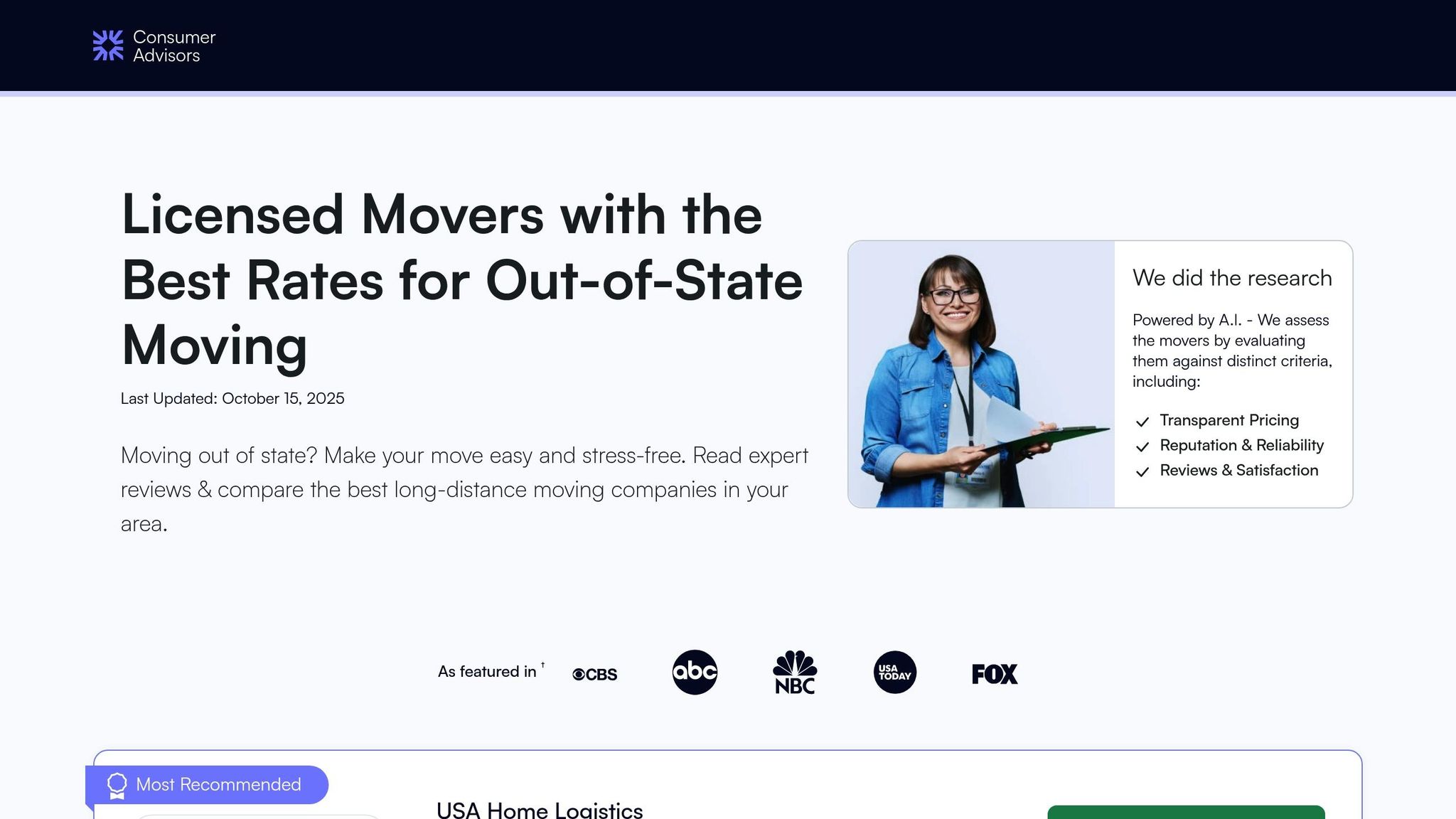
Finding trustworthy movers can be a daunting task, but ConsumersAdvisors.com simplifies the process by connecting you with reliable, pre-screened moving companies. The platform takes care of the verification process, ensuring that each mover meets strict licensing and insurance standards. Instead of spending hours researching, you can quickly access a network of movers that have already been vetted for quality and compliance.
Compare Pre-Screened Licensed Movers
ConsumersAdvisors.com eliminates the hassle of manual verification by thoroughly pre-screening all moving companies listed on the platform. For interstate moves, the site verifies USDOT and MC numbers, while state licenses are checked for local moves. Each mover’s verified credentials are prominently displayed on their profiles. For instance:
- Amerisafe Van Lines: DOT No. 3341650
- USA Home Logistics: DOT No. 2936759
- New Start Relocation: DOT No. 3545015
This level of transparency allows you to confirm a mover's legal status with ease.
"Every mover we recommend must meet our strict standards. Our mover guarantee includes: Proper insurance & liability coverage, Legal USDOT Mover Authority" - ConsumersAdvisors.com
The platform also offers a comparison tool that lets you filter movers based on licensing, insurance, services, customer reviews, and pricing. This helps you make well-informed decisions while reducing the risk of hiring unlicensed operators.
Get Expert Reviews and Clear Pricing
Beyond licensing verification, ConsumersAdvisors.com provides expert reviews written by industry professionals. These reviews evaluate movers based on their licensing, insurance, service quality, pricing transparency, and customer feedback. By highlighting both strengths and weaknesses, the reviews help you choose with confidence.
The platform also features an instant quote service, providing detailed, itemized quotes from licensed movers. These quotes break down all fees, surcharges, and optional services, allowing you to compare offers and potentially save up to 33% on moving costs.
Customer testimonials further enhance the platform’s credibility. For example, Michael from Arlington, TX, shared his positive experience with Amerisafe Van Lines:
"Unlike brokers that just sell your move, they actually handled everything directly. Our coordinator managed it from Philly to Austin without any handoffs. It felt like we had a dedicated team the whole way."
Chloe from Seattle, WA, also praised USA Home Logistics for their professionalism:
"The team was professional but friendly, kept me updated throughout, and ensured careful handling. No surprise charges, no drama, just a smooth move from start to finish."
Work with Verified Moving Companies
ConsumersAdvisors.com integrates all these features to provide a full picture of each mover's reliability. The network includes companies equipped to handle residential and commercial relocations, covering local, interstate, and long-distance moves. Many movers also offer additional services, such as full-service packing, storage, and handling of specialty items, all while maintaining proper licensing and insurance.
The platform actively monitors user feedback and investigates complaints. Movers that fail to meet licensing, insurance, or service standards are promptly removed from the network. This ongoing quality control ensures you’re only matched with dependable companies.
Conclusion: Protect Yourself with Proper License Verification
Checking a moving company's licenses is one of the most effective ways to guard yourself against fraud, loss, and damage. The Federal Motor Carrier Safety Administration (FMCSA) reported over 4,000 moving fraud complaints in 2022 alone[1], and with nearly 35 million Americans moving each year[AMSA], this step is too important to skip.
Licensed movers are required to maintain active insurance and pass safety inspections, giving you legal options if something goes wrong. On the other hand, movers who dodge questions about their license or provide inconsistent documents should raise immediate concerns. Fraudsters often rely on fake websites or shell companies to appear legitimate, which makes independent verification even more critical.
One way to streamline this process is by using a trusted platform like ConsumersAdvisors.com. They offer access to pre-screened movers who are properly licensed and reviewed by experts, saving you time and reducing the risk of falling victim to scams.
Taking the time to verify licenses not only ensures your belongings are in safe hands but also confirms that your mover complies with strict regulatory standards. Whether you choose to do it yourself or rely on a trusted resource like ConsumersAdvisors.com, this step ties together all the precautions we've covered, giving you confidence that your move will be secure and compliant.
FAQs
How can I tell if a moving company is properly licensed?
To ensure a moving company is properly licensed, begin by requesting their USDOT number (mandatory for interstate movers) or any relevant state-specific license numbers for local moves. You can verify the USDOT number on the Federal Motor Carrier Safety Administration (FMCSA) website. For state licenses, reach out to your state's transportation or consumer protection agency.
Licensed movers are usually registered with regulatory authorities, which helps confirm they meet required safety and operational standards. Be wary of companies that can't provide licensing details - this could be a red flag that they’re operating without proper oversight or authorization.
What should I do if a moving company won’t share their license and insurance details?
If a moving company won’t share their license and insurance details, it’s a major warning sign. Legitimate movers are obligated to provide this information to show they’re operating lawfully and responsibly. Without it, you could be putting your belongings - and your money - at risk.
For a secure and hassle-free move, stick with companies that value transparency. Services like ConsumersAdvisors.com can help you compare licensed long-distance movers and connect with reliable options tailored to your needs.
What warning signs should I look for when checking a moving company's licenses and credentials?
When checking a moving company's licenses and credentials, keep an eye out for warning signs that might signal trouble. If a company hesitates to share their license number or if their license can't be verified through official sources, that's a major red flag.
Other signs to be wary of include movers asking for large upfront payments, inconsistent or negative customer reviews, or the absence of a physical business address. These could point to untrustworthy or even fraudulent operations. Verifying a company's legitimacy is a crucial step to safeguard your belongings and ensure your move goes as planned.