Sep 11th 2025
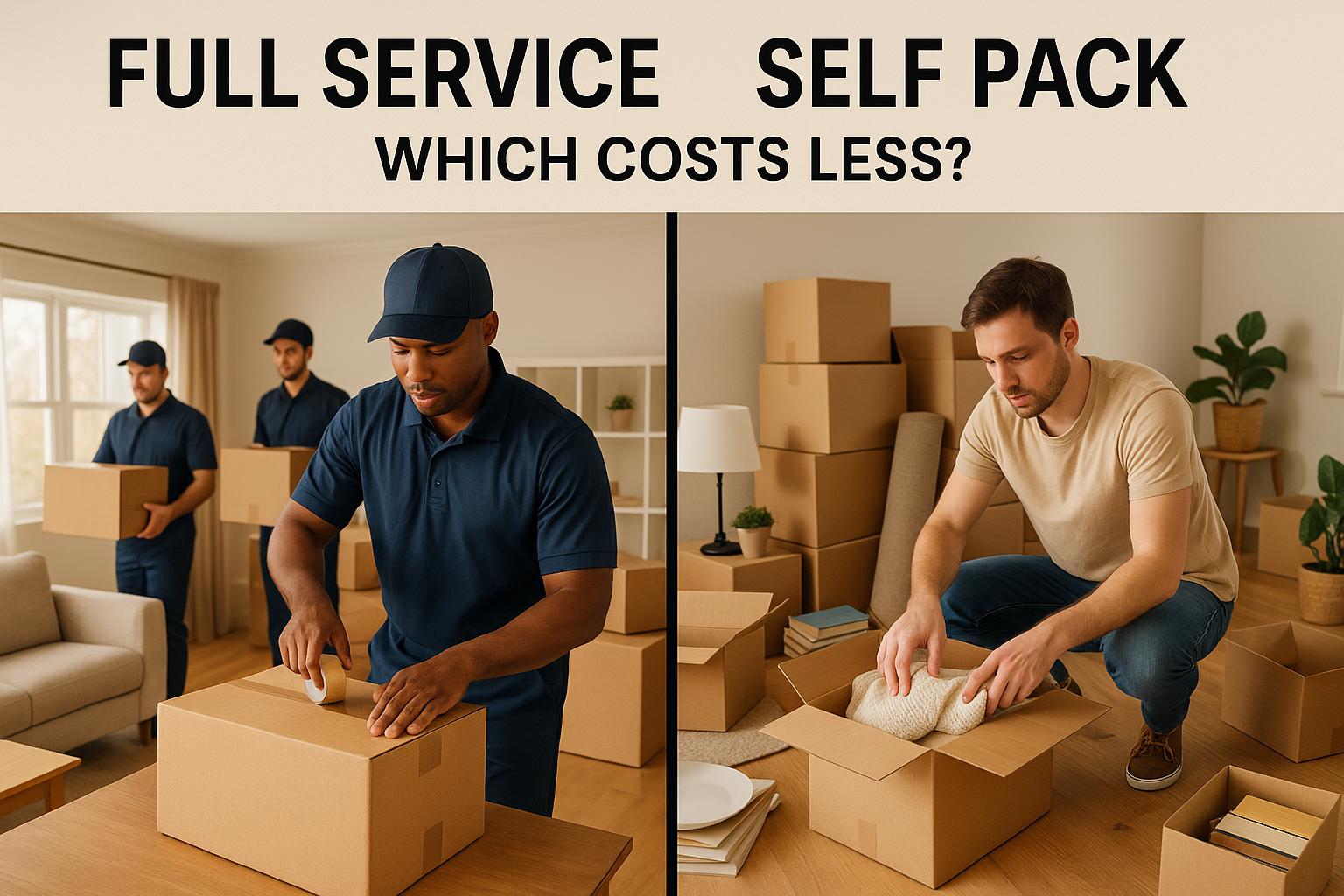
Full Service vs Self Pack: Which Costs Less?
When deciding between full-service and self-pack moving, the choice comes down to cost, convenience, and effort. Full-service movers handle everything - packing, transport, and unloading - but come with higher costs. Self-pack moving is cheaper but requires significantly more time, physical effort, and planning.
Key Takeaways:
- Full-Service Pros: Saves time, reduces stress, includes professional handling, and offers insurance.
- Self-Pack Pros: Lower upfront costs, more control, and flexibility.
- Hidden Costs: Full-service may charge for extras like stairs or long carries; self-pack can include fuel, mileage, or truck rental extensions.
Quick Comparison:
| Factor | Full-Service Moving | Self-Pack Moving |
|---|---|---|
| Upfront Cost | Higher | Lower |
| Time Investment | Minimal | High |
| Physical Effort | None | Significant |
| Risk of Damage | Lower | Higher |
| Hidden Fees | Possible | Possible |
The best option depends on your budget, schedule, and willingness to invest effort. Full-service is ideal for those prioritizing convenience, while self-pack suits those focused on saving money.
DIY vs. Professional Movers: What's the Real Cost?"
Full-Service Moving: What It Costs
Opting for full-service moving means paying more, but it also means covering every part of your relocation. The total cost can vary widely depending on factors like the distance of your move, the size of your home, and any specific requirements. Here's a breakdown of the main cost components to keep in mind.
Main Cost Categories for Full-Service Moves
- Labor: Labor is often the biggest expense. For local moves, movers charge hourly, with the total depending on the crew size and how long the job takes. Long-distance moves, on the other hand, are priced based on the shipment's weight and the distance traveled.
- Packing Services: If you hire professional packers, their fees usually depend on the size of your home and the volume of your belongings. This service typically includes materials like boxes, bubble wrap, and tape. Be aware that handling fragile or high-value items may come with extra charges.
- Transportation: Transportation costs vary based on the distance of your move. For local moves, this includes truck rental, fuel, tolls, and driver fees. For long-distance moves, costs are calculated based on mileage and the shipment's weight.
- Insurance Coverage: Basic insurance is often included in full-service packages, but it provides limited protection. If you want full market coverage, you'll need to pay extra for upgraded insurance.
While these costs add up, full-service moving offers advantages that can make the price worthwhile.
Benefits of Full-Service Moving
One of the biggest perks of full-service moving is the time it saves. Professional movers work much faster than the average homeowner, allowing you to focus on other aspects of your move. Their expertise is particularly valuable when dealing with fragile or expensive items, as they know how to pack, disassemble, and move furniture safely to reduce the risk of damage. The table below outlines the typical costs for both local and long-distance moves.
Full-Service Moving Cost Breakdown
Here’s a breakdown of the main cost categories for full-service moving:
| Cost Category | Local Move | Long-Distance Move | What's Included |
|---|---|---|---|
| Labor & Loading | Hourly rates based on crew size | Based on weight and distance | Professional crew and equipment for loading and unloading |
| Packing Services | Fees vary by home size and items | Costs depend on packing needs and distance | Packing materials, professional service, and care for delicate belongings |
| Transportation | Truck rental, fuel, tolls, and driver fees | Mileage and shipment weight | Vehicle rental, fuel, tolls, and travel-related charges |
| Additional Services | Fees for assembly or temporary storage | Extra charges for specialty needs | Furniture assembly, storage solutions, and handling of specialty items |
Some additional services, like moving a piano or handling heavy items, can increase your total cost. If you need temporary storage, expect to pay a monthly fee on top of your moving expenses.
Seasonal demand can also affect pricing. Rates tend to rise during peak moving times, like summer, while off-peak periods - such as winter or mid-week - may offer lower rates.
Lastly, the size of your home plays a big role in determining costs. Larger homes typically require more time, materials, and manpower, which leads to higher overall expenses.
Self-Pack Moving: What It Costs
Self-pack moving is all about taking charge of your move. You pack your belongings, arrange transportation, and handle the logistics yourself. This hands-on approach gives you more control over costs like truck rentals, packing supplies, and fuel - but it does require effort and careful planning.
Key Costs of Self-Pack Moving
- Truck Rental: The price depends on the truck's size, how long you need it, and the distance you’ll travel. Larger trucks and longer trips will naturally cost more.
- Packing Supplies: You’ll need essentials like boxes, tape, and protective materials. The overall cost will depend on how much you’re packing and the type of items you need to protect.
- Fuel: Don’t forget fuel costs. How far you’re driving and the gas mileage of your rental truck will determine this expense.
These are the primary costs to consider when planning a self-pack move, giving you a clear picture of where your money goes.
Why Choose Self-Pack Moving?
Packing everything yourself not only puts you in control but can also save you money compared to hiring full-service movers. By managing expenses like truck rentals and supplies, you can adjust your spending to fit your budget.
Up next, we’ll compare these costs with full-service moving to help you figure out which option makes the most sense for your situation.
sbb-itb-be87134
Full-Service vs Self-Pack: Side-by-Side Comparison
Understanding the differences between full-service and self-pack moving options can help you find the right fit for your budget and needs. Let’s break down how these two approaches compare in terms of cost, time, and effort.
Cost Comparison Chart
Here’s a quick look at how the key factors stack up:
| Factor | Full-Service Moving | Self-Pack Moving |
|---|---|---|
| Upfront Cost | Higher, as it includes comprehensive services | Lower, since you handle most tasks yourself |
| Time Investment | Minimal - professionals handle everything quickly | Significant - requires planning, packing, and managing logistics |
| Physical Effort | None - you don’t lift a finger | High - packing and loading are your responsibility |
| Risk of Damage | Lower - trained movers handle items carefully | Higher - you’re responsible for packing and transport |
| Hidden Fees | Potential charges for long carries or stairs | Possible extra costs for mileage, fuel, or rental extensions |
| Flexibility | Limited - services are scheduled on fixed dates | Greater - you control the timing and process |
Hidden Costs in Both Options
Both options come with potential extra costs that aren’t always obvious upfront. Full-service movers might charge for things like long-distance carries or navigating stairs, adding to the final bill. On the other hand, self-pack moves often include unexpected fees, like additional charges for exceeding mileage estimates or fuel costs. Insurance is another factor - full-service movers typically offer basic coverage, but it may not fully protect high-value items. For self-pack moves, you’ll likely rely on your homeowner’s or renter’s insurance, which might have its own limitations.
Real Cost Examples by Move Size
The gap between full-service and self-pack costs can vary depending on the size and distance of your move. For smaller moves, full-service options tend to feel much pricier. However, as the move size increases, the difference becomes less dramatic. Larger moves require more packing materials, bigger trucks, and additional labor, which can make self-pack options less cost-effective than they initially seem. For long-distance moves, the efficiency and expertise of full-service movers might justify the higher price tag, especially when you factor in the reduced stress and time commitment.
Ultimately, the best choice depends on aligning your move's size and complexity with the service that meets your priorities.
How to Choose the Right Moving Option
Deciding between full-service and self-pack moving comes down to weighing cost, time, energy, and stress. The best choice hinges on what offers the most value for your specific situation.
Main Factors to Consider
Beyond just cost, there are several other factors to think about. Budget is important, but so are the time and effort involved, as well as the potential risks. While self-pack moving can save money upfront, it might not be worth it if you need to take significant time off work, as lost income could cancel out those savings.
Time is another key consideration. Full-service movers can complete a move in just a day or two, whereas self-pack moves often stretch out over weeks. If you’re on a tight schedule - like starting a new job or meeting a strict closing date - paying extra for full-service moving could be the more practical option.
Self-pack moves also demand physical labor, especially when it comes to lifting and managing bulky or heavy items. If you don’t have the strength, help, or tools for the job, this can quickly become overwhelming. The complexity of your move matters, too. Relocating a small apartment locally is far simpler than moving a large home with fragile or valuable items across the country. In such cases, professional movers might be worth the added expense for their expertise.
Distance is another factor that impacts your decision. Local self-pack moves are generally straightforward, but long-distance moves can bring challenges like extended travel, potential lodging costs, and a higher risk of damage during transit. Full-service movers often handle these logistics more efficiently, which can save you money and reduce stress in the long run.
Get Custom Moving Solutions with ConsumersAdvisors.com

ConsumersAdvisors.com makes it easy to customize your move. You can mix and match services - like hiring professionals to pack fragile items such as kitchenware or artwork while handling less delicate belongings like clothes and books yourself.
The platform offers instant quotes from a network of vetted carriers, so you can compare real costs without any guesswork. This transparency helps you see exactly how your money is being spent and which services deliver the most value. Plus, you’ll have access to dedicated move coordinators who can create a plan tailored to your budget and schedule.
ConsumersAdvisors.com connects you with licensed movers who offer everything from basic truck-and-driver services to full-service options. This flexibility means you can start with a basic quote and add services as needed, instead of paying for an all-inclusive package when you only require partial help.
Getting multiple quotes and understanding what’s included in each one is crucial. A slightly higher quote that covers essentials like insurance, quality packing materials, and guaranteed delivery dates might save you from unexpected costs and stress later on. With customizable options, you can fine-tune your move to fit your exact needs, ensuring a smoother and more efficient process.
FAQs
How can I avoid hidden costs when choosing between full-service and self-pack moving options?
To steer clear of unexpected expenses during both full-service and self-pack moves, it’s essential to dig into the details ahead of time. If you’re going with a full-service option, request a comprehensive estimate that breaks down everything - labor, packing materials, fuel charges, and any extra fees like those for stairs or long carries. Make sure you know exactly what’s covered so there are no surprises when moving day arrives.
For self-pack moves, cutting costs often starts with finding budget-friendly packing supplies. Check local stores for used boxes or hunt down free options online. Careful planning is key here - packing efficiently can help you avoid those last-minute runs for supplies or additional trips that rack up gas costs. Don’t forget to factor in smaller expenses that are easy to overlook, like meals during the move or extra fuel if you’re making multiple trips.
By staying organized and thinking ahead, you can keep these hidden costs in check and make your move as stress-free as possible.
Does moving fragile or valuable items make full-service moving a better choice than self-packing?
If you're relocating fragile or high-value belongings, opting for full-service moving can be a safer bet. Professional movers are skilled in handling delicate items, use appropriate packing materials, and often provide insurance to cover any potential damages. This can help you avoid the expense and hassle of repairs or replacements.
On the other hand, self-packing might seem like a more budget-friendly choice, but it demands a lot of time, effort, and careful attention to detail to protect your items properly. Mistakes in packing can lead to damage, which could end up costing more than the money you initially saved. For fragile or valuable possessions, investing in full-service moving can reduce risks and offer greater peace of mind.
Should I hire professional movers to pack fragile items, or is it better to handle it myself?
Deciding whether to bring in professional movers to pack your fragile items depends on a mix of budget, time, and confidence in your packing abilities. Professional packing services typically range from $50 to $200, depending on the materials and labor involved. While this adds to your moving costs, it also reduces the chances of damage, thanks to their expertise in handling delicate belongings.
On the flip side, packing on your own can save you money and give you complete control over the process. But it does demand time, effort, and meticulous care to ensure fragile items are protected.
To make the best choice, think about your skill level, the complexity of the items you need to pack, and the risks of damage or even personal injury. If you're pressed for time or unsure about how to safely pack breakables, hiring professionals might be a smart move. However, if you're confident in your packing skills and want to keep expenses low, tackling it yourself could be the way to go.