Dec 23rd 2025
Eco-Friendly Packing Tips for Storage Containers
Packing doesn’t have to create waste. Here’s how you can pack efficiently while reducing your impact:
- Use Recyclable and Reusable Materials: Opt for recycled boxes, biodegradable peanuts, or reusable plastic bins instead of single-use items.
- Repurpose Household Items: Towels, clothing, and newspapers make excellent padding for fragile items.
- Source Free Supplies Locally: Check liquor stores, grocery stores, or online groups like Craigslist and Freecycle for free boxes and materials.
- Organize Smartly: Use digital tools for inventory and reusable labels like chalkboard stickers or dry-erase markers.
- Dispose Responsibly: Recycle cardboard, compost biodegradable items, and donate leftover supplies.
How I Pack My Products | Eco-Friendly & Recyclable Packaging
Choosing Green Packing Materials
Switching to eco-friendly packing materials is a smart way to reduce waste while still ensuring your items are well-protected. The key is finding materials that strike a balance between sustainability and durability. Let’s dive into some great options, including recycled materials, reusable supplies, and environmentally friendly fasteners.
Recycled and Biodegradable Options
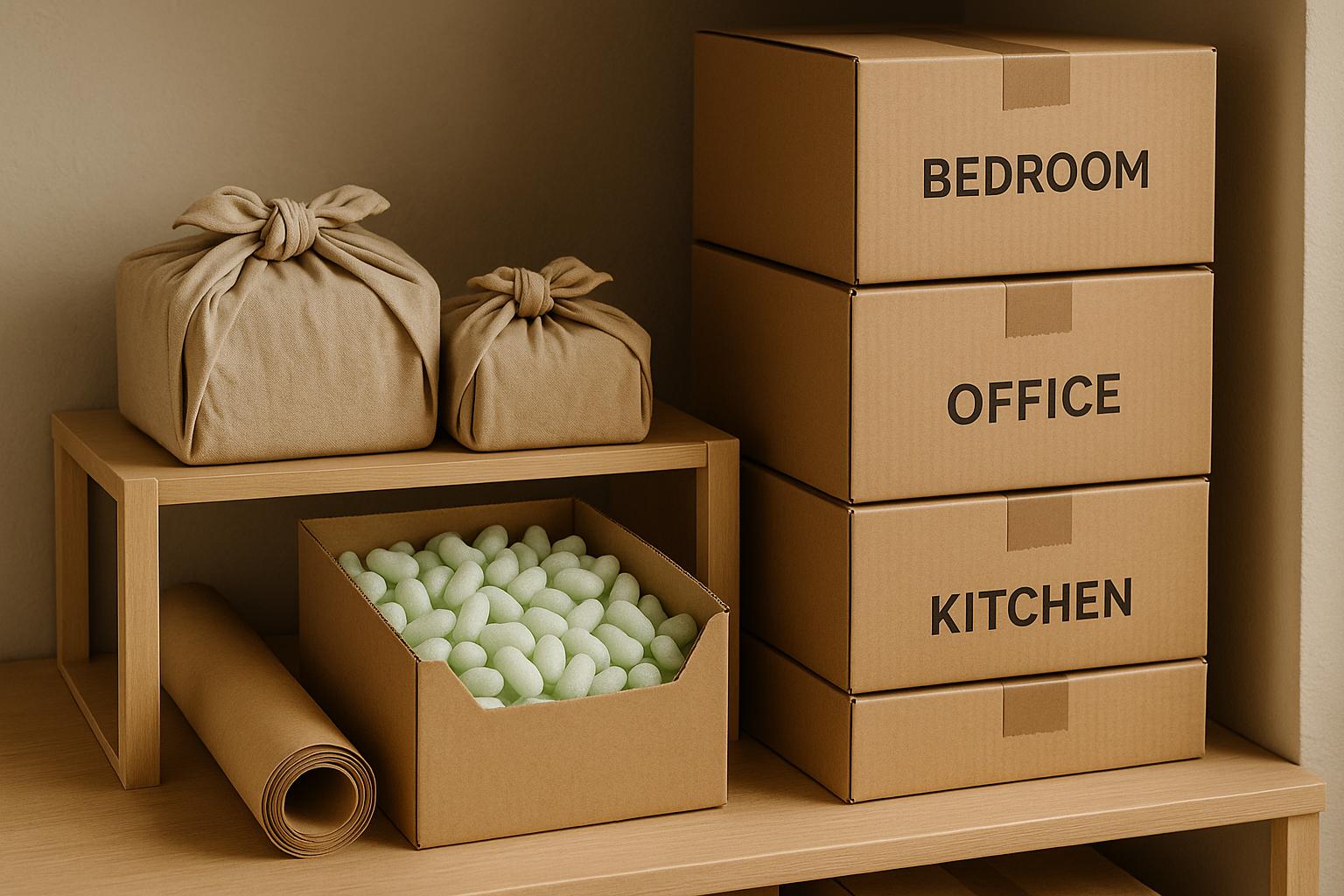
Recycled cardboard boxes are a practical and eco-conscious choice. They reduce the need for new resources while performing just as well as standard boxes. For cushioning, cornstarch-based packing peanuts are a great alternative to traditional foam - they break down naturally without harming the environment. Another option is paper-based bubble wrap, which provides excellent protection for fragile items and can be composted after use.
Reusable Packing Supplies
Reusable supplies are a fantastic way to cut down on waste over time. Durable plastic containers with secure lids can replace single-use boxes and are perfect for multiple moves or storage. Glass jars are handy for organizing smaller items, such as craft materials, while steel bins offer waterproof and heavy-duty protection for more delicate or bulky goods. For wrapping, fabric options like Furoshiki cloths provide a reusable and stylish way to protect various objects.
Earth-Friendly Tapes and Ties
When it comes to sealing and bundling, there are plenty of green alternatives. Water-activated paper tape is a strong and eco-friendly replacement for plastic tape. Reusable plant-based zip ties are another sustainable option for bundling items. Natural fiber twine, such as jute, is a renewable and biodegradable choice for tying packages. For more flexibility, Velcro straps can be reused countless times, making them ideal for securing items inside containers or binding oddly shaped objects.
Finding Free and Cheap Green Materials
Eco-friendly packing doesn’t have to break the bank. With a little creativity, you can source sustainable materials locally, saving money while reducing waste. By tapping into nearby resources, you can find plenty of free or affordable options to support your sustainable packing needs.
Getting Free Supplies Locally
Many local businesses regularly discard sturdy boxes and packing materials that are perfect for reuse. Liquor stores, for example, often have strong boxes with built-in dividers designed to hold heavy glass bottles, making them ideal for protecting fragile items. Other great places to check include big retailers like Walmart, Target, Costco, and Best Buy, as well as grocery stores, bookstores, restaurants, coffee shops, warehouses, schools, and office buildings. These businesses often welcome someone taking packing materials off their hands [3].
Online communities can also be a goldmine for free packing materials. Platforms like Craigslist's "free" section, U-Haul’s Box Exchange service, NextDoor, Buy Nothing groups, Freecycle, Facebook Marketplace, and local "House Moving groups" are excellent places to look for boxes and other supplies [3].
Buying Used Packing Materials
If free options don’t meet your needs, buying pre-used materials is another eco-friendly choice. Thrift stores and garage sales often sell plastic bins, wooden crates, and storage containers at low prices. Websites like BoxCycle specialize in connecting people who want to buy or sell used boxes, creating a sustainable loop of reuse [1]. Additionally, businesses like Economy Packing Supplies offer used and surplus boxes at discounted rates [2].
Don’t overlook local recycling centers or your personal network. Friends, family, and neighbors might have leftover boxes from recent moves or deliveries. When sourcing used boxes, always check for damage or contamination, clean them as needed, and reinforce any weak spots with packing tape to ensure they’re up to the task.
Packing Methods That Cut Waste
Smart packing isn’t just about fitting everything into a box - it’s about cutting down on materials and making sure your belongings stay safe. By packing thoughtfully and using space efficiently, you can save money on supplies while reducing waste.
Making the Most of Space
Start by stacking heavy items on the bottom to create a solid base. Use hollow items like pots, bowls, or boots to hold smaller objects - socks, underwear, or even small electronics fit perfectly in these spaces. Think of packing as solving a puzzle: arrange items to eliminate gaps and maximize every inch. Rolling clothes tightly not only saves space but also keeps wrinkles at bay.
Books can stand upright along the edges of containers, acting as natural dividers. Once you’ve made the most of your space, everyday items can double as padding for delicate belongings.
Using Everyday Items as Padding
Why buy extra packing materials when you already have what you need? Towels, linens, and clothing are excellent for protecting fragile items. Wrap dishes in dish towels, electronics in sweaters, or mirrors in a thick winter coat. Sturdy fabrics like jeans work well for items with sharp edges or corners.
Paper products can also step in as padding. Old newspapers, magazines, or even outdated documents can fill gaps in boxes. Just don’t mix up important papers with the ones you’re using for packing!
Right-Sizing Protection
The level of protection you need depends on the item. Start with a thin layer of soft material, then add more only if you feel movement when you lightly shake the container. This approach works hand-in-hand with optimizing space and reusing materials to minimize waste.
For sturdy items like books, tools, or metal objects, a basic wrap will prevent scratches. Delicate items - like glassware, ceramics, or electronics - need a little extra care. And don’t forget to think about how long your items will be stored. Short-term storage might require less padding, but for long-term storage, where items could face temperature changes or shifting, you’ll want to add an extra layer of protection.
Long-Term Storage Containers
When it comes to long-term storage, it’s worth investing in sturdy, reusable containers that can protect your belongings from temperature changes, moisture, and general wear and tear. While high-quality options may seem pricey upfront, their durability makes them a smart choice by cutting down on replacement costs over time. Different materials suit different storage needs - here’s a breakdown of some of the best options.
Plastic Bins and Wooden Crates
For most storage needs, BPA-free plastic bins are a reliable go-to. Look for clear, stackable models to make it easy to see what’s inside and to save space. These bins are designed to resist cracking and warping, offering long-lasting protection.
If you’re storing heavier items, wooden crates are a solid choice. Their natural ability to allow air circulation helps prevent moisture buildup, which can be especially useful in damp environments. Plus, when they’ve reached the end of their usefulness, they’re biodegradable.
Fabric and Glass Containers
For lightweight storage, fabric bins made from materials like canvas or cotton are a practical option. Their breathable design prevents items from developing that musty odor often associated with long-term storage. Many fabric bins also come with reinforced handles for easier carrying, and some are treated to repel pests, making them ideal for storing seasonal clothing, linens, or craft supplies.
When moisture control is a top priority, glass containers can be a lifesaver. They’re perfect for safeguarding sensitive items like important documents, photos, or electronics. Airtight seals help regulate humidity, while the clear glass makes it easy to identify contents at a glance. Keep in mind that glass containers are heavier and more fragile, so they’re best suited for stationary storage rather than frequent transport.
Metal Storage Options
For the ultimate in durability, metal containers are hard to beat. Stainless steel options are especially resilient, standing up to rust, dents, and extreme temperatures. They’re a great fit for challenging environments like unheated garages or outdoor sheds, offering a long-lasting solution for tough storage conditions.
If you need something lightweight yet sturdy, aluminum cases are worth considering. Many come with foam inserts and waterproof seals, making them ideal for protecting valuable or delicate items. Aluminum’s resistance to rust and its lightweight nature make it a practical and durable choice for a range of storage needs.
sbb-itb-be87134
Green Labeling and Organization
Staying organized with your storage containers can help reduce waste and eliminate the need for single-use labels. A well-thought-out system not only keeps your setup eco-friendly but ensures you can easily track what you’ve stored. The trick is to use methods that are reusable and don’t generate trash every time you reorganize. Start by digitizing your inventory to cut down on waste, and pair it with reusable labels for a clear, physical system.
Digital Inventory Tools
Your smartphone can replace paper lists and sticky notes entirely. Inventory apps or simple note-taking tools allow you to update your records instantly. Apps like Sortly and MyStuff2 let you create visual inventories by snapping photos of your containers and their contents. Alternatively, you can use a basic spreadsheet to list container numbers, contents, locations, and storage dates. These tools make it easy to add descriptions, set reminders for seasonal items, and even track where each container is stored in your home or storage unit.
Reusable Labels
While digital tools are great, physical labels are still essential for quick identification. Reusable options like chalkboard labels, dry-erase markers, and washi tape are practical and waste-free. Chalkboard labels work well on nearly any container and can withstand years of erasing and rewriting. Dry-erase markers, on the other hand, are perfect for plastic bins and wipe clean with a damp cloth. Washi tape adds a pop of color for coding purposes and peels off easily, allowing you to reposition it as needed.
Photo and QR Code Systems
For a hybrid approach, photograph your packed containers to create a visual inventory. Pair these images with free QR codes that link to your digital inventory stored on cloud services. This setup gives you a quick, offline reference for what’s inside each container. Apps like QR & Barcode Scanner can connect these codes to detailed records, including purchase dates, warranty information, and item photos, making it easy to manage your storage efficiently.
Disposing of Packing Materials Properly
Even with the best eco-friendly intentions, some packing materials eventually outlive their usefulness. When reuse is no longer an option, proper disposal becomes key to reducing waste. By familiarizing yourself with local waste management programs, you can help divert these materials from landfills and complete the eco-conscious cycle you started during packing.
Recycling Guidelines
Cardboard is a recycling staple, but it needs a little prep work. Remove any tape, labels, and staples, then flatten the boxes to save space. For plastics, ensure they are clean and dry before dropping them off at designated collection points. Curbside recycling programs often accept common items, but it’s a good idea to double-check local rules, especially for size and preparation requirements.
Plastic wraps, bags, and air pillows are trickier. These materials can jam recycling machinery, so don’t toss them into your regular recycling bin. Instead, look for dedicated collection bins at grocery stores or other retail locations that accept plastic films.
Packing paper is generally accepted in curbside recycling, but there are exceptions. Paper with heavy ink or food contamination might need special handling. Always consult your local waste management guidelines for the best way to dispose of these items.
Composting Natural Materials
Some packing materials, like biodegradable packing peanuts made from cornstarch, are compost-friendly. A quick test: drop one in water - if it dissolves in minutes, it’s safe for composting. Paper-based padding, like shredded newspaper or kraft paper, can also go into your compost pile. Tear larger pieces into smaller strips to improve airflow and speed up decomposition.
If home composting isn’t an option, many communities offer industrial composting programs. These facilities can handle materials that might not break down easily in a backyard setup. Check with your local waste management service to see if curbside or drop-off composting options are available. And if composting isn’t feasible, think about repurposing these materials by donating them.
Donating Used Supplies
Before throwing packing materials away, consider giving them a second life. Local moving companies or packing supply centers often accept clean boxes, bubble wrap, and packing paper. Schools and community centers might also welcome donations for art projects or storage needs.
Online platforms like Freecycle, Buy Nothing, Facebook Marketplace, and Nextdoor are excellent resources for finding people in your area who could use your leftover supplies. Nonprofits and community groups also frequently seek these materials, so donating can be a simple yet impactful way to reduce waste while helping others.
Cutting Carbon Emissions While Packing
When it comes to packing, the choices you make can have a direct impact on your carbon footprint. By being mindful of your approach, you can reduce travel-related emissions and embrace more eco-conscious habits.
Planning Supply Trips
Streamline your errands to minimize fuel consumption when gathering packing materials. Instead of making multiple trips, plan a single, efficient route that covers all your stops. For example, you can combine a supply run with other tasks like grocery shopping or picking up other essentials. If you need to collect large items, coordinate those pickups with your planned errands to save both time and fuel.
Buying Local Supplies
Sourcing packing materials locally is another smart way to cut back on emissions. Local suppliers mean shorter transportation routes, which translates to reduced shipping-related emissions. Plus, by purchasing from nearby businesses, you’re not only lowering your environmental impact but also supporting your local economy.
Packing Only What You Need
Before you start gathering packing supplies, take stock of what you actually need. Decluttering beforehand can significantly reduce the number of boxes and materials required. Items you no longer need can be donated, sold, or recycled instead of being stored. This not only saves you money on storage costs but also lessens the demand for new packing materials, reducing the environmental toll of production and transportation.
Conclusion
Eco-friendly packing isn’t just good for the planet - it’s also a smart way to save money and simplify your move. By using items like towels and blankets for padding, repurposing cardboard boxes from local stores, or opting for reusable plastic bins instead of single-use materials, you can cut down on costs while keeping unnecessary waste out of landfills.
Want to reduce your carbon footprint even more? Declutter before packing, plan errands efficiently, and source materials locally. These steps not only help the environment but also streamline the entire moving process. Plus, staying organized is easier than ever with digital inventories and reusable labels, such as photos or QR codes, eliminating the need for paper-based systems.
Small changes, like using biodegradable tape or composting natural packing materials, can make a big difference. Donating unused supplies is another simple way to extend the environmental benefits of your move. With these habits in place, your future moves will naturally become more sustainable.
Whether you’re relocating cross-country with portable storage containers or temporarily storing items during a renovation, these eco-friendly packing strategies help protect your belongings while caring for the planet. They’re a win-win for your wallet and the environment.
For more tips and expert guidance on planning an eco-conscious move, visit ConsumersAdvisors.com.
FAQs
How can I repurpose household items for eco-friendly packing?
You can give everyday household items a second life by using them for packing, which helps cut down on waste. For instance, old clothes, towels, or bed linens make excellent padding for fragile items. Shoe boxes or cardboard boxes can double as sturdy organizers or storage containers. Even glass jars and plastic containers come in handy for storing small items like screws, cords, or other loose bits.
Reusing these materials not only reduces waste but also eliminates the need to buy single-use packing supplies. It's a simple way to make your moving or storage process a little kinder to the planet.
How can I make sure my packing materials are genuinely biodegradable and not just labeled that way?
To make sure your packing materials are genuinely biodegradable, check for certifications like BPI (Biodegradable Products Institute) or similar trusted labels. These certifications confirm that the materials will break down properly in composting facilities. Common options include bamboo, PHA (polyhydroxyalkanoates), and starch-based films, which are generally reliable choices.
You can also try a simple home test - see if the material dissolves in water or breaks down in your home compost within a reasonable timeframe. Be cautious with products labeled as "biodegradable" without clear certifications or scientific evidence, as they might not fully decompose in typical conditions.
How can I reduce my environmental impact when sourcing packing materials locally?
When sourcing packing materials locally, consider suppliers that provide eco-conscious options like recycled, biodegradable, or compostable materials. Reusing or repurposing items such as boxes, bubble wrap, and padding is another great way to reduce waste. By supporting nearby businesses that emphasize environmentally friendly practices, you can also help minimize transportation emissions while contributing to greener efforts in your community.