Oct 8th 2025
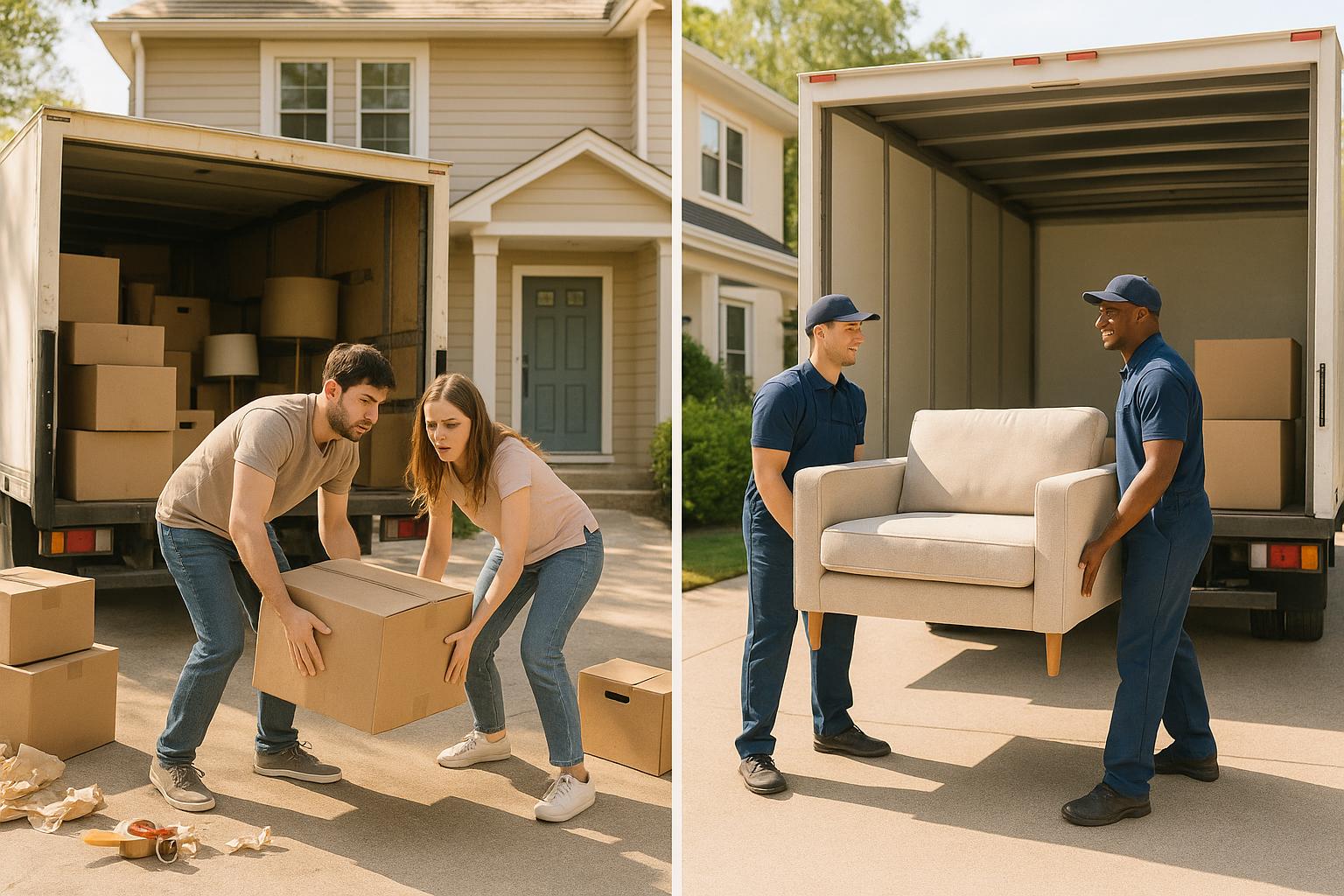
DIY Moving vs. Hiring Movers: Who Saves More?
When deciding between a DIY move and hiring professional movers, the choice often comes down to cost versus convenience. While DIY might seem cheaper upfront, hidden expenses like fuel, equipment rentals, and potential lost wages can quickly add up. On the other hand, professional movers cost more but save you time, reduce stress, and minimize risks like property damage or personal injury.
Key Takeaways:
- DIY Pros: Lower upfront costs, flexibility in scheduling, and control over the process.
- DIY Cons: Hidden expenses (fuel, lodging, supplies), physical strain, and higher risk of damage or injury.
- Professional Movers Pros: Faster, safer, and includes services like packing, insurance, and specialty item handling.
- Professional Movers Cons: Higher upfront costs and less control over the process.
Quick Comparison:
| Criteria | DIY Move | Professional Movers |
|---|---|---|
| Cost | Lower upfront, but hidden costs | Higher upfront, fewer hidden costs |
| Time & Effort | Significant personal time required | Minimal effort required |
| Risk of Damage/Injury | Higher | Lower |
| Convenience | Limited | High |
Ultimately, the best choice depends on your budget, time availability, physical ability, and the complexity of your move. For long-distance or large moves, professional movers may be worth the investment. For smaller, local moves, DIY can be a practical option with proper planning.
DIY vs. Professional Movers: What's the Real Cost?"
Cost Breakdown: DIY Moving vs. Hiring Movers
When it comes to moving, the advertised costs only tell part of the story. Both DIY moves and hiring professional movers come with additional expenses that can significantly impact your budget.
DIY Moving Expenses
-
Truck Rental Costs
Renting a truck is often the largest expense for a DIY move. Rates depend on factors like the truck size, rental duration, locations for pickup and drop-off, and even the season. It's worth shopping around to compare rates from different companies to find the best deal. -
Mileage and Fuel Charges
Rental companies typically charge for mileage and fuel, which can quickly add up, especially for long-distance moves. Be sure to include these charges when calculating your total cost. -
Packing Supplies
Supplies like boxes, tape, bubble wrap, and furniture pads are essential for a DIY move. The cost will vary depending on how much you need and the fragility of your belongings. -
Equipment Rental
Moving heavy or bulky items often requires specialized equipment, such as dollies or straps. Rental fees for these tools depend on the type of equipment and how long you’ll need them. -
Lodging and Meals
If your move spans several days, don’t forget to account for expenses like hotel stays and meals along the way. These costs can sneak up on you and should be factored into your budget.
In contrast, professional movers typically include these elements in their overall service fees.
Professional Moving Service Costs
-
Labor and Transportation
Professional movers calculate costs based on factors like the weight of your belongings, the distance of the move, and the size of your home. Because of this, the final price can vary widely. -
Insurance Coverage
Moving companies usually offer basic insurance as part of their quote, but you can opt for more comprehensive coverage to protect your belongings. Keep in mind, upgrading to full replacement value coverage will increase your overall cost. -
Additional Services
Services like packing, disassembling and reassembling furniture, or even storage often come with extra fees. Be sure to ask about these costs when getting quotes. -
Specialty Item Handling
Items like pianos, antiques, or artwork require extra care during transport. Professional movers may charge additional fees for safely handling these specialty items.
Hidden Costs You Might Miss
-
Lost Wages
A DIY move demands a significant time commitment, which could mean taking unpaid time off work. This is an often-overlooked expense when budgeting for a move. -
Damage and Injury Costs
Without professional expertise, there’s a higher risk of damaging your belongings or even injuring yourself. Repair costs or medical bills can quickly add up, making professional movers a safer option in many cases. -
Stress-Related Expenses
Managing a DIY move can be overwhelming, leading to unexpected expenses like ordering takeout or hiring cleaning services when you’re too exhausted to handle everything yourself. -
Return Trip Costs
Renting a truck for a one-way move might require additional fees or logistical planning for returning the vehicle, adding to your overall costs. -
Tool and Equipment Purchases
If you don’t have the necessary tools for the job, purchasing them can increase your expenses.
These hidden costs highlight the importance of weighing not just the financial aspect, but also the time, effort, and potential risks involved in your moving choice.
Time, Effort, and Risk Factors
Moving isn’t just about the money - it’s also about the time, effort, and risks involved. Taking these factors into account gives a clearer understanding of what each moving option truly entails.
Time and Physical Demands
DIY moves often require more time and effort than people anticipate. For example, moving the contents of a typical 3-bedroom home yourself can take anywhere from 25 to 35 hours of physical labor and preparation. In contrast, professional movers can complete the same job in under 10 hours[1]. When you go the DIY route, you’re not just packing boxes; you’re also planning the entire process, renting trucks, and coordinating logistics. On top of that, the physical labor - lifting, bending, and hauling heavy or bulky items like refrigerators, king-sized beds, and sectional sofas - can be exhausting and often requires help from others[3].
While DIY moves allow you to work at your own pace, the physical and time demands can quickly become overwhelming. Professional movers, on the other hand, bring trained teams, specialized tools, and efficient systems to handle these tasks. Their experience allows them to complete moves quickly and with far less stress.
"People often underestimate the real costs of a DIY move. It's not just about money - it’s about your time, your health, and your peace of mind." - Vidyadhar Garapati, CEO, Movers.com[1]
Risks of DIY Moving
DIY moving carries its own set of risks, with statistics showing that 1 in 4 people experience damage to their belongings or suffer personal injuries during the process[4]. These risks are heightened by the physical demands of moving, especially when stress and fatigue set in.
Personal Injuries: Heavy lifting, awkward postures, and tasks outside your usual routine can lead to back injuries, muscle strains, or accidents. Without proper training or equipment, the chances of injury increase significantly.
Property Damage: Navigating tight spaces, staircases, and doorways without professional techniques often results in scratched floors, dented walls, or damaged furniture[2]. Most DIY movers lack the tools and know-how to prevent these mishaps.
Insurance Gaps: Unlike professional movers, DIY moves typically aren’t covered by standard homeowner’s or renter’s insurance policies. This means you’re financially responsible for replacing damaged items or repairing property damage. Add in risks like bad weather, vehicle breakdowns, or other unexpected delays, and a DIY move can quickly spiral into a costly, multi-day ordeal.
Why Professionals Are Worth Considering
Professional movers offer a safer and more efficient alternative to the risks of DIY moves. Their expertise comes from handling these challenges daily, whether it’s maneuvering through narrow hallways or carefully navigating steep staircases. They also use specialized equipment to reduce strain and protect both your belongings and your property[2].
Another key advantage is insurance. Professional moving companies are insured and bonded, meaning you’re covered if something is damaged or lost during the move[2]. Their systematic approach also keeps everything running smoothly - they manage logistics, adapt to unexpected challenges, and stick to schedules. Plus, their packing techniques maximize space while ensuring items are secure for transport, reducing the risk of damage during loading and unloading.
In short, professional movers take much of the stress out of moving, offering peace of mind that’s hard to put a price on.
sbb-itb-be87134
Cost Analysis by Moving Situation
The actual cost difference between a DIY move and hiring professional movers depends largely on your unique circumstances. By understanding how expenses and logistics vary, you can make a more informed and financially sensible choice for your move. Let’s take a closer look at how the size of your home and the distance of your move influence costs.
Small vs. Large Home Moves
If you’re moving out of a studio or one-bedroom apartment, a DIY move often involves just truck rental, fuel, and supplies, which usually keeps costs lower. On the other hand, professional movers typically charge higher fees due to labor and time, making them a pricier option for smaller moves.
But as the size of your home grows, the cost gap between DIY and professional movers can shrink. Larger homes mean more belongings, and items like pianos, pool tables, or large appliances can make the DIY option less economical. In cases like these, the expertise and equipment provided by professionals may justify the additional expense.
Local vs. Long-Distance Moves
For local moves, DIY is often the more affordable choice since you can complete the move in a single day with lower rental and fuel costs. Professional movers, however, usually charge hourly rates and may have minimum time requirements, which can quickly drive up costs.
Long-distance moves, on the other hand, introduce additional expenses for DIY movers. Beyond truck rental and fuel, you’ll need to budget for lodging, meals, and possibly lost income from time off work. The physical toll of a long-distance move can also be significant. In these scenarios, professional movers - who handle the logistics and heavy lifting - can sometimes be the more cost-effective option when you factor in convenience and time saved.
For moves that fall somewhere between local and long-distance, the decision often hinges on your willingness to handle the challenges of driving a large truck versus the ease and efficiency provided by professional services.
Real-World Cost Examples
Take, for instance, a small local move where DIY proved to be the cheaper option, despite the initial costs of truck rental and supplies. Contrast that with a long-distance family move, where added expenses for equipment and labor reduced the cost savings of going DIY. These examples highlight how the specifics of your move can greatly influence the financial outcome.
How to Choose the Right Moving Option
Your choice of moving method depends largely on your personal priorities. It's not just about the cost - several factors come into play when deciding what works best for you.
Main Decision Factors
Budget considerations often push people toward DIY moves, especially if they have some financial wiggle room. However, it's essential to factor in hidden expenses like truck rentals, gas, and moving supplies. Time availability is another huge factor. A DIY move demands a significant time commitment for planning, packing, loading, driving, and unloading. If your schedule is tight due to work or limited vacation days, hiring professionals could save you precious hours.
Physical ability and health are also critical. Moving heavy furniture and boxes - especially up and down stairs - can be taxing. If you have back issues, mobility limitations, or simply want to avoid the physical strain, hiring movers is a smart investment.
The complexity of your move can influence your decision as well. If you're moving a basic apartment with standard furniture, a DIY approach might work fine. But if you’re dealing with delicate items like pianos, antiques, or fragile electronics, professional movers with specialized equipment and expertise are often the safer choice. The cost of repairing or replacing damaged items can easily surpass the price of hiring help.
Distance and logistics play a big role, too. For local moves within the same city, a DIY approach is manageable. But for cross-country relocations, the challenges of overnight stops, unfamiliar roads, and extended truck rentals make professional services far more practical.
Ultimately, your decision boils down to balancing cost, time, and risk. If you’re leaning toward professional movers, ConsumersAdvisors.com can help simplify the process.
How ConsumersAdvisors.com Can Help

For those considering professional movers, ConsumersAdvisors.com makes the selection process much easier. The platform provides instant quotes from licensed moving companies, saving you the hassle of researching and contacting movers individually.
On top of that, ConsumersAdvisors.com offers expert reviews and detailed profiles of vetted companies. This helps you avoid unreliable or unlicensed movers who might hit you with hidden fees or mishandle your belongings. Whether you need full-service packing, storage solutions, or help coordinating a residential or commercial move, the platform connects you with reputable providers.
Their network includes movers offering a range of services - from basic truck-and-driver packages to full-service options that handle packing, loading, transportation, and unloading. This flexibility allows you to find a service level that fits your budget while still getting the professional assistance you need.
Tips for Making Your Final Choice
Here are some practical tips to help you make the best decision:
- Create a realistic budget. Factor in all potential costs for both DIY and professional options. For example, if your time is worth $25 per hour and a DIY move takes 20 extra hours, that’s $500 in opportunity cost alone.
- Get multiple quotes. Professional moving prices can vary widely. Some companies even offer package deals that make hiring movers more affordable than you might think. Just be cautious of quotes that seem too low - they often come with hidden fees or involve unlicensed operators.
- Consider hybrid options. You could pack your belongings yourself and hire professionals for the heavy lifting, transportation, and unloading. This approach reduces costs while still ensuring that the most challenging tasks are handled by experts.
- Evaluate your stress tolerance. Moving is inherently stressful, and DIY moves can amplify that stress with physical demands and logistical hurdles. If you’re already managing a job change, family responsibilities, or other major life events, paying for professional movers might be worth it for the peace of mind.
- Think about insurance. Professional movers typically offer insurance to cover damages, while DIY moves leave you fully responsible for any losses or breakages.
Choosing between DIY and professional moving isn’t just about upfront costs. It’s about finding the right balance of money, time, effort, and risk to suit your specific needs.
Conclusion: Cost vs. Convenience Trade-offs
Choosing between a DIY move and hiring professional movers boils down to what matters most to you - saving money or saving time and effort. There's no one-size-fits-all answer here; the right choice depends on your unique situation, budget, and priorities.
If you're leaning toward DIY, you'll likely save on expenses like truck rentals, fuel, and supplies, especially for smaller or local moves. However, these savings come with trade-offs: you'll need to invest significant time, endure physical strain, and take on the risks of handling everything yourself. Plus, there are often hidden costs to consider, like taking time off work, renting specialized equipment, and the mental load of coordinating every detail.
On the other hand, professional movers come at a higher price but bring valuable perks like expert packing, careful handling, insurance coverage, and a lot less stress. Their efficiency and expertise can be a game-changer, particularly if you have a packed schedule or a more complicated move.
For many, a hybrid approach strikes the right balance. For instance, you could pack non-fragile items yourself while leaving the heavy lifting or delicate items to the pros. This way, you get to save on costs without sacrificing the convenience and skill that professionals provide.
To make the decision process easier, ConsumersAdvisors.com offers a helpful tool: instant quotes from vetted, licensed movers. This feature takes much of the guesswork out of comparing options, helping you find reliable services at competitive rates.
Ultimately, the cheapest route isn't always the smartest. By weighing factors like time, stress, and potential risks, you can make a choice that aligns with your needs. Whether you go the DIY route or hire professionals, careful planning and a realistic budget will set the stage for a smoother move to your new home.
FAQs
What unexpected expenses should I consider when planning a DIY move?
When you're gearing up for a DIY move, it's easy to underestimate the hidden costs that can sneak up on you. For starters, truck rental fees often come with extra mileage charges and fuel costs. If you're covering a long distance, these expenses can add up faster than you'd expect. Then there’s the need to stock up on packing materials - think boxes, tape, and padding - as well as renting equipment like dollies or straps to handle those bulky, heavy items safely.
On top of that, there’s the risk of unexpected expenses, like damage to your belongings, which may not be covered by insurance, or even property damage to your home - scratched walls and scuffed floors are all too common during a move. And don’t forget to factor in the value of your time. Packing, loading, and driving can be incredibly time-consuming, potentially causing you to miss work or adding unnecessary stress to your plate. When you put all these factors together, you might find that a DIY move isn’t as budget-friendly as it seems at first glance.
How do professional movers handle specialty items compared to a DIY move?
Professional movers come equipped with the right tools and skills to handle delicate, heavy, or high-value items like pianos, artwork, and antiques. Their training allows them to maneuver through tight spaces and secure these belongings properly, reducing the risk of damage during transportation.
On the other hand, DIY moves often miss the mark when it comes to having the right equipment or know-how. This can lead to a higher chance of damage or even personal injury when dealing with specialty items. For added safety and peace of mind, trusting professionals is usually the better option for these kinds of belongings.
What should I think about when choosing between a DIY move and hiring professional movers for a long-distance relocation?
When choosing between a DIY move and hiring professional movers, it's essential to weigh factors like budget, time, and physical ability. Professional movers can take a lot off your plate - they handle the heavy lifting, packing, and logistics, making the process smoother and less stressful. However, this convenience often comes with a higher price tag.
On the flip side, a DIY move can save you money, especially if you're comfortable taking charge of packing, driving, and organizing. That said, it demands a lot of effort and can be physically taxing.
To decide what works best for you, consider your timeline, the amount of help you'll have, and whether you're ready to tackle the challenges of moving on your own. If safety and convenience are at the top of your list, investing in professional movers might be the way to go. But if you're prioritizing cost savings and flexibility, a DIY move could be the better fit.