Jan 23rd 2026
Best Materials for Protecting Furniture in Transit
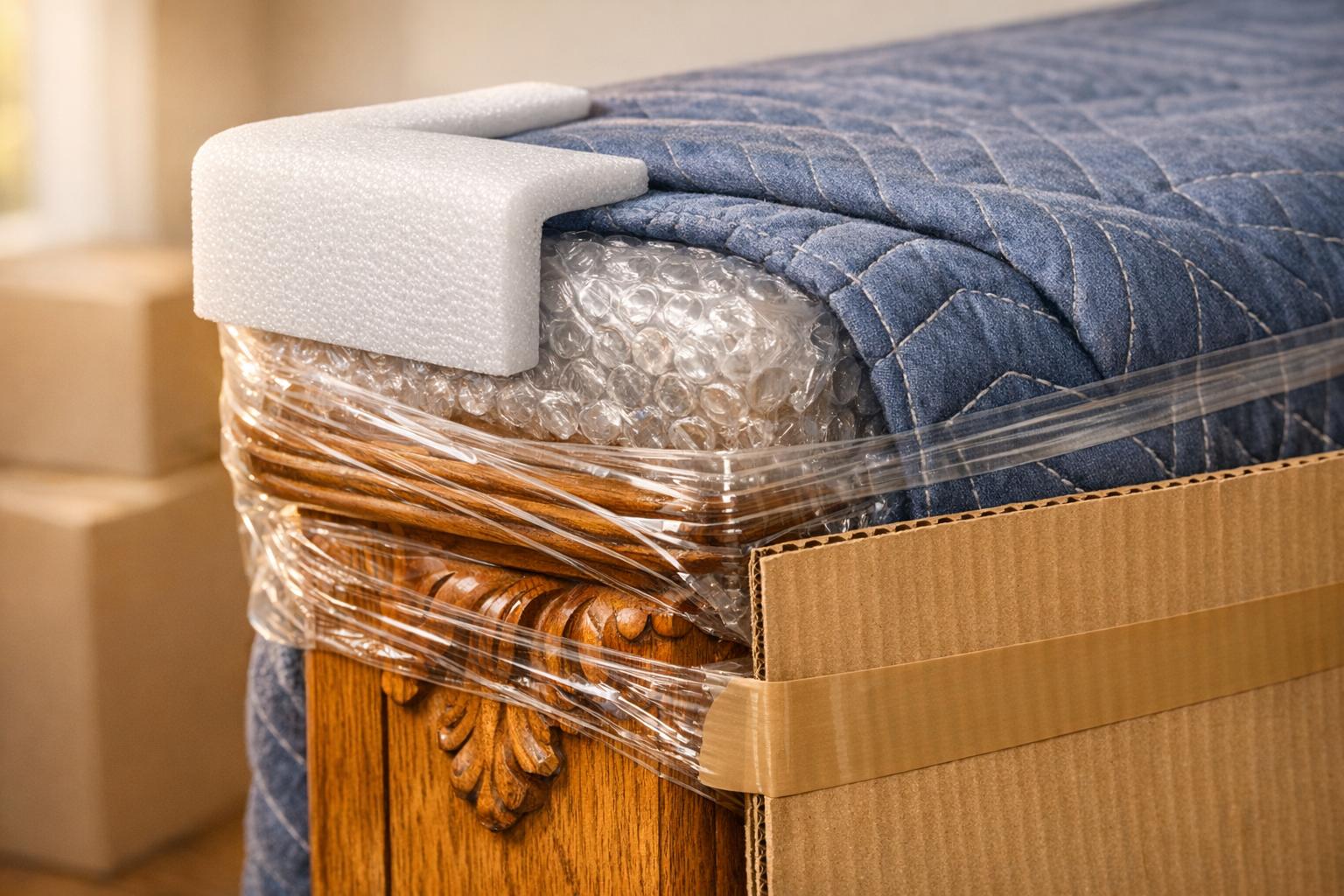
When moving furniture, damage risks like scratches, dents, or moisture exposure are common. Using the right materials can prevent these issues and keep your furniture safe. Here’s a quick guide to the best options:
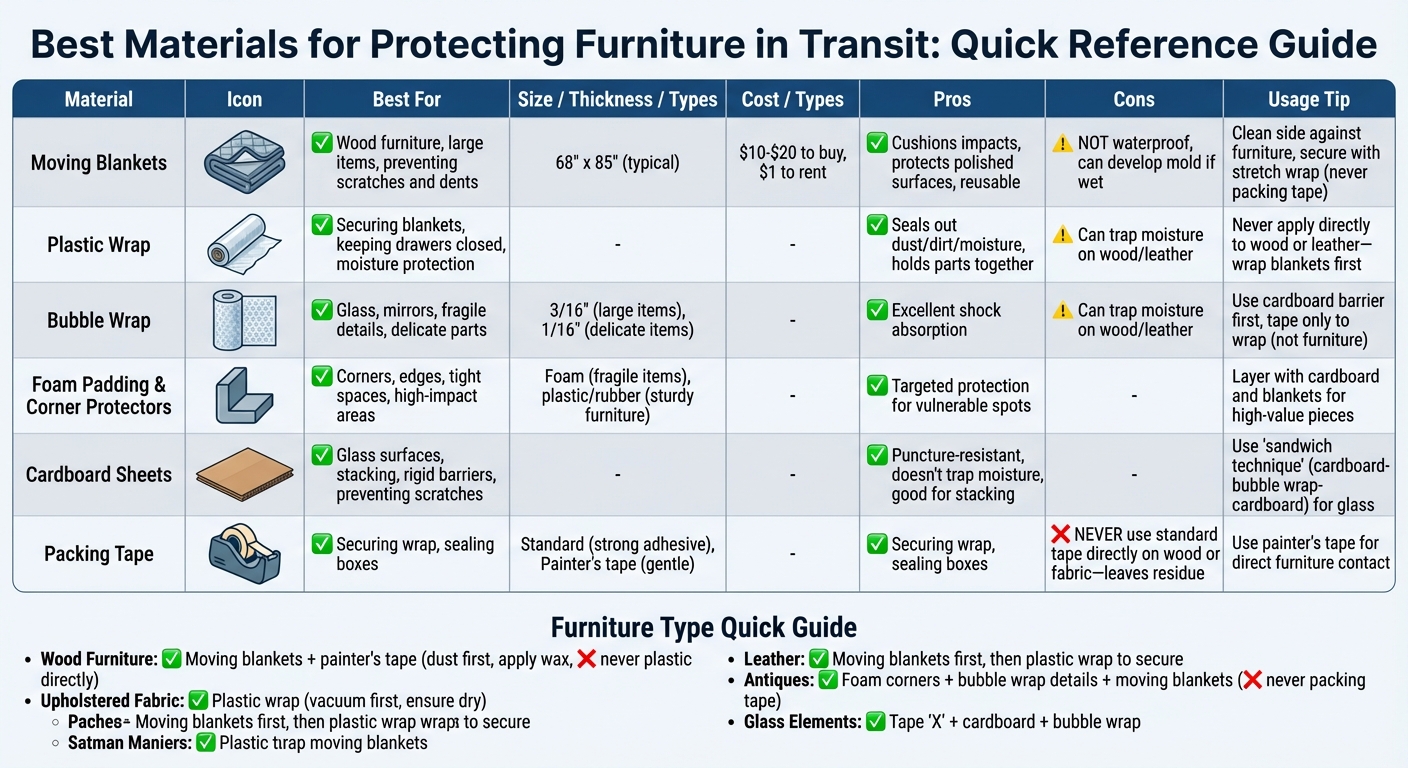
- Moving Blankets: Thick, quilted covers that cushion impacts and prevent scratches. Ideal for wood and large furniture. Not waterproof, so avoid using them in wet conditions.
- Plastic Wrap: Secures blankets, protects from dirt and moisture, and keeps drawers or parts in place. Avoid direct contact with wood or leather to prevent damage.
- Bubble Wrap: Best for fragile parts like glass, mirrors, or intricate details. Use with cardboard for extra protection.
- Foam Padding & Corner Protectors: Shields corners and edges during tight moves. Foam rolls or cardboard can also work for irregular shapes.
- Cardboard Sheets: Adds a rigid barrier for stacking or protecting surfaces. Essential for glass or polished wood.
- Packing Tape: Use carefully to secure materials without leaving residue. Painter’s tape is safer for direct application.
Best Furniture Protection Materials Guide: When and How to Use Each Type
How to Protect Furniture for Moving and Storage - How to Pad and Wrap a Dresser Professionally
sbb-itb-be87134
Core Materials for Furniture Protection
When moving, protecting your furniture is key, and three materials stand out as your go-to options: moving blankets (or furniture pads), plastic wrap (commonly called stretch or shrink wrap), and bubble wrap. Each serves a specific purpose, and using them correctly can make all the difference in keeping your furniture safe. Together, they create a reliable shield against physical damage and environmental factors. Let’s break down how each material works and when to use it.
Moving Blankets and Furniture Pads
Moving blankets are your first line of defense. These quilted, durable layers are designed to prevent scratches, dents, and other damage during transit. Typically measuring 68″ x 85″, they’re large enough to wrap most furniture pieces entirely [7]. Professional-grade blankets, often made from recycled cotton and double-stitched, offer extra durability.
As U-Haul explains:
"Whether you realize it or not, moving blankets (or furniture pads) are a major moving essential, up there with moving trucks and moving boxes." [7]
These blankets cushion impacts and shield polished surfaces and upholstery from dust and debris. They’re versatile, too - you can drape them over doorways or attach them to walls in high-traffic areas to protect your home during the move. When using them, always place the cleaner, lighter side against the furniture to avoid transferring dirt. Secure the blankets with stretch wrap or large rubber bands instead of packing tape, which can leave sticky residue or damage finishes.
For smaller furniture like chairs or nightstands, one blanket usually does the job. Larger items, such as sofas or dining tables, may need two or three blankets. Keep in mind, however, that moving blankets are not waterproof. If they get wet and stay on your furniture, mold or mildew could develop [5]. You can rent them for about $1 per blanket from companies like U-Haul, or buy them for $10 to $20 each [5]. While old towels or bedspreads might work in a pinch, they don’t offer the same level of padding and impact resistance [5].
Plastic Wrap and Shrink Wrap
Plastic wrap is a versatile tool when moving furniture. It serves two main purposes: securing protective layers like moving blankets in place and shielding items from dust, dirt, and moisture.
"Stretch wrap will help you secure the furniture blankets, so they don't fall off during the move and leave your furniture exposed to damage, and will provide excellent protection against dust, dirt, and moisture." [1]
Plastic wrap is ideal for bundling furniture parts, keeping drawers closed, and holding disassembled components like bed rails or table legs together. It can also be applied directly to fabric upholstery to guard against stains and tears. However, avoid placing it directly on wood or leather surfaces, as it can trap moisture and damage the finish, especially in warm conditions. For these materials, wrap the furniture in moving blankets first, then use plastic wrap to secure everything.
For items like dressers with intact drawers, wrapping the entire unit keeps the drawers shut and prevents contents from spilling out. Plastic wrap is also helpful for keeping small parts together, making it easier to reassemble furniture later.
Bubble Wrap
Bubble wrap is perfect for protecting fragile and delicate furniture parts. Its air-filled bubbles absorb impacts, making it ideal for glass tabletops, mirrors, and intricate decorative details. It’s also a great choice for non-removable legs, armrests, or other delicate features.
For glass surfaces, start by taping a large "X" across the glass with masking tape to reduce the risk of shattering. Then, place a flat piece of cardboard over the glass before wrapping it in bubble wrap and adding a layer of packing paper. For larger items like furniture legs, go with a 3/16-inch bubble thickness, while smaller, more delicate items like china benefit from a thinner 1/16-inch wrap [6].
Avoid wrapping wood or leather directly with bubble wrap, as it can trap moisture. Instead, use packing paper or moving blankets as a barrier. When securing bubble wrap, use packing tape carefully - make sure it sticks only to the wrap and not the furniture itself to avoid residue or damage. For electronics, anti-static bubble wrap is your best bet to prevent static discharge.
While bubble wrap offers excellent shock absorption for fragile items, moving blankets remain the better option for covering larger surfaces and preventing scratches and dents. Each material has its strengths, and using them together ensures your furniture stays safe during the move.
Materials for Specific Protection Needs
When moving furniture, some pieces require extra attention to protect their most vulnerable areas. Corners, edges, and delicate details are prone to damage, so using the right materials can save you from expensive repairs. Here's how to safeguard those sensitive spots effectively.
Foam Padding and Corner Protectors
Corners and edges often bear the brunt of impacts, especially when maneuvering furniture through doorways or tight spaces. Foam corner protectors are specifically designed to cushion these areas. They come in foam, plastic, or rubber options, each suited for different furniture types. For fragile items like glass tabletops, mirrors, and picture frames, foam protectors are ideal, as they absorb shocks effectively. For sturdier wooden furniture, such as desks or cabinets, plastic or rubber guards offer a tougher shield against blunt impacts.
If you're looking for a DIY solution, folded corrugated cardboard can work as a substitute. For irregularly shaped items, foam padding rolls can provide tailored protection. For high-value pieces, consider layering foam padding, cardboard, and a moving blanket, then securing everything with stretch wrap for maximum safety.
Packing Tape and Securing Materials
Packing tape is essential for keeping protective layers in place during transit. Standard packing tape has a strong adhesive, making it perfect for sealing boxes or securing plastic wrap. However, it’s not safe to apply directly to furniture, as it can leave sticky residue. Instead, use painter's tape for direct application on wood or upholstery - it’s gentle and won’t damage finishes.
A good rule of thumb: never use standard packing tape on wood or fabric surfaces. Instead, reserve it for tasks like securing bubble wrap, holding cardboard sheets together, or tightening plastic wrap around moving blankets. Stretch wrap is another excellent option for securing drawers and doors, ensuring they stay closed and don’t cause damage during the move. For added protection, cardboard sheets can be used to create a rigid barrier.
Cardboard Sheets and Boxes
Cardboard sheets are a versatile tool for protecting furniture. They act as a sturdy barrier, preventing scratches, pressure marks, and damage to finishes when items are stacked. For glass tabletops and mirrors, cardboard provides an extra puncture-resistant layer that works well alongside bubble wrap. A "sandwich technique" - placing cardboard on both sides of bubble-wrapped glass - offers the best protection against impacts [9].
Double-walled cardboard boxes, such as mirror boxes or dish packs, are perfect for heavy or fragile items. These boxes often include dividers to keep parts like glass shelves, legs, or decorative details separated, reducing the risk of friction damage [10][3]. Cardboard also fills gaps in the truck, preventing items from sliding or toppling during transit [10].
While moving blankets cushion surfaces, cardboard sheets provide a flat, rigid layer that’s especially useful for stacking heavy items on upholstered or polished furniture [9][11]. Unlike plastic wrap, cardboard doesn’t trap moisture, making it a better choice for protecting wood furniture [8][9].
Choosing Materials by Furniture Type
When it comes to protecting your furniture during a move, the type of material matters - a lot. Using the wrong method can lead to unnecessary damage. For example, what works for wood might ruin leather, and fabric care differs entirely from what antiques need. Here's how to handle different furniture materials the right way.
Wood Furniture
Moving blankets are a must for wood furniture. These thick, quilted covers act as a cushion, absorbing impacts and preventing scratches [1][5]. You can buy good-quality moving blankets for $10–$20 each or rent them for about $1 per blanket. When wrapping, always place the lighter, clean side against the furniture and keep the darker, dirtier side facing out [5].
One crucial tip from moving expert Jessica Ryan:
"Do not wrap wooden furniture directly in plastic wrap – wood needs to breathe and the plastic material will not allow it. As a result, condensation may form and moisture may get trapped... This may lead to mold growth or may cause the wood to swell or warp" [1].
Instead, wrap the wood in moving blankets first, then secure them with plastic stretch wrap. Use painter's tape instead of packing tape to avoid sticky residue or damage to the finish [1].
Before wrapping, make sure to dust all surfaces thoroughly. Dust can act like sandpaper during transit, scratching the finish [1][2]. For extra protection, apply a layer of furniture wax to fine wood surfaces before packing [2]. If your piece has glass doors or tops, tape a large "X" across the glass to minimize shattering risks, then cover the glass with cardboard before wrapping in blankets [1][2].
Upholstered Furniture
For fabric furniture, plastic stretch wrap is your best friend. It seals out dirt and moisture while adding a tear-resistant layer of protection. But for leather upholstery, take extra care: start with moving blankets to prevent moisture buildup, then secure the blankets with plastic wrap.
Before wrapping, vacuum the furniture to remove dirt and debris that could cause stains or scratches during the move. Make sure everything is completely dry before applying plastic wrap - any trapped moisture could lead to mold or mildew. If you're moving during bad weather, adding plastic wrap over the moving blankets can help keep water out and prevent mildew.
While modern upholstered pieces are relatively straightforward to protect, antiques or delicate items require extra attention.
Antique and Delicate Items
Protecting antiques and fragile furniture means layering up. Start by using foam corner guards or folded corrugated cardboard to shield edges from chips or cracks. Secure these with painter's tape to avoid damaging the finish [1][2]. Fixed details like handles, ornaments, or legs should be wrapped in bubble wrap for added cushioning [1]. A handy trick? Slip clean tube socks over delicate legs before wrapping them in bubble wrap [6].
Always use moving blankets for antiques - they allow airflow and help prevent moisture damage [1][6]. For glass elements, tape a large "X" across the surface to reduce the risk of shattering, then cover the glass with cardboard and bubble wrap [1][2]. If you're moving something like a grandfather clock, remove the pendulum and weights beforehand. Use 2-inch square Styrofoam blocks to secure pulleys and cables during transport [6].
Finally, keep track of all screws, nuts, and bolts by placing them in labeled, sealable bags. Attach these bags to the corresponding furniture piece with painter's tape to avoid losing them and to protect the finish [1][4]. And remember, packing tape should never touch wood or leather - it leaves behind sticky residue that can ruin finishes [1][2][3].
Protecting Furniture in Long-Term Storage
When it comes to long-distance moves or extended storage, using the right materials and methods is key. For long-term storage, careful packing and controlled conditions can make all the difference in preserving your furniture.
Climate-Controlled Storage
Opting for a climate-controlled storage unit is a smart move, even if it adds $25–$30 to your monthly expenses. These units maintain temperatures between 55–80°F, which helps protect furniture from issues like warping, cracking, and moisture damage [14][15].
Before storing wooden furniture, apply a coat of commercial furniture polish or wax. This creates a barrier to guard against humidity changes. Be sure all surfaces are completely dry to prevent mold from forming [12][13]. Beyond temperature control, safeguarding against dust and residual moisture is equally important.
Moisture and Dust Protection
Cover furniture with breathable fabric covers instead of plastic wrap. This shields against dust while allowing airflow, which helps prevent moisture buildup. As CubeSmart advises:
"Thick plastic wrap may seal in any traces of moisture and create condensation that may lead to long-term problems like mold, mildew and swelling" [14].
To further protect against moisture, line the floor with plastic sheeting and elevate furniture using pallets or blocks. This prevents direct contact with the ground and improves air circulation [12][13]. Leave a few inches of space between furniture pieces and between furniture and the storage unit walls to promote airflow [12][13].
For upholstered items like mattresses and sofas, use storage bags and covers specifically designed for long-term use. These covers keep dust out while allowing some breathability. Avoid wrapping items too tightly, as this can trap moisture and lead to condensation damage [12][13].
These steps ensure your furniture remains in good condition, even during extended storage periods.
Conclusion
Safeguarding your furniture during a move takes some thoughtful preparation and the right materials. Relocation expert Pamela Smith puts it best:
"To ensure the protection of your furniture you need to invest in high-quality packing supplies" [2].
Using durable packing materials not only keeps your furniture safe but can also help you avoid costly repairs down the line.
Matching the right materials to your furniture is just as important. For example, heavy-duty packing tape ensures boxes stay sealed even if temperatures change. Corner protectors are great for preventing chips, and cleaning your furniture before wrapping it eliminates dust that could cause scratches during the move. While household linens might seem like a good way to save money, they don’t offer the thickness or padding needed to guard against dents or structural damage.
Whether you're managing the move yourself or hiring professionals, investing in quality supplies is a smart way to protect your furniture and reduce moving-day stress. By taking these steps, you can ensure your furniture arrives at your new home looking just as good as when it left.
FAQs
What’s the best way to protect wooden furniture from moisture during a move?
When moving wooden furniture, protecting it from moisture is crucial. Avoid wrapping it directly in plastic or bubble wrap, as this can trap condensation and harm the wood. Instead, use moving blankets or furniture pads as a first layer to cushion and safeguard the furniture. After that, place a layer of plastic sheeting over the blankets to guard against rain or spills. Make sure the plastic doesn’t come into direct contact with the wood. This approach keeps your furniture safe from moisture while providing secure protection during the move.
What are the best materials to protect fragile items like glass and mirrors during a move?
When it comes to moving fragile items like glass and mirrors, using the right materials can make all the difference in keeping them safe. Bubble wrap is perfect for absorbing shocks, while packing paper is great for filling empty spaces and preventing scratches. For larger or heavier pieces, foam sheets and moving blankets provide an extra layer of protection. To keep everything secure, you can also use plastic wrap to hold items tightly in place. Taking these steps helps ensure your delicate belongings make it to your new home in one piece.
Can I use plastic wrap directly on leather furniture during a move?
No, wrapping leather furniture directly in plastic wrap isn’t a good idea. Plastic wrap can trap moisture, which might cause stains or even harm the leather’s surface over time. A better option is to start with a breathable layer, like moving blankets or padded covers. These provide a soft barrier and allow airflow. Once that’s in place, you can use plastic wrap over it for added security without risking damage to the leather.