Nov 4th 2025
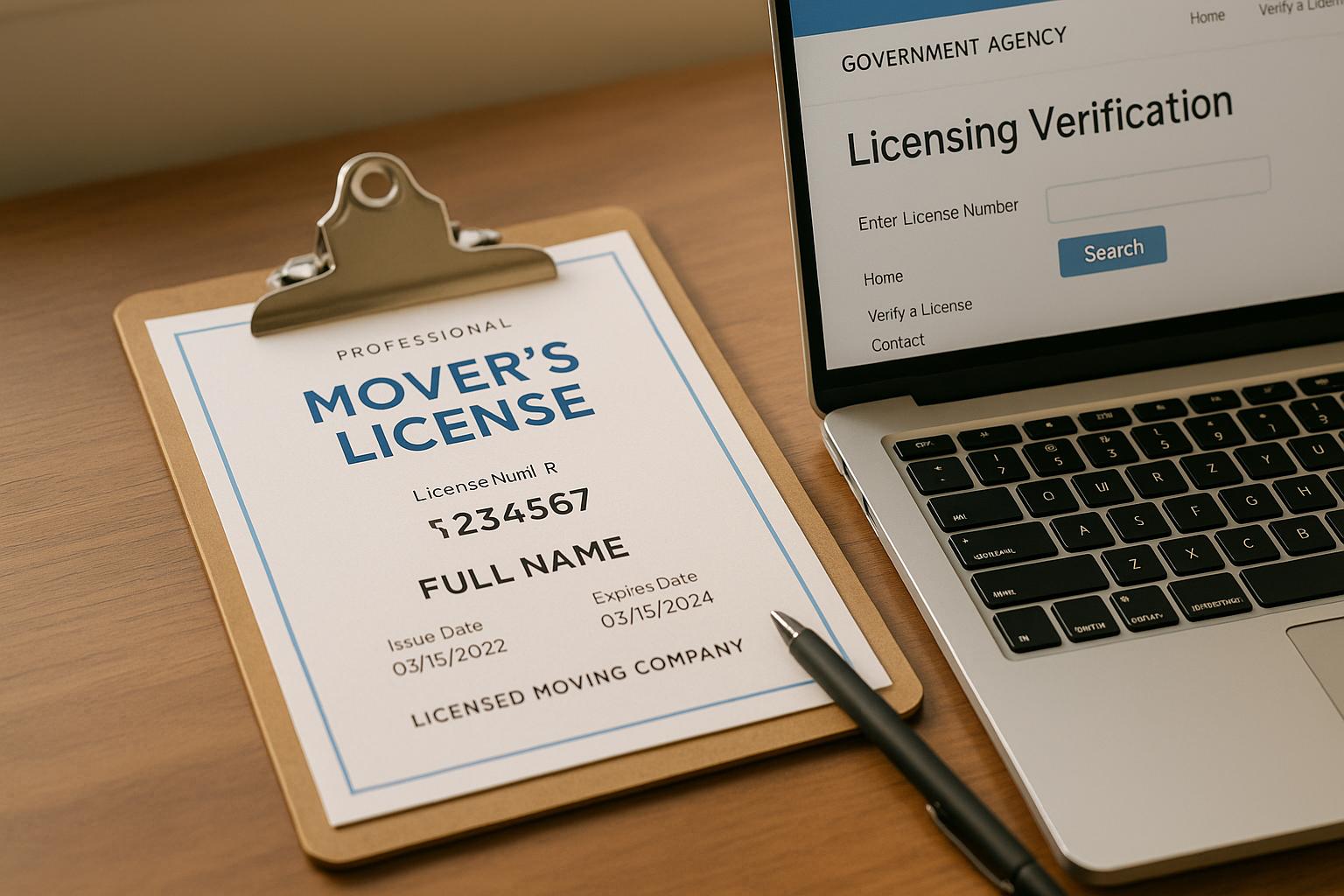
5 Ways to Verify a Mover's License
Hiring a mover? Don’t skip this step: Verify their license. In the U.S., licensed movers follow strict federal and state rules to protect your belongings and wallet. Unlicensed movers? They often dodge accountability, leaving you vulnerable to scams or losses. Here’s how to check credentials quickly and for free:
- Use Trusted Platforms: Websites like consumersAdvisors.com pre-vet movers and display verified licensing details (USDOT, MC numbers, insurance).
- Check the FMCSA SAFER System: For interstate moves, confirm USDOT and MC numbers, safety ratings, and complaint history.
- Verify State Licensing: For local moves, check your state’s Department of Transportation or Consumer Affairs database.
- Request Official Documents: Ask for licenses, insurance, and permits, then cross-check with government databases.
- Review Safety Records and Complaints: Use tools like the FMCSA Snapshot or state resources to check for unresolved issues or poor safety ratings.
Quick Tip: Legit movers provide licensing info without hesitation. If they don’t, it’s a red flag. Protect yourself by verifying credentials before signing any contract.
✅ How to Check a Mover’s USDOT Number Before You Get Scammed
1. Use Trusted Comparison Platforms like consumersAdvisors.com
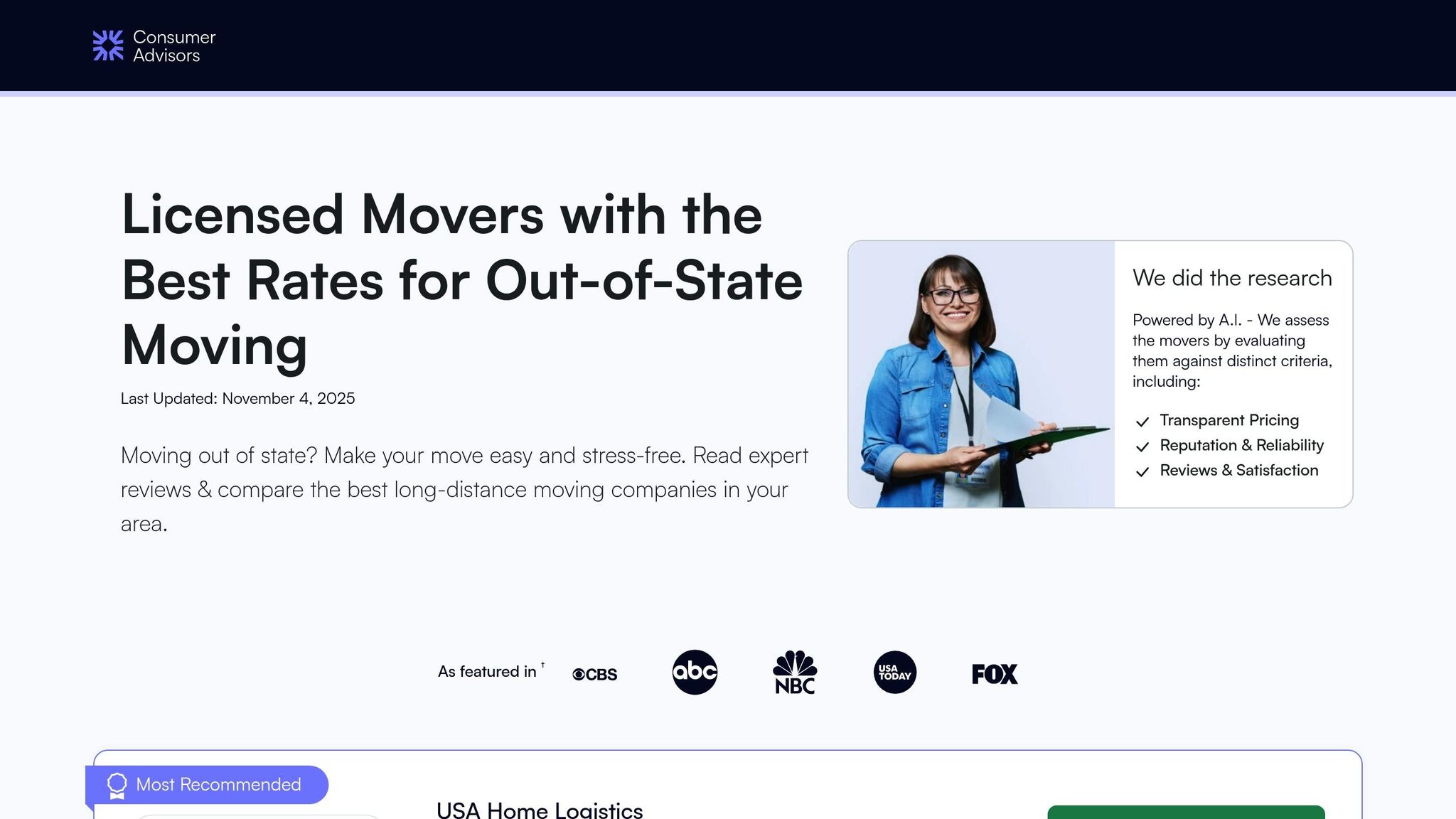
When you're comparing licensed movers, starting with a reliable comparison platform can save you a ton of time and help you steer clear of unlicensed operators. Platforms like consumersAdvisors.com take care of the heavy lifting by pre-vetting movers and verifying their licensing credentials, so you can quickly check a company's legitimacy without spending hours digging through multiple sources. This way, you can confidently move forward with your choices.
Accurate Licensing Information Made Easy
ConsumersAdvisors.com pulls verified licensing data straight from official federal and state databases and organizes it into a user-friendly format. This means you can easily check details like a mover's USDOT and MC numbers, insurance coverage, and regulatory status - all in one place [2][3].
The platform ensures that every mover listed meets strict criteria, including holding "Legal USDOT Mover Authority" [1]. For added peace of mind, you can cross-reference the information with official government databases, thanks to the transparency provided by the platform.
Instead of hopping between multiple government websites, consumersAdvisors.com simplifies the process by presenting all the crucial licensing details in one spot. Each mover's profile includes their USDOT and MC numbers, licensing status, and insurance information, along with direct links to official tools like the FMCSA's SAFER system for verification [2][3].
Additionally, the platform uses an AI-powered assessment system to evaluate movers based on factors like "Safety & Security" and "Reputation & Reliability." This ensures you're not just browsing a list of companies - you’re looking at a curated selection of properly licensed and vetted movers.
Trustworthiness of the Platform
While consumersAdvisors.com provides a convenient way to access licensing data, it's worth remembering that the most definitive source will always be official government databases [3][4][5]. That said, the platform maintains strict vetting standards and regularly updates its data to ensure accuracy. Verifying these details is a crucial step in avoiding unlicensed operators, as highlighted earlier.
The platform also offers a "mover guarantee", which ensures that recommended companies have proper insurance and liability coverage, giving you an extra layer of security [1].
Tailored for Local and Interstate Moves
Beyond making licensing information accessible, it’s important to consider how well these tools work for different types of moves. ConsumersAdvisors.com is particularly strong when it comes to interstate moves, as it incorporates FMCSA data and highlights movers with valid USDOT and MC numbers [2][3]. This makes it especially useful for long-distance or out-of-state relocations, where federal licensing is mandatory.
For local moves, the platform’s effectiveness depends on whether it includes state-level licensing details, which can vary widely. ConsumersAdvisors.com does provide information for both local and long-distance movers, but it’s a good idea to double-check that state-specific requirements are covered for local moves [2]. Many listed companies handle both interstate and local services, making them versatile options if your moving plans change.
2. Check the FMCSA SAFER System
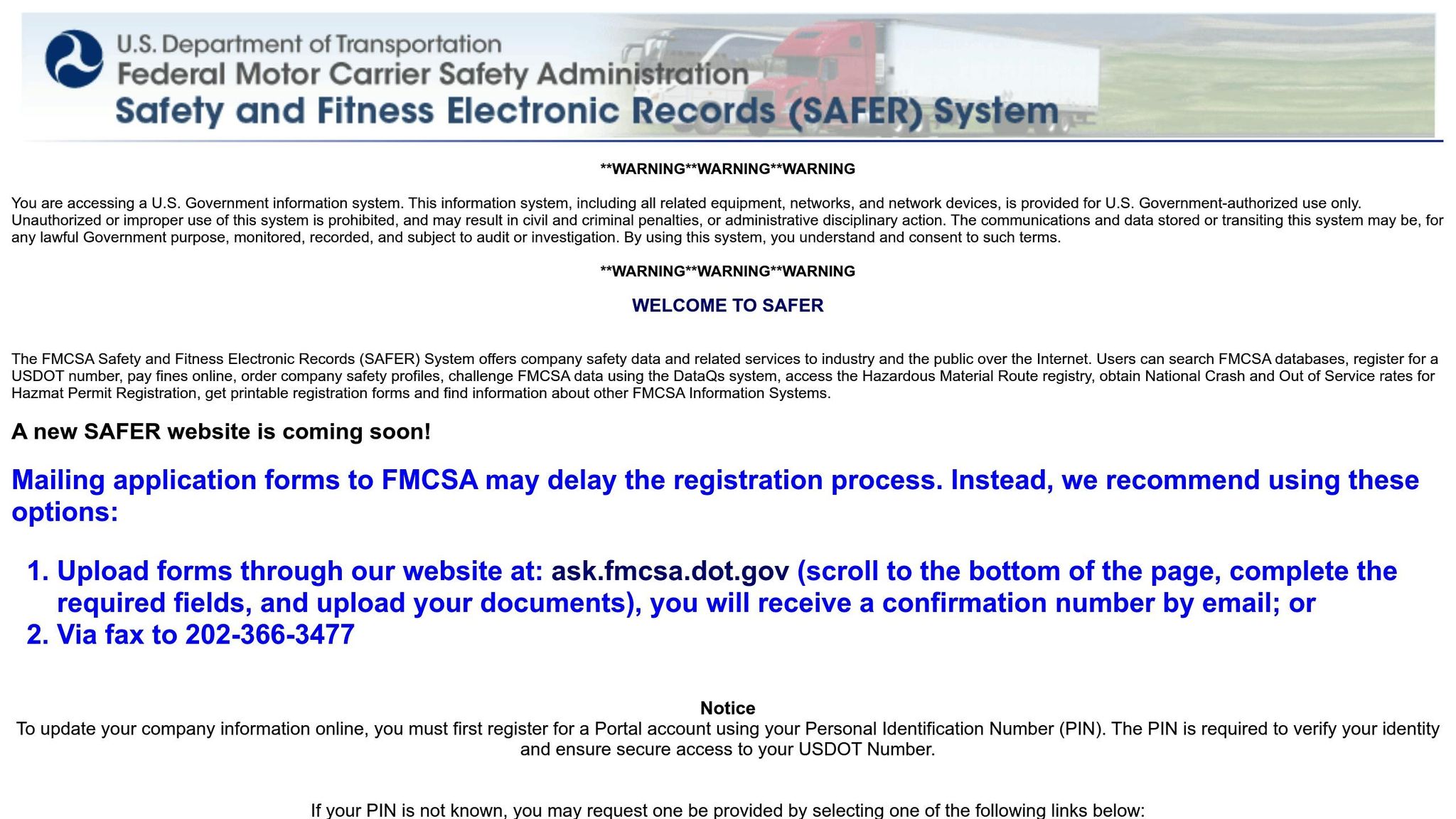
The FMCSA SAFER System is the go-to federal database for verifying the credentials of interstate moving companies. Managed by the Federal Motor Carrier Safety Administration, this free online tool (accessible at safer.fmcsa.dot.gov) provides direct access to licensing and safety data used by regulators to oversee the moving industry. It's an essential resource for anyone planning a move across state lines.
To get started, you'll need the mover's unique USDOT or MC number - federal identifiers required for all legitimate interstate movers. For instance, searching for USA Home Logistics (DOT No. 2936759) will pull up their complete regulatory profile.
Why the SAFER System is Trustworthy
The SAFER System pulls real-time data directly from federal registration records, offering accurate details about a company's operating status, safety ratings, and current insurance coverage. For household goods movers, the operating status should read "Authorized for HHG." Since this database is maintained by the FMCSA and updated regularly, it’s considered the most reliable source for verifying interstate movers.
However, it’s smart to double-check the information you find against the documents provided by the mover. Scammers often use names similar to legitimate companies, so make sure the business name and address in the SAFER System match exactly with what’s on the mover’s paperwork and website.
User-Friendly Verification Tools
The SAFER System is both free and straightforward to use. You can search using a company name, USDOT number, or MC number, and the results are displayed in an easy-to-read format - even if you're not familiar with transportation regulations.
When to Use the SAFER System
The SAFER System is specifically designed for verifying companies that handle interstate moves - those that cross state lines. It won’t provide information on movers that only operate within a single state. If you’re planning an interstate move, this database is indispensable. All legitimate interstate movers must be registered in the system and meet minimum insurance requirements: $750,000 in public liability coverage and a $75,000 bond.
For local moves within a single state, you’ll need to check with your state’s Department of Transportation or consumer affairs office. Local movers are regulated at the state level and won’t appear in the SAFER System.
| Move Type | Verification Tool | Required Numbers | Regulatory Authority |
|---|---|---|---|
| Interstate | FMCSA SAFER System | USDOT, MC | Federal (FMCSA) |
| Local/Intrastate | State licensing portals | State license number | State DOT/Consumer Affairs |
When reviewing SAFER System results, be on the lookout for missing or invalid identifiers, non-authorized operating status, expired insurance, or poor safety ratings. Movers with a "Satisfactory" rating - or "Not Rated" if they’re new - are generally safe choices.
3. Verify State Licensing for Local Moves
If you're planning a move within the same state, federal resources like the FMCSA SAFER System won’t be of much help. That’s because local movers are regulated at the state level, requiring a completely different verification process. While the FMCSA SAFER System is key for interstate moves, state databases are your go-to resource for local relocations. Each state has its own licensing agency and procedures, so knowing where to look is crucial.
Relevance for Local or Interstate Moves
For moves like Dallas to Houston or Los Angeles to San Francisco, your mover must have a state license rather than federal registration. Local moves depend entirely on state-specific licensing, while interstate moves require both federal and sometimes additional state permits. This distinction makes state verification your primary safety net when dealing with local movers.
Reliability of the Source
State licensing databases are managed by government agencies, ensuring they are dependable tools for verification. These databases are directly tied to regulatory enforcement, meaning any changes to a mover’s license - such as suspension or revocation - are reflected in real time. This allows you to access up-to-date and accurate information about a company’s legal standing.
States like California and Texas even offer user-friendly online tools to check whether a mover is licensed and if they have any recorded violations.
Ease of Access to Verification Tools
Most state verification tools are free and available online, though the user experience can vary depending on the state. To check a mover’s credentials, visit your state’s Department of Transportation, Consumer Affairs, or Public Utilities Commission website. Keep in mind that each state organizes its regulatory oversight differently. For example, some states regulate movers under transportation departments, while others handle it through consumer protection or public utilities agencies.
Despite these differences, the availability of online tools makes it easier to confirm a mover’s credentials and ensure they comply with state regulations.
Accuracy of Licensing Information
Having accurate licensing information is critical to avoiding scams and shady operators. While state databases generally provide reliable information, cross-referencing details is a must to protect yourself. Some fraudulent movers use names similar to legitimate companies or operate under multiple aliases to deceive customers.
When you locate a company in the state database, make sure the business name and address match exactly with the details on their website, quotes, and contracts. Even small discrepancies can be a red flag. Always ask for physical copies of the mover’s license, insurance, and registration documents. Reputable companies will have no problem providing these, and the information should align perfectly with what you find in the database. If a mover hesitates or the details don’t match, it’s best to walk away and find someone else.
| State Agency Type | Common Names | Typical Services |
|---|---|---|
| Department of Transportation | DOT, DMV, Motor Vehicle Division | License verification, safety records |
| Consumer Affairs | Consumer Protection, Attorney General | Complaint records, business registration |
| Public Utilities Commission | PUC, Utilities Board | Operating permits, rate regulations |
In 2022, over 4,000 complaints were filed against unlicensed movers, with the Better Business Bureau highlighting moving scams as one of the top consumer issues [4][7].
sbb-itb-be87134
4. Request and Check Official Documents
After completing initial online checks, the next step is to request official documents to confirm a mover's credentials. These documents, whether physical or digital, should come directly from reputable movers. If a company hesitates or refuses to provide them, it could indicate issues with licensing or insurance. It's also important to understand how the type of move - local or interstate - affects the required documentation.
Relevance for Local or Interstate Moves
The documents you need will depend on whether your move is local or crosses state lines. For interstate moves, movers must provide a valid USDOT number and an MC number, both issued by the Federal Motor Carrier Safety Administration (FMCSA). They should also provide proof of federal registration and insurance [2]. For local moves, state-specific permits often take the place of federal registration [2].
Accuracy of Licensing Information
Check that the business name and address on all documents match exactly with what appears on quotes, contracts, and the company’s website. Even minor inconsistencies in names or addresses can be a red flag [2]. Additionally, look for missing details, expired documents, or any discrepancies, as these could indicate potential problems. If something seems off, consider investigating further or choosing a different mover.
Reliability of the Source
Once you have the necessary documents, confirm their authenticity using data from official agencies. Government-issued documents are the most reliable way to verify a mover's credentials. For interstate moves, these are provided by the FMCSA, while local movers are regulated by state transportation departments. Unlike third-party websites or customer reviews, official documents reflect the company’s legal standing under government oversight.
Ease of Access to Verification Tools
Requesting documents is only part of the process - verification is just as important. With the paperwork in hand, use official databases to cross-check the information. For interstate movers, the FMCSA’s SAFER System is a valuable tool for confirming USDOT and MC numbers, as well as reviewing active insurance and complaint histories [2]. For local moves, your state’s Department of Transportation or Consumer Affairs often provides verification tools. Many of these resources are free, making it simple to ensure that license numbers, business names, and addresses align with official records [2].
| Document Type | Interstate Moves | Local Moves | Verification Source |
|---|---|---|---|
| Operating License | USDOT & MC Numbers | State-issued permits | FMCSA SAFER System / State DOT |
| Insurance Certificate | Federal requirements | State requirements | Insurance provider / Regulatory database |
| Business Registration | FMCSA registration | State business license | Government business registry |
5. Check Safety Records and Customer Complaints
Taking a closer look at a mover's safety record and history of complaints can give you a better understanding of their operations. This step goes beyond just checking licenses, helping you spot patterns that might indicate potential problems. Tools like the FMCSA Snapshot make it easier to quickly evaluate a mover's reliability.
Reliability of the Source
Government databases offer trustworthy and verified information on safety records and complaints. For interstate movers, the FMCSA's SAFER System provides access to licensing details, safety ratings, and complaint histories [3][4]. On the local level, state regulatory agencies maintain similar resources. For example, California's Bureau of Household Goods and Services (BHGS) provides online tools to check for disciplinary actions and complaints [6].
These agencies track important metrics like safety ratings and the types of complaints filed, giving you a standardized way to compare different companies.
Ease of Access to Verification Tools
The FMCSA's "Company Snapshot" tool is a free and user-friendly resource for checking safety ratings - categorized as Satisfactory, Conditional, or Unsatisfactory - and complaints filed over the past two years [3][5]. In 2023, FMCSA data showed over 4,000 complaints against moving companies, with 38% related to loss or damage, 21% to delays, and 15% to overcharging [4]. These insights can complement your review of a mover's licensing documents.
For local moves, state transportation departments or consumer affairs offices often provide similar online tools to verify a company's background.
Relevance for Local or Interstate Moves
After verifying licensing, it's helpful to review a mover's performance history to see how well they comply with regulations. Interstate movers are regulated federally and can be checked through the FMCSA database. Local movers, on the other hand, are overseen by state agencies [2].
Companies with a "Satisfactory" safety rating and minimal complaints generally show consistent compliance with regulations. However, movers with "Conditional" or "Unsatisfactory" ratings may have ongoing safety or compliance issues that could negatively impact your move [3].
Accuracy of Licensing Information
Pay attention to patterns in the types of complaints and how they are resolved. Recurring issues, such as unresolved complaints or repeated safety violations, can signal deeper problems within a company. Reputable movers typically have few unresolved complaints and will provide their USDOT or state license numbers without hesitation for verification [3].
| Information Type | Interstate Source | Local Source | Key Indicators |
|---|---|---|---|
| Safety Rating | FMCSA SAFER System | State DOT/Consumer Affairs | Satisfactory, Conditional, Unsatisfactory |
| Complaint History | FMCSA Company Snapshot | State regulatory databases | Number and type of complaints in 24 months |
| Resolution Status | Federal complaint tracking | State complaint systems | Resolved vs. unresolved issues |
License Requirements Comparison
When it comes to licensing, federal and state requirements vary significantly. Interstate movers are required to have a USDOT number and an MC number to comply with FMCSA (Federal Motor Carrier Safety Administration) regulations. On the other hand, local movers must adhere to state-specific standards, which can differ widely.
The USDOT number serves as a unique identifier for tracking a moving company's safety records, compliance history, and insurance status. Meanwhile, the MC number provides legal authorization for transporting household goods across state lines. These credentials are essential for interstate movers and must be displayed clearly. You can verify both numbers through the FMCSA's SAFER System, which provides access to safety ratings and compliance data.
For local movers, licensing requirements are determined by individual states. This may involve oversight from the state Department of Transportation or registration with agencies like Consumer Affairs, as seen in states such as Texas and California.
Federal vs. State Insurance Standards
Insurance requirements also differ between federal and state levels. Interstate movers must meet federal minimums, which include:
- Public liability insurance of at least $750,000
- Cargo coverage
- A $75,000 surety bond
State-level requirements for local movers are typically less stringent but still aim to ensure basic consumer protection.
Licensing and Insurance Comparison Table
| License Type | Move Type | Issuing Authority | Primary Purpose | Insurance Minimum | Verification Method |
|---|---|---|---|---|---|
| USDOT Number | Interstate (100+ miles or across state lines) | FMCSA (Federal) | Safety tracking and compliance monitoring | $750,000 liability | FMCSA SAFER System |
| MC Number | Interstate household goods transport authorization | FMCSA (Federal) | Legal authority for interstate moving | $75,000 bond required | FMCSA SAFER System |
| State License/Permit | Local (within state boundaries) | State DOT/Consumer Affairs | State compliance and consumer protection | Varies by state | State agency websites |
How to Verify Licenses
Reputable moving companies will willingly provide their license numbers upon request. For interstate moves, ensure the mover provides both their USDOT and MC numbers. For local moves, ask for the state license or permit number. If a company hesitates to share this information or if their documentation doesn’t align with official records, it’s a serious warning sign.
The verification process is straightforward when you know what to look for:
- Interstate Moves: Use the FMCSA database to confirm the USDOT and MC numbers. You can also check the company’s safety ratings and complaint history.
- Local Moves: Visit your state’s Department of Transportation website or relevant agency’s online tools to confirm the mover’s license and insurance compliance.
Conclusion
Making sure your mover is properly licensed is a critical step to avoid falling victim to scams or unreliable service. By following the steps outlined, you can confidently verify credentials and steer clear of unlicensed operators who might lack insurance or accountability.
For interstate moves, use the FMCSA SAFER System to check USDOT and MC numbers, verify insurance coverage, and review safety ratings. For local moves, turn to your state's Department of Transportation or Consumer Affairs office to confirm state licenses. Platforms like consumersAdvisors.com can simplify the process by connecting you with pre-vetted, licensed movers.
Legitimate moving companies will always provide their licensing numbers and proof of insurance without hesitation [2][3]. If a mover is unwilling or reluctant to share this information, consider it a major red flag. Hiring unlicensed movers could leave you vulnerable to theft, lost belongings, or damage with no legal recourse.
FAQs
Why should I check if a moving company is licensed before hiring them?
When you hire a licensed moving company, you’re taking an important step to safeguard yourself against scams and shady practices. Licensed movers must adhere to certain regulations and standards, which means you can feel more secure knowing your move is in the hands of a legitimate business.
Checking a mover’s license isn’t just about avoiding fraud - it also helps protect you from unpleasant surprises, like damaged items or poor service. This simple step ensures you’re trusting your belongings to professionals who are held accountable for the quality of their work.
What documents should I ask a moving company for to confirm they are licensed and insured?
To confirm that a moving company is legitimate and trustworthy, make sure to check these key documents:
- License Number: If the company handles interstate moves, ask for their U.S. Department of Transportation (USDOT) number. You can verify this number on the Federal Motor Carrier Safety Administration (FMCSA) website to ensure it's valid.
- Proof of Insurance: Request a copy of their insurance certificate to confirm they have both liability and cargo coverage. This protects your belongings in case of damage or loss.
- State-Specific Licenses: For in-state moves, ask about any required state-level licenses. Licensing requirements differ from state to state, so it's important to confirm they meet local regulations.
Checking these documents not only confirms the company's credibility but also gives you peace of mind that your belongings are in safe hands.
How can I find out if a moving company has complaints or safety concerns?
To ensure a moving company has a clean record, begin by checking their details on the Federal Motor Carrier Safety Administration (FMCSA) website. Here, you can verify their license status, review safety ratings, and see if there are any past complaints against them.
For more information, reach out to your state’s consumer protection agency or consult the Better Business Bureau (BBB). Additionally, browsing customer reviews and testimonials can give you a better sense of their service quality and dependability.